Anyone researching culinary school eventually runs into the same question about Johnson & Wales: is it really as hands-on as people say, or is it mostly lectures and textbooks? Studying culinary arts at Johnson & Wales University means spending most of your time in working kitchens, not classrooms, learning skills that build on each other from basic knife cuts to running a full restaurant service. This guide breaks down exactly what that education looks like, course by course and skill by skill, so you know what you’re signing up for before you apply.
Table of Contents
- How the Culinary Arts Program Is Structured
- Foundational Skills You Learn First
- Cooking Techniques You’ll Master
- Baking and Pastry Fundamentals
- Business, Management, and Cost Control
- Food Safety and Nutrition Training
- Real-World Experience Through Labs and Internships
- Bachelor’s Degree: Adding Management to the Craft
- Common Mistakes Students Make Early On
- Conclusion
- FAQ
How the Culinary Arts Program Is Structured
Johnson & Wales runs its culinary arts education as a progressive sequence. Instead of jumping straight into advanced techniques, students build skills in a deliberate order, starting with knife work and basic cooking methods, then moving into global cuisines, baking, and finally restaurant-level operations.
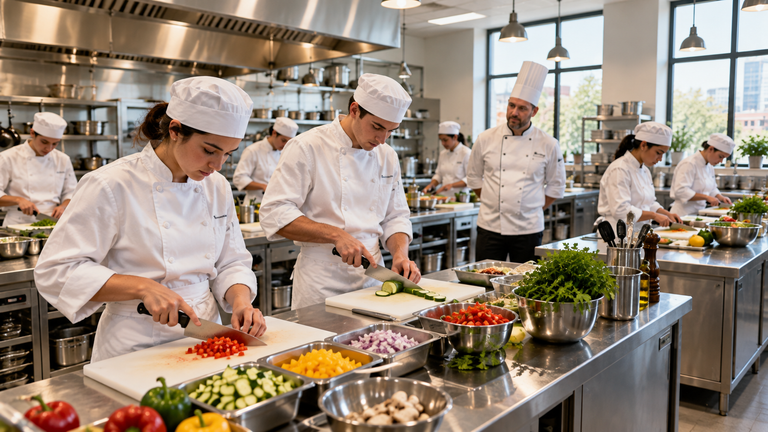
The program is built around culinary laboratory courses that focus on progressively developing culinary craft skills, product identification, and cooking methods, before expanding into classical and contemporary techniques and flavor profiles used across major world cuisines. Students also work in a dedicated dining and beverage service lab, which mirrors real front-of-house service rather than just kitchen prep.
Two main paths exist:
- Associate in Science (A.S.) in Culinary Arts – a two-year program focused on hands-on kitchen craft
- Bachelor of Science in Culinary Arts and Food Service Management – a four-year path that layers business and leadership training on top of the culinary foundation
Both degrees share the same core idea: cooking skill and professional judgment are built through repetition in real kitchens, not just demonstrations.
Foundational Skills You Learn First
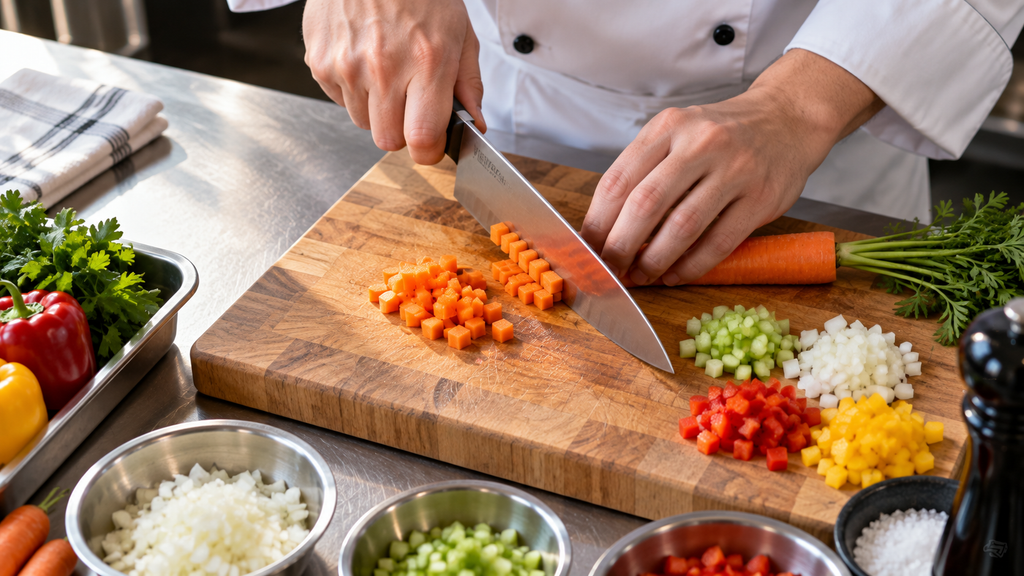
Every student starts in the same place, regardless of which degree they’re pursuing. The introductory culinary course covers the craft, tools, food safety and sanitation, basic knife skills, culinary math applications, and mise en place — the French term for having every ingredient prepped and organized before cooking begins.
From there, students are introduced to moist cooking techniques such as boiling, simmering, poaching, steaming, blanching and shocking, and sweating, along with the basic preparations of stocks, soups, and classic sauces.
This foundation matters because almost everything taught afterward assumes you already know how to hold a knife properly, read a recipe in professional shorthand, and keep a clean, organized station. Students who skip ahead mentally during this stage tend to struggle once the pace picks up.
Cooking Techniques You’ll Master
Once the basics are locked in, coursework shifts toward applied technique across different meal formats and cooking methods.
Breakfast, brunch, and lunch cooking. Students practice egg preparation, sandwiches, salads, soups, vegetable cookery, sauces including basic emulsions, and vinaigrettes, along with basic yeast and quick bread techniques like creaming, blending, and rubbing. Plate presentation and nutritionally balanced plating are emphasized here, not just flavor.
À la minute cooking. This is restaurant-speed cooking — dishes made to order rather than prepped in advance. Students are introduced to sautéing, shallow-frying, and grilling, applying portion control, ingredient selection, and flavoring techniques with a focus on nutrition.
Global cuisines. Students apply diverse skills to produce contemporary, globally influenced à la carte menus by exploring flavor profiles, culture, and cuisines from around the world. This is where students start developing a personal cooking style instead of just following a recipe card.
By the time students reach upper-level courses, they’re expected to fabricate proteins, manage a full station under time pressure, and adjust technique based on ingredient quality — skills that take real kitchen hours to develop, not just classroom time.
Baking and Pastry Fundamentals
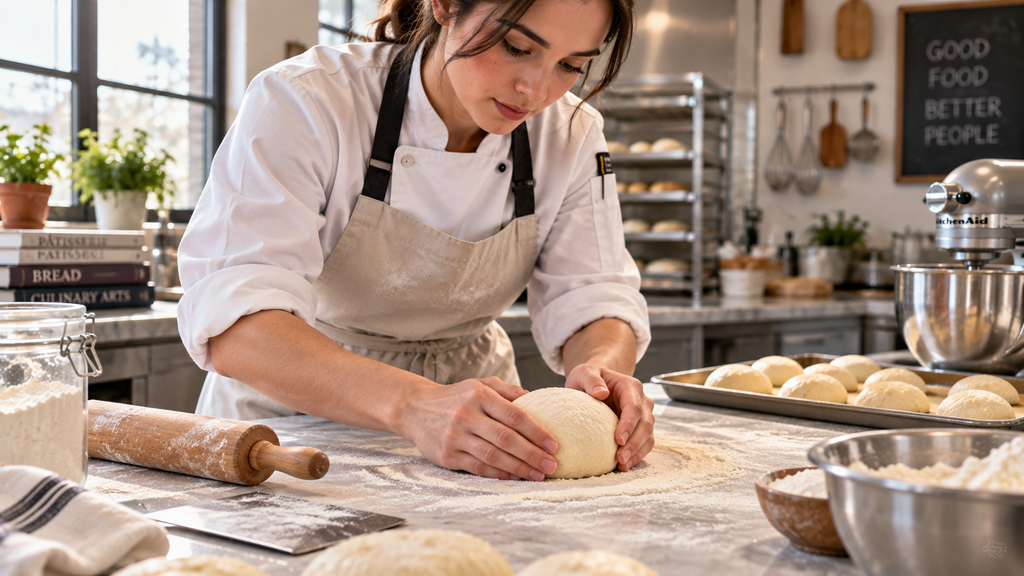
Even students on the culinary track (not the dedicated baking & pastry degree) get formal training in baking. A dedicated course on baking and pastry concepts for culinary operations is built into the curriculum, covering the science behind doughs, batters, and basic pastry work.
This matters because most professional kitchens expect line cooks to handle at least basic bread and dessert components, even if they’re not specializing in pastry. Understanding why a dough behaves a certain way — not just following steps — is part of what separates a trained cook from someone who learned by watching videos.
Business, Management, and Cost Control
Cooking well is only part of the job. Johnson & Wales builds business literacy into the culinary curriculum from early on.
Students learn to develop recipes, implement cost controls, and apply food safety standards, working toward a Conference for Food Protection–approved Food Safety Manager Certification. There’s also a dedicated course on menu planning and cost controls, where students learn how pricing, portion size, and food cost percentages actually affect a restaurant’s bottom line.
For students who go on to the bachelor’s degree, this expands significantly. Coursework develops industry expertise in food and beverage strategies and logistics, hospitality strategic marketing, financial and managerial accounting, and advanced food service operations management.
Understanding food cost isn’t optional in a professional kitchen — chefs who can’t manage a budget don’t stay chefs for long, no matter how good their food tastes.
Food Safety and Nutrition Training
Food safety runs through the entire program rather than existing as one standalone unit. Sanitation is covered from day one, and by graduation, students are expected to meet national certification standards.
Johnson & Wales requires students to pass a national exam recognized by the Conference for Food Protection, and the certificate must be obtained within three years of enrollment. This isn’t a formality — it reflects the same standard commercial kitchens are held to by local health departments.
Nutrition is woven in as well, particularly in how dishes are portioned and plated for nutritional balance, rather than taught as a purely academic subject disconnected from cooking practice.
Real-World Experience Through Labs and Internships
Classroom theory only goes so far in a field this physical and time-sensitive. That’s why hands-on labs and outside placements make up a large portion of the culinary arts education.
Students get access to state-of-the-art labs where they learn advanced cooking techniques, baking and pastry concepts, à la minute cooking, and more, through an experience-based approach rather than lecture-heavy instruction.
The associate degree culminates in an internship where students gain industry experience at sites such as hotels, restaurants, country clubs, resorts, casinos, spas, and workplace dining venues — locally, nationally, or internationally if specific requirements are met.
This internship is often where the real learning clicks. Working a real service, under real pressure, with real customers waiting, teaches things no lab exercise can fully replicate — pacing, communication under stress, and how to recover when something goes wrong mid-service.
Bachelor’s Degree: Adding Management to the Craft
Students who continue into the Bachelor of Science in Culinary Arts and Food Service Management build directly on their associate-level training rather than starting over.
The bachelor’s program combines the strengths of culinary arts and management to prepare students for a management career in either front- or back-of-house roles, with graduates going on to positions such as restaurant manager, kitchen manager, executive chef, food and beverage director, catering manager, and beverage manager.
The curriculum builds leadership and management abilities, cooking techniques, critical thinking, personal accountability, problem-solving, financial analysis skills, and customer awareness.
The program also includes senior-level capstone work, where students plan, budget, and lead a working food operation — essentially a trial run for the kind of responsibility they’ll carry as a working chef or manager. One capstone course has students develop a menu with conscious sourcing and procurement while leading a team through production and service, and their ability to plan, budget, and report finances is directly assessed.
Common Mistakes Students Make Early On
A few patterns show up consistently among students who struggle in the first year of a culinary program like this one:
- Treating knife skills as a formality. Rushing through basic cuts early on causes speed and consistency problems later, when recipes assume you can already do them without thinking.
- Skipping mise en place. Students who don’t fully prep before cooking fall behind during timed lab exercises and never catch up.
- Underestimating the business side. Some students arrive expecting pure cooking instruction and are surprised by how much cost control, math, and planning is involved — but that knowledge is exactly what separates a line cook from a chef who can run a kitchen.
- Not taking food safety seriously. Sanitation lapses are graded strictly because the standards mirror real health inspections, not classroom leniency.
Knowing these patterns ahead of time makes the transition into the program noticeably smoother.
Conclusion
Culinary arts at Johnson & Wales University isn’t built around watching demonstrations and memorizing recipes — it’s built around repetition, pressure, and gradually increasing responsibility in real kitchen and service environments. Students leave with technical cooking skills, a working understanding of food safety and cost control, and, for those in the bachelor’s track, real leadership experience running a food operation. Whether the goal is a line cook position, a pastry career, or eventually running a kitchen, the training is designed to mirror what the job actually demands.
FAQ
Do you need cooking experience before starting the culinary arts program? No. The program is designed to start with fundamentals like basic knife skills, sanitation, and mise en place, so students without prior kitchen experience can build up progressively.
What’s the difference between the associate and bachelor’s culinary arts degrees? The associate degree focuses more heavily on food preparation and technique, while the bachelor’s degree adds leadership training in operations, giving graduates both kitchen skills and business management knowledge.
Is baking and pastry included if you’re not in the dedicated pastry program? Yes. Culinary arts students take a dedicated course covering baking and pastry concepts, even if their focus is savory cooking rather than dessert work.
Does the program require an internship? Yes, the associate degree includes a required internship at an approved food service site, which can be local, national, or international depending on program requirements.
What certification do students need to graduate? Students must pass a national food safety exam recognized by the Conference for Food Protection, completed within three years of enrolling.
What jobs can graduates pursue after the bachelor’s program? Common roles include restaurant manager, kitchen manager, executive chef, food and beverage director, catering manager, sous chef, and dining room manager.