
Classic Cheese Pizza
There is something special about a hot, freshly baked Classic Cheese Pizza with a golden crust, rich tomato sauce, and plenty of bubbling mozzarella cheese. The edges turn lightly crisp while the center stays soft, fluffy, and chewy.
This homemade pizza is simple enough for beginners but delicious enough to become a regular family favorite. The dough uses everyday ingredients, while a quick tomato sauce and generous layer of cheese create that familiar pizzeria-style flavor.
The best part is the flexibility. The pizza can be baked as a thin, crispy pie or left slightly thicker for a softer crust. A few simple toppings can also be added without changing the basic recipe.
For another easy homemade dinner idea, try this easy cheesy chicken dinner recipe for a comforting meal with minimal effort.
Ingredients
For the Pizza Dough
- 3 cups all-purpose flour
- 1 teaspoon instant yeast
- 1 teaspoon sugar
- 1 teaspoon salt
- 1 tablespoon olive oil
- 1 cup warm water, plus 1 to 2 tablespoons if needed
For the Quick Pizza Sauce
- 1 cup tomato passata or plain tomato sauce
- 1 tablespoon tomato paste
- 1 teaspoon dried oregano
- 1/2 teaspoon garlic powder
- 1/2 teaspoon salt
- 1/4 teaspoon black pepper
- 1 teaspoon olive oil
For the Cheese Pizza
- 2 cups shredded low-moisture mozzarella cheese
- 2 tablespoons grated Parmesan cheese, optional
- 1/2 teaspoon dried oregano
- 1 tablespoon olive oil, for brushing the crust
Tools Needed
- Large mixing bowl
- Measuring cups and spoons
- Wooden spoon or spatula
- Rolling pin
- Baking sheet or pizza pan
- Parchment paper, optional
- Small bowl
- Pizza cutter
- Oven mitts
How to Make Classic Cheese Pizza
1. Prepare the Dough
Add the warm water, instant yeast, and sugar to a large mixing bowl. Stir gently and let the mixture sit for about 3 to 5 minutes.
Add the flour, salt, and olive oil. Stir until a rough dough forms.
Transfer the dough to a lightly floured surface. Knead for about 6 to 8 minutes until it becomes smooth and elastic.
If the dough feels very sticky, add flour one tablespoon at a time. If it feels dry or difficult to knead, add a little warm water.
2. Let the Dough Rise
Place the dough in a lightly oiled bowl and turn it once so the surface is coated.
Cover the bowl with a clean kitchen towel or plastic wrap. Leave it in a warm place for about 60 to 90 minutes.
The dough should become noticeably larger and soft to the touch.
3. Make the Pizza Sauce
While the dough rises, prepare the sauce.
Combine tomato passata, tomato paste, oregano, garlic powder, salt, black pepper, and olive oil in a small bowl.
Stir until smooth. There is no need to cook the sauce because it will cook while the pizza bakes.
Taste and adjust the seasoning if needed.
4. Preheat the Oven
Place a baking sheet or pizza pan inside the oven if possible.
Preheat the oven to 475°F (245°C).
A very hot oven helps the crust develop a lightly crisp exterior while keeping the inside soft and fluffy.
Allow the oven to fully preheat before baking the pizza.
5. Shape the Pizza Dough
Once the dough has risen, gently press it down to release excess air.
Place it on a lightly floured surface and shape it into a round.
Use a rolling pin to roll the dough to approximately 12 inches wide. For a thicker crust, leave the dough slightly smaller.
Transfer the dough to a parchment-lined baking sheet or lightly oiled pizza pan.
For a puffier edge, leave about 1 inch around the outside untouched while gently pressing the center thinner.
6. Add the Sauce
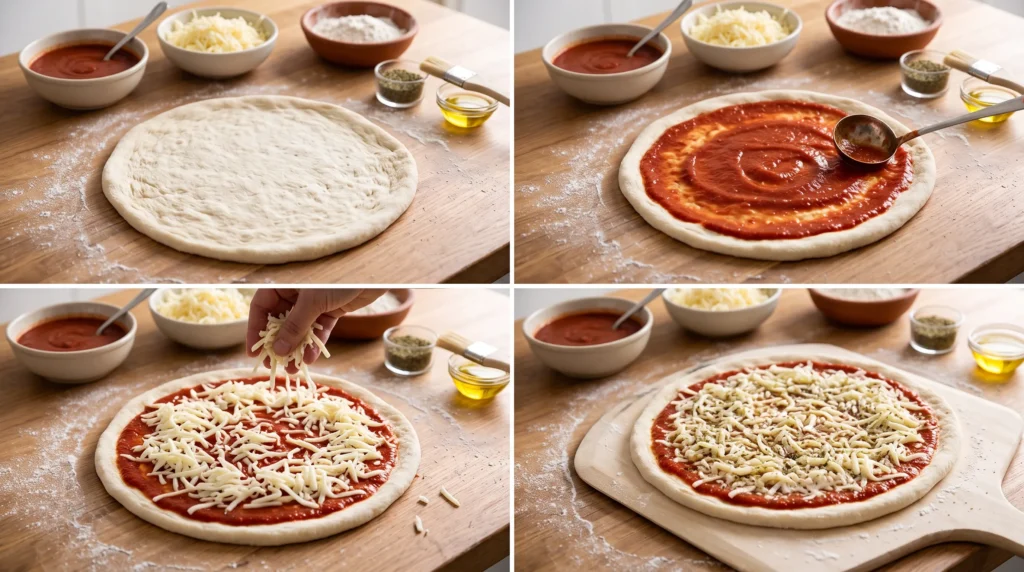
Spread the prepared tomato sauce over the dough.
Leave a small border around the edge for the crust.
Avoid adding too much sauce. A thin, even layer helps the pizza bake properly without making the center soggy.
7. Add the Cheese
Sprinkle the shredded mozzarella evenly over the sauce.
Add the Parmesan, if using, followed by the dried oregano.
Try to spread the cheese close to the edges without completely covering the crust border.
For the best melted texture, freshly shredded low-moisture mozzarella works especially well.
8. Brush the Crust
Lightly brush the exposed crust with olive oil.
This gives the edges a beautiful golden finish and adds a subtle richness.
Keep the oil light so the crust does not become greasy.
9. Bake
Place the pizza in the fully preheated oven.
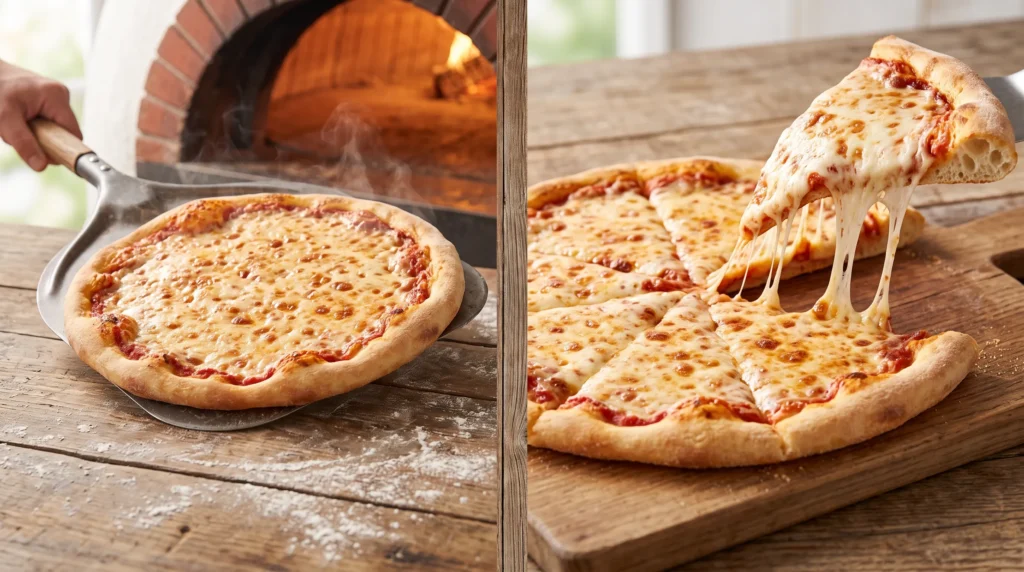
Bake for approximately 12 to 16 minutes, or until the crust is golden brown and the cheese is melted, bubbly, and lightly browned in spots.
The exact baking time depends on the thickness of the crust and the oven.
For a crispier bottom, bake the pizza on a preheated baking sheet or pizza stone.
10. Rest and Slice
Remove the pizza from the oven and let it rest for about 3 to 5 minutes.
This short resting time allows the melted cheese to settle slightly and makes slicing easier.
Use a pizza cutter to cut the pizza into 6 to 8 slices.
Serve while warm for the best combination of crispy crust, rich sauce, and gooey cheese.
Classic Cheese Pizza Tips & Variations
Use Warm, Not Hot, Water
The water should feel comfortably warm rather than hot. Very hot water can damage the yeast and prevent the dough from rising properly.
A warm environment also helps the dough become soft and airy.
Don’t Overload the Sauce
Too much sauce can make the center of the pizza wet.
A thin layer is enough to provide plenty of tomato flavor while allowing the crust to become crisp.
Shred the Mozzarella Fresh
Pre-shredded cheese is convenient, but freshly shredded mozzarella often melts more smoothly.
Low-moisture mozzarella is especially useful because it provides a stretchy, gooey topping without releasing too much moisture.
Bake at High Heat
A properly preheated oven is one of the most important parts of homemade pizza.
Starting with a very hot oven helps create a golden crust and beautifully melted cheese before the toppings overcook.
Give the Dough Enough Time
Do not rush the rising stage.
Properly risen dough should look noticeably larger and feel soft and airy. This creates a lighter crust instead of a dense, heavy one.
For a Thin Crust
Roll the dough more thinly and spread it over a larger area.
Keep an eye on the pizza during baking because thin dough can become crisp quickly.
For a Thick Crust
Keep the dough slightly smaller when shaping it.
Allow the edges to remain thicker so the finished pizza has a soft, fluffy center and puffy crust.
Add Simple Toppings
Classic cheese pizza can easily become a customized family dinner.
Try halal-friendly toppings such as:
- Sliced bell peppers
- Black olives
- Mushrooms
- Thinly sliced onions
- Sweet corn
- Jalapeños
- Cooked halal chicken
- Turkey pepperoni labeled halal
For another comforting recipe that pairs well with homemade pizza night, check out this creamy beef pasta recipe.
Add Fresh Herbs After Baking
A small amount of fresh basil or parsley can add a fresh, aromatic finish.
Add delicate herbs after baking rather than before so their flavor stays bright.
Avoid These Common Mistakes
Using cold water can slow down the dough’s rise.
Adding too much flour can make the crust dry and tough.
Skipping the oven preheating step can result in a pale, soft crust.
Too many toppings can weigh down the dough and prevent the center from becoming crisp.
Cutting the pizza immediately after baking can also make the cheese slide off more easily.
For more simple family-friendly meals, save this easy weeknight dinner collection for busy evenings.
Storage & Serving
Classic Cheese Pizza tastes best fresh from the oven, but leftovers can be stored easily.
Allow leftover slices to cool before placing them in an airtight container. Store them in the refrigerator for up to 3 to 4 days.
For best texture, reheat slices in a skillet over medium-low heat. Cover the skillet for a few minutes to warm the cheese, then uncover it briefly to crisp the bottom.
An oven or toaster oven also works well. Reheat at about 375°F (190°C) until the cheese is hot and the crust is crisp.
Microwaving is the fastest option, although the crust will be softer.
Freezing Pizza
Individual slices can be frozen for up to 2 months for the best quality.
Wrap each slice tightly in plastic wrap or freezer-safe material, then place the slices in a freezer bag or airtight container.
Reheat directly from frozen in a preheated oven until hot and crisp.
What to Serve With Cheese Pizza
A simple green salad provides a fresh contrast to the rich, cheesy pizza.
Roasted vegetables, cucumber salad, or a bowl of tomato soup also make easy side dishes.
For a casual meal, serve the pizza with fresh fruit and a cold, alcohol-free drink.
Frequently Asked Questions
1. What cheese is best for Classic Cheese Pizza?
Low-moisture mozzarella is one of the best choices because it melts evenly, stretches beautifully, and does not add too much moisture to the crust.
A small amount of Parmesan can also add a deeper, savory flavor.
2. Can homemade pizza dough be made ahead?
Yes. Prepare the dough, place it in a covered container, and refrigerate it for up to about 24 to 48 hours.
Allow refrigerated dough to sit at room temperature for a while before shaping so it becomes easier to stretch and roll.
3. Why is homemade pizza crust tough?
A tough crust can result from adding too much flour, overworking the dough, or baking the pizza for too long.
Use enough flour to handle the dough without making it dry and dense.
4. How can pizza crust become crispier?
Bake the pizza at a high temperature on a fully preheated baking sheet, pizza pan, or pizza stone.
Keeping the sauce layer thin also helps prevent excess moisture.
5. Can a different cheese be used instead of mozzarella?
Yes. Monterey Jack, mild cheddar, provolone, or a combination can be used.
For the most classic pizza texture, combine another cheese with mozzarella rather than replacing it completely.
6. Can tomato sauce be used instead of pizza sauce?
Yes. Plain tomato sauce can work well when seasoned with oregano, garlic, salt, and black pepper.
Avoid sauces that are extremely watery because excess moisture can soften the crust.
7. How do you prevent the pizza from becoming soggy?
Use a hot oven, avoid excessive sauce, and do not overload the pizza with wet toppings.
Ingredients such as mushrooms and vegetables can release moisture, so slice them thinly and use moderate amounts.
8. Can this pizza be made without Parmesan?
Absolutely. Parmesan is optional.
The mozzarella alone provides plenty of creamy, melted cheese and classic pizza flavor.
9. How do you get a fluffy pizza crust?
Give the dough enough time to rise and avoid rolling the outer edge completely flat.
Leaving a thicker border allows the crust to puff during baking.
10. Can this recipe be made with whole wheat flour?
Yes, but the texture will be denser and slightly more hearty.
For a softer crust, replace only part of the all-purpose flour with whole wheat flour rather than using 100% whole wheat flour.
11. Can the pizza be made without a pizza stone?
Yes. A regular baking sheet or pizza pan works perfectly.
Preheating the baking sheet can help create a crisper bottom.
12. How long should pizza rest before slicing?
About 3 to 5 minutes is enough.
This gives the melted cheese a little time to settle while keeping the pizza hot and enjoyable.
Conclusion
A homemade Classic Cheese Pizza does not need complicated ingredients or advanced cooking skills. Soft, fluffy dough, rich tomato sauce, and bubbling mozzarella come together to create a simple meal that feels special.
The crust can be made thin and crispy or slightly thick and airy, depending on personal preference. With a hot oven and a few basic ingredients, a delicious homemade pizza is only a short bake away.
Serve it fresh with a simple salad, roasted vegetables, or a favorite family side. Once this easy recipe becomes part of the dinner rotation, homemade pizza night may quickly become a favorite.
Give this Classic Cheese Pizza a try and enjoy every crispy, cheesy, flavorful slice.