Smoked BBQ Ribs
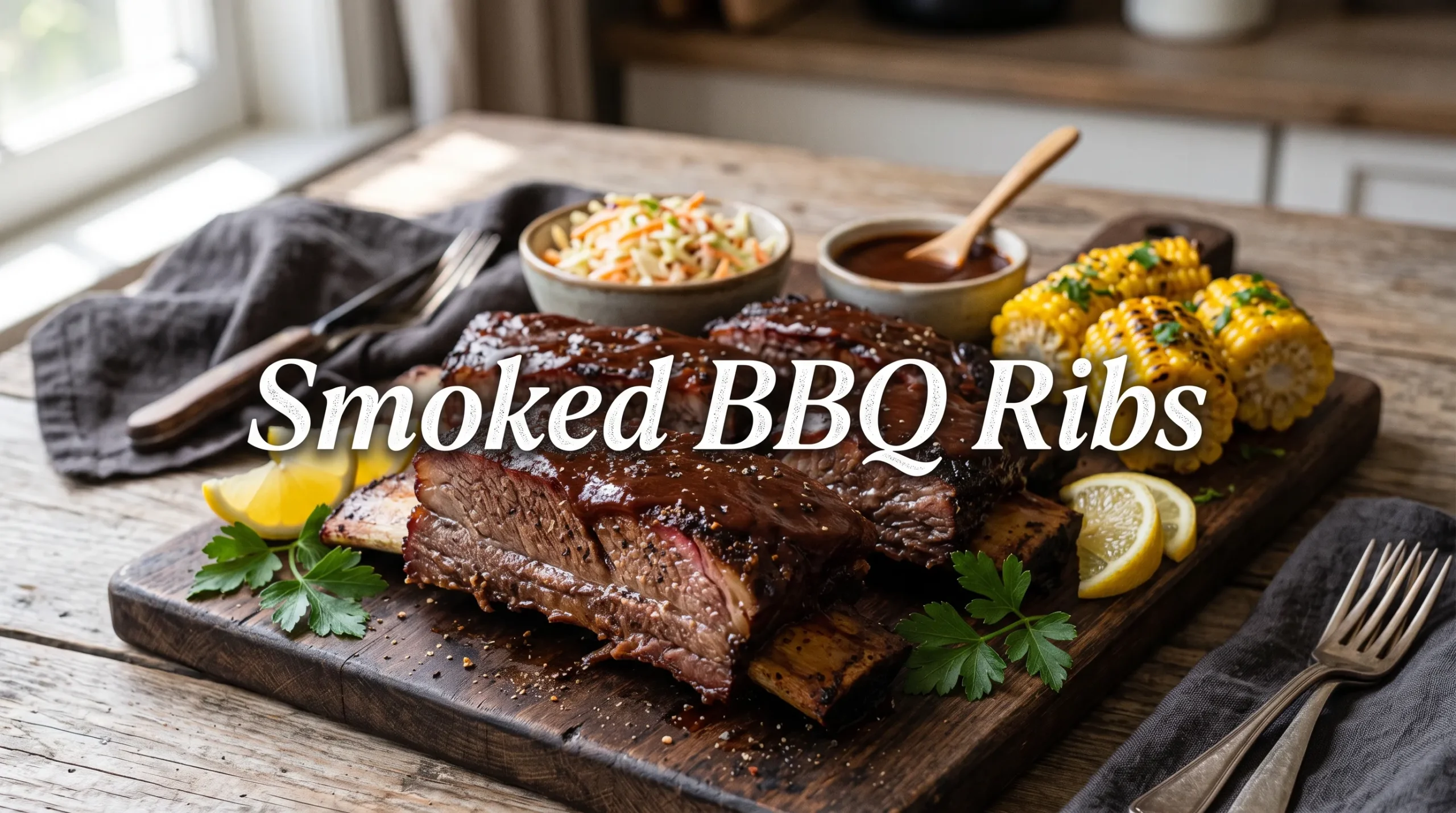
Tender, smoky, juicy, and coated in a glossy layer of BBQ sauce, these Smoked BBQ Ribs are made for slow cooking and big flavor. The ribs develop a deep smoky crust on the outside while becoming wonderfully tender inside.
This recipe uses halal-certified beef ribs for a completely alcohol-free and halal-friendly meal. A simple dry rub adds savory, slightly sweet flavor before the ribs spend several hours in the smoker.
The process is straightforward, making it suitable for home cooks who are new to smoking meat. There is no complicated marinade or long list of ingredients. Just season, smoke, wrap, finish, and serve.
The result is rich and flavorful ribs with a tender bite, smoky bark, and sticky BBQ finish. Serve them with creamy homemade coleslaw, crispy roasted potatoes, or easy homemade cornbread for a satisfying BBQ-style meal.
Ingredients
For the Beef Ribs
- 2 racks halal-certified beef back ribs, about 1.8–2.2 kg total
- 2 tablespoons yellow mustard
- 2 tablespoons apple juice
- 1 tablespoon Worcestershire-style sauce, halal-certified and alcohol-free
- 2 tablespoons olive oil
For the Dry Rub
- 3 tablespoons brown sugar
- 2 tablespoons sweet paprika
- 1 tablespoon garlic powder
- 1 tablespoon onion powder
- 2 teaspoons fine salt
- 2 teaspoons black pepper
- 1 teaspoon chili powder
- 1 teaspoon ground cumin
- 1/2 teaspoon cayenne pepper, optional
For the BBQ Finishing Sauce
- 1 cup alcohol-free BBQ sauce
- 2 tablespoons apple juice
- 1 tablespoon honey
- 1 teaspoon smoked paprika
- 1/2 teaspoon garlic powder
For Spritzing
- 1/2 cup apple juice
- 1/2 cup water
Tools and Equipment
- Smoker
- Wood chunks or chips suitable for beef
- Large cutting board
- Small bowls
- Measuring spoons
- Sharp knife
- Basting brush
- Spray bottle
- Heavy-duty aluminum foil or butcher paper
- Meat thermometer
- Tongs
- Large tray or baking sheet
Step-by-Step Instructions
1. Prepare the ribs
Place the beef ribs on a large cutting board.
Pat the surface completely dry with paper towels. Removing excess moisture helps the seasoning stick and encourages a flavorful bark to develop.
2. Remove the membrane
Turn the ribs bone-side up.
If a tough membrane is present, slide the tip of a small knife underneath one corner. Grip the loosened membrane with a paper towel and pull it away slowly.
Removing the membrane helps the seasoning reach the meat and gives the finished ribs a more pleasant texture.
If the butcher has already removed it, simply continue with the recipe.
3. Make the dry rub
Add brown sugar, paprika, garlic powder, onion powder, salt, black pepper, chili powder, cumin, and cayenne pepper to a small bowl.
Mix thoroughly until the spices are evenly combined.
The rub should smell smoky, sweet, and savory.
4. Season the ribs
Mix the yellow mustard, apple juice, Worcestershire-style sauce, and olive oil in a small bowl.
Brush a thin layer over both sides of the ribs. This mixture helps the dry rub adhere to the meat while adding another layer of flavor.
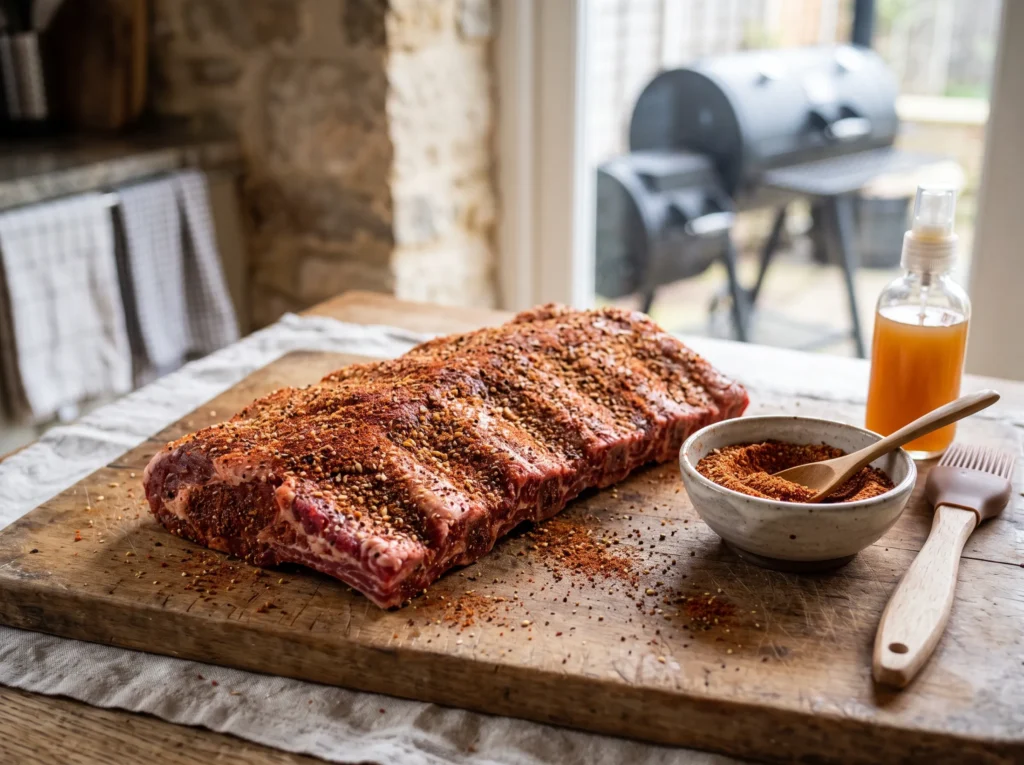
Generously sprinkle the dry rub over the ribs.
Press the seasoning gently into the surface instead of rubbing aggressively. Make sure the sides and edges are covered as well.
5. Rest the seasoned ribs
Place the seasoned ribs on a tray.
Allow them to rest at room temperature for about 20 to 30 minutes while the smoker heats.
Do not leave raw meat at room temperature for an extended period.
6. Preheat the smoker
Preheat the smoker to 120°C (250°F).
For beef ribs, mild or medium-strength wood such as oak, cherry, or a small amount of hickory works well.
Avoid using excessive wood. Too much smoke can make the ribs taste bitter rather than pleasantly smoky.
7. Start smoking
Place the ribs in the smoker with the bone side facing down.
Close the smoker and let the ribs cook undisturbed for about 3 hours.
Keeping the smoker closed as much as possible helps maintain a steady temperature.
8. Spritz the ribs
After the first 2 hours, combine the apple juice and water in a spray bottle.
Lightly spritz the ribs every 45 to 60 minutes after this point.
A light spritz helps prevent the surface from becoming excessively dry and adds a subtle fruity note.
Avoid soaking the ribs. A gentle mist is enough.
9. Check the bark
After about 3 to 4 hours, inspect the ribs.
The outside should have developed a deep reddish-brown bark. The seasoning should look set rather than wet.
At this stage, the ribs may not yet be tender. The bark and color are more useful indicators than cooking time alone.
10. Wrap the ribs
Place each rack on a large sheet of heavy-duty aluminum foil.
Pour a small amount of apple juice over the ribs, then wrap the foil tightly around the meat.
Place the wrapped ribs back into the smoker.
Continue cooking at 120°C (250°F) for another 2 to 3 hours.
Wrapping helps trap moisture and gently steams the ribs, helping the meat become tender.
11. Check for tenderness
Start checking the ribs after about 5 hours of total cooking time.
Insert a meat thermometer into the thickest section between the bones.
For tender beef ribs, a temperature around 93–99°C (200–210°F) is often a useful range, but tenderness matters more than a single number.
The thermometer should slide into the meat with little resistance.
12. Make the BBQ sauce
While the ribs finish cooking, combine the alcohol-free BBQ sauce, apple juice, honey, smoked paprika, and garlic powder in a small saucepan.
Warm over low heat for 3 to 5 minutes.
Stir until smooth and glossy.
Do not boil the sauce aggressively. Gentle heating is enough to combine the ingredients.
13. Unwrap the ribs
Once the ribs are tender, carefully open the foil.
Hot steam will escape, so open the package away from the face and hands.
Transfer the ribs back to the smoker grate, meat side up.
14. Add the BBQ sauce
Brush a generous but even layer of the warm BBQ sauce over the ribs.
Close the smoker and cook uncovered for another 20 to 30 minutes.
The sauce should become glossy, slightly sticky, and deeply flavored.
For a thicker glaze, add another thin layer of sauce during the final 10 minutes.
15. Rest the ribs
Remove the finished ribs from the smoker.
Place them on a clean cutting board and loosely cover them with foil.
Let them rest for 15 to 20 minutes.
Resting allows the juices to settle back into the meat and makes slicing easier.
16. Slice and serve
Cut between the bones with a sharp knife.
Arrange the ribs on a serving platter and brush with a little extra BBQ sauce if desired.
Serve while warm with fresh sides and plenty of napkins.
Smoked BBQ Ribs Tips & Variations
Choose meaty beef ribs
The meatier the ribs, the better the final result.
Look for beef ribs with a good amount of meat over the bones and visible marbling. Fat helps keep the meat rich and juicy during the long smoking process.
Keep the smoker temperature steady
A steady temperature is more important than constantly adjusting the smoker.
Try to maintain around 120°C (250°F). Frequent temperature swings can extend the cooking time and make the results less predictable.
Do not chase the clock
Smoking times can vary depending on the size and thickness of the ribs.
The stated cooking times are useful guidelines, but tenderness should determine when the ribs are finished.
Avoid too much smoke
More smoke does not automatically mean better ribs.
A clean, gentle stream of smoke creates a pleasant smoky flavor. Heavy, dirty smoke can leave the surface tasting harsh and bitter.
Let the bark develop
The dark, seasoned exterior is one of the best parts of smoked ribs.
Avoid wrapping the ribs too early. Give the seasoning enough time to set and form a rich bark before wrapping.
Use mustard as a binder
Mustard may seem unusual in a rib recipe, but the finished ribs will not taste strongly of mustard.
It creates a thin coating that helps the dry rub stick to the meat while adding subtle tanginess.
Adjust the sweetness
For less-sweet ribs, reduce the brown sugar in the dry rub to 2 tablespoons and use less honey in the finishing sauce.
For sweeter BBQ ribs, add an extra tablespoon of honey to the sauce.
Make them spicier
Increase the cayenne pepper to 1 teaspoon for a noticeably hotter rub.
A pinch of crushed red pepper can also be added to the finishing sauce.
Use a different BBQ sauce
A smoky tomato-based sauce works particularly well with beef ribs.
For a tangier finish, choose an alcohol-free BBQ sauce with vinegar and mustard notes. Always check packaged sauces for alcohol-containing ingredients and choose a halal-certified option when required.
Do not cut the ribs too soon
Cutting immediately after smoking can release too much hot juice.
A short resting period keeps the meat moist and makes each rib easier to handle.
Do not rely only on color
Dark ribs are not necessarily finished ribs.
The meat can develop a beautiful bark before becoming tender. Use a thermometer and, more importantly, test the meat for tenderness.
Storage & Serving
Allow leftover ribs to cool slightly before storing them.
Place the ribs in an airtight container and refrigerate within 2 hours of cooking.
Properly refrigerated smoked beef ribs can be kept for 3 to 4 days.
For longer storage, wrap individual portions tightly in foil and place them in a freezer-safe bag or container.
Frozen ribs are best used within about 2 to 3 months for good quality.
To reheat, place the ribs in a covered baking dish with a small splash of water or apple juice. Cover tightly with foil and warm in a 160°C (325°F) oven until heated through.
The ribs can also be reheated gently in an air fryer, although the oven method helps retain moisture.
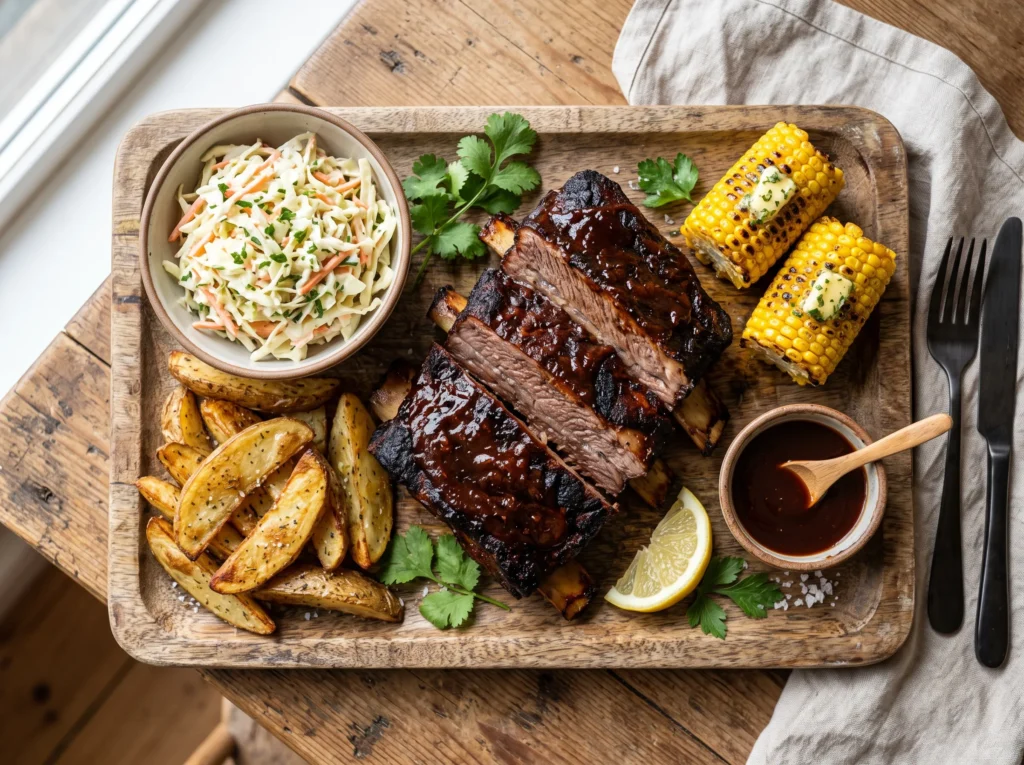
For serving, keep the sides fresh and simple. Creamy coleslaw adds cool crunch, while baked potatoes provide a soft and fluffy contrast to the smoky meat.
A fresh green salad, grilled corn, roasted vegetables, or warm flatbread also works beautifully.
For a full BBQ spread, serve the ribs with crispy oven-baked potato wedges, fresh homemade coleslaw, and easy grilled vegetables.
Extra BBQ sauce can be served on the side for dipping.
Frequently Asked Questions
What type of ribs are best for smoking?
Meaty beef back ribs or beef short ribs both work well.
Beef back ribs are especially convenient because they can provide a good balance of meat, rich flavor, and manageable cooking time.
How long do beef ribs take to smoke?
At 120°C (250°F), beef ribs commonly take around 6 to 8 hours, depending on their size and thickness.
Cooking time can vary significantly, so tenderness and internal temperature should guide the final stage.
Can Smoked BBQ Ribs be made without a smoker?
Yes. A grill with a lid can be used for indirect cooking if it can maintain a low, steady temperature.
A small amount of suitable smoking wood can provide smoky flavor while the ribs cook away from direct heat.
Why are smoked ribs tough?
Ribs can remain tough when they have not cooked long enough for connective tissue to soften.
Low-and-slow cooking gives that connective tissue time to break down, creating softer, more tender meat.
Should ribs be wrapped while smoking?
Wrapping is optional but useful.
It can speed up the tenderizing stage and help retain moisture. Leaving ribs unwrapped for the entire cook can produce a firmer, more pronounced bark.
Can the ribs be prepared the day before?
Yes. The dry rub can be applied several hours ahead and kept refrigerated.
For the best results, smoke the ribs close to serving time, although fully cooked ribs can also be chilled and gently reheated.
What wood is best for beef ribs?
Oak is an excellent all-purpose choice for beef.
Cherry provides a milder smoky character, while hickory offers a stronger flavor. Start with a moderate amount of wood rather than using a large quantity.
Why did the BBQ sauce burn?
BBQ sauces often contain sugar, which can darken quickly over high heat.
Apply the sauce near the end of cooking and use moderate heat to create a glossy glaze without burning it.
Can boneless beef ribs be used?
Yes, but cooking times will change.
Boneless pieces can cook more quickly because there are no bones affecting the heat distribution. Check them earlier and use tenderness as the main guide.
Can these ribs be made less spicy?
Absolutely.
Simply leave out the cayenne pepper and use a mild chili powder. The paprika, garlic, onion, and brown sugar still provide plenty of flavor without significant heat.
Conclusion
Slow smoking transforms simple beef ribs into something deeply flavorful, juicy, and wonderfully tender.
A savory dry rub creates a rich bark, gentle smoke adds depth, and a glossy alcohol-free BBQ sauce gives the finished ribs a sticky, sweet-savory finish.
The process is simple enough for beginners while still producing impressive results for a weekend BBQ or family dinner.
For tender meat, steady smoker temperature, and plenty of smoky flavor, Smoked BBQ Ribs are a delicious choice. Serve them hot with crisp sides, extra BBQ sauce, and plenty of napkins.