
Prawn Linguine with Prawn Bisque Sauce
There is something special about a bowl of silky linguine coated in a rich, creamy seafood sauce. Add juicy prawns and a quick homemade prawn bisque, and a simple pasta dinner suddenly feels like a restaurant-style meal.
Prawn Linguine with Prawn Bisque Sauce combines tender prawns, smooth pasta and a deeply savoury sauce made from prawn shells. The shells add plenty of natural seafood flavour without needing complicated ingredients or alcohol.
The recipe is straightforward enough for a weeknight dinner and impressive enough for a special meal. The sauce is creamy without being too heavy, while garlic, tomato paste, lemon and parsley keep the flavour fresh and balanced.
For more easy seafood inspiration, pair this recipe with a simple garlic butter prawn recipe or serve it alongside homemade garlic bread for an easy family meal.
Ingredients
For the Prawn Bisque Sauce
- 450 g raw shell-on prawns, peeled and deveined, shells reserved
- 2 tablespoons olive oil
- 1 small onion, finely chopped
- 2 garlic cloves, finely chopped
- 1 tablespoon tomato paste
- 500 ml water
- 1 small bay leaf
- ½ teaspoon paprika
- ½ teaspoon salt
- ¼ teaspoon black pepper
- 120 ml double cream or heavy cream
- 1 tablespoon unsalted butter
- 1 tablespoon fresh lemon juice
For the Linguine
- 300 g dried linguine
- 1 tablespoon salt, for the pasta water
- 1 tablespoon olive oil
- 2 garlic cloves, finely sliced
- 450 g prepared raw prawns
- ¼ teaspoon paprika
- ¼ teaspoon black pepper
- ½ teaspoon salt, or to taste
- 2 tablespoons fresh parsley, finely chopped
- Lemon wedges, for serving
Optional Garnish
- Extra fresh parsley
- A little lemon zest
- A light drizzle of extra virgin olive oil
- A pinch of chilli flakes, if a little heat is preferred
Tools Needed
- Large pot for cooking the linguine
- Large frying pan or deep skillet
- Small saucepan
- Fine-mesh sieve
- Wooden spoon or spatula
- Tongs
- Colander
- Sharp knife and chopping board
Step-by-Step Instructions
1. Prepare the prawns
Peel and devein the prawns, keeping the shells in a separate bowl. Pat the peeled prawns dry with kitchen paper.
Keeping the shells is important because they provide the deep, savoury flavour needed for the bisque sauce.
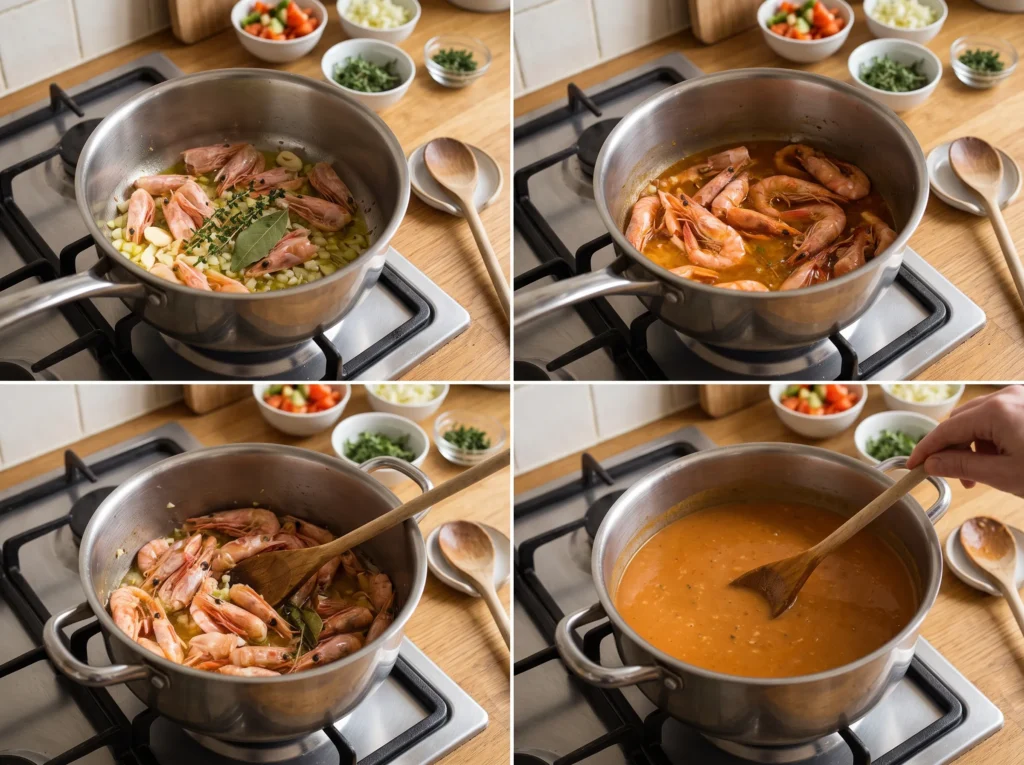
2. Make the quick prawn stock
Heat 2 tablespoons of olive oil in a saucepan over medium heat.
Add the reserved prawn shells and cook for 3 to 4 minutes. Stir frequently until the shells turn pink and smell fragrant.
Add the chopped onion and garlic. Cook for another 2 minutes until the onion begins to soften.
Stir in the tomato paste, paprika, salt and black pepper. Cook for 1 minute to lightly caramelise the tomato paste.
Pour in 500 ml of water and add the bay leaf. Bring the mixture to a gentle boil.
Reduce the heat and simmer uncovered for 15 minutes. This gives the water enough time to take on the rich seafood flavour from the shells.
3. Strain the bisque
Place a fine-mesh sieve over a clean saucepan or heatproof bowl.
Carefully pour the prawn stock through the sieve. Press the shells gently with the back of a spoon to extract as much liquid as possible.
Discard the shells and bay leaf.
Return the strained stock to the saucepan and simmer for another 3 to 5 minutes if it needs to reduce slightly.
4. Finish the creamy bisque sauce
Lower the heat and add the cream and butter to the strained prawn stock.
Stir gently until the butter melts and the sauce becomes smooth and glossy.
Add 1 tablespoon of fresh lemon juice. Taste and adjust the salt if needed.
Keep the sauce warm over very low heat. Avoid boiling it once the cream has been added, as high heat can make the sauce split.
5. Cook the linguine
Bring a large pot of water to a boil.
Add 1 tablespoon of salt, then add the linguine. Cook according to the packet instructions until al dente.
Before draining, reserve about 150 ml of the pasta cooking water.
Drain the linguine well, but do not rinse it. The starch left on the pasta helps the sauce cling to every strand.
For another comforting pasta dinner, try an easy creamy chicken pasta recipe on another night.
6. Cook the prawns
While the pasta cooks, heat 1 tablespoon of olive oil in a large frying pan over medium-high heat.
Add the sliced garlic and cook for about 30 seconds. Do not let it turn dark brown.
Add the prepared prawns, paprika, black pepper and salt.
Cook for about 1½ to 2 minutes on each side, depending on their size. The prawns should become pink, opaque and firm.
Avoid overcooking them. Properly cooked prawns should be juicy and tender rather than rubbery.
7. Combine the pasta and sauce
Add the drained linguine to the frying pan with the cooked prawns.
Pour over the warm prawn bisque sauce and toss gently with tongs.
If the sauce seems too thick, add a small splash of reserved pasta water. Add it gradually until the sauce becomes silky and coats the linguine evenly.
8. Add the finishing touches
Sprinkle over the chopped fresh parsley.
Add a little lemon zest if desired, then toss once more.
Taste before serving and add a little more lemon juice, salt or black pepper if needed.
9. Serve immediately
Divide the linguine between warm bowls.
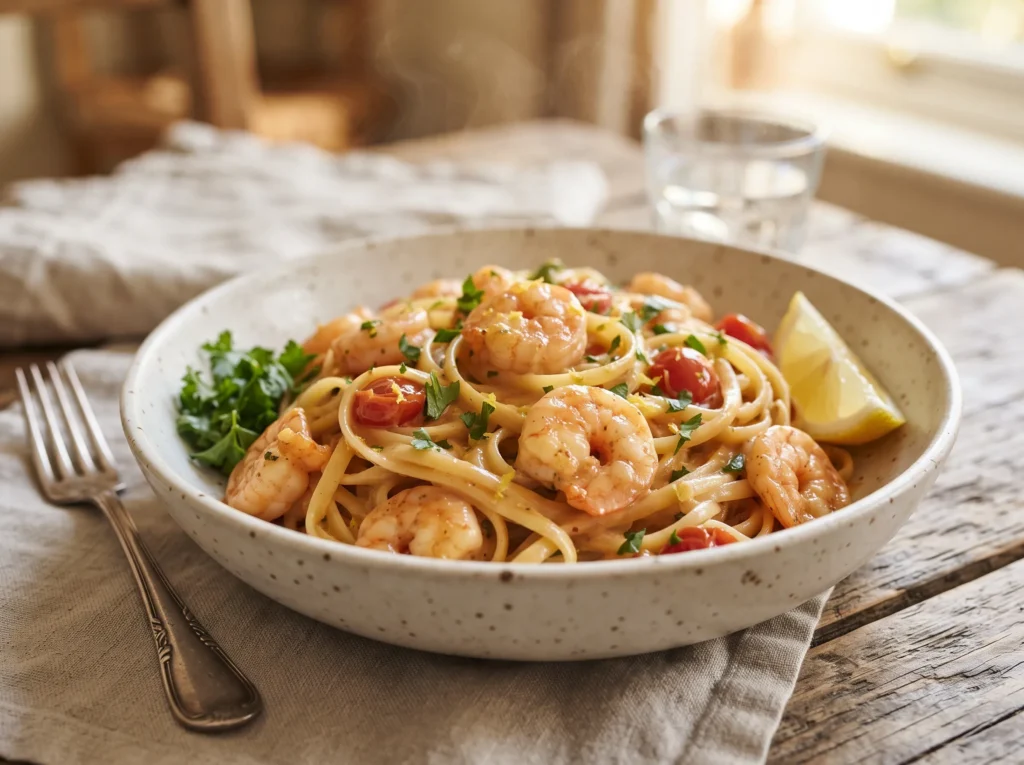
Top with extra parsley and a few prawns. Serve with lemon wedges for squeezing over the pasta.
The finished dish should have silky strands of linguine, tender prawns and a creamy, rich sauce with a fresh lemon finish.
Tips & Variations
Use shell-on prawns for the best bisque
The prawn shells are the key to the sauce. They contain natural seafood flavour that gives the stock a richer taste than plain water or ordinary vegetable stock.
If only peeled prawns are available, the recipe can still be made. Simply skip the shell-based bisque and use a good-quality seafood stock instead.
Do not overcook the prawns
Prawns cook quickly. Once they turn pink and opaque, they are usually ready.
Large prawns may need slightly longer, while smaller prawns can cook in less time. Remove them from the heat as soon as they are cooked through.
Keep the sauce gently heated
Cream sauces do not need vigorous boiling. High heat can cause the cream to separate and leave the sauce looking oily.
A gentle simmer is enough to create a smooth, glossy texture.
Reserve pasta water
Pasta water is useful for adjusting the consistency of the sauce.
The water contains starch from the linguine, which helps loosen the sauce while keeping it creamy and helping it stick to the pasta.
Choose fresh or frozen prawns
Both fresh and properly thawed frozen prawns work well.
For frozen prawns, thaw them completely in the refrigerator and pat them dry before cooking. Excess water can cause them to steam instead of developing a lightly golden surface.
Make it spicier
Add ¼ to ½ teaspoon of chilli flakes with the garlic when cooking the prawns.
A little chilli works particularly well with the sweet flavour of prawns and the creamy bisque sauce.
Make it lighter
For a lighter sauce, replace some of the cream with extra prawn stock.
The result will be less creamy but still full of seafood flavour.
Add vegetables
Baby spinach, peas, cherry tomatoes or thinly sliced courgette can be added for extra colour and texture.
Cook vegetables until just tender so the dish keeps its fresh, light feel.
Avoid these common mistakes
Do not rinse the cooked linguine. This removes surface starch and makes it harder for the bisque sauce to cling to the pasta.
Do not throw away the prawn shells before making the stock. They are responsible for much of the sauce’s rich flavour.
Do not cook the prawns for too long. Overcooked prawns become chewy and lose their soft, juicy texture.
Do not add cold cream straight into a rapidly boiling stock. Lower the heat first and stir gently.
Storage & Serving
How to store leftovers
Allow the pasta to cool slightly before transferring it to an airtight container.
Store leftover prawn linguine in the refrigerator for up to 2 days.
Because the dish contains cooked seafood and cream, it should be refrigerated promptly rather than left at room temperature for an extended period.
How to reheat
Place the leftovers in a frying pan over low to medium heat.
Add 1 to 2 tablespoons of water or milk and gently warm the pasta while tossing. This helps loosen the sauce and prevents the linguine from becoming dry.
Avoid very high heat, as it can make the prawns tough and cause the creamy sauce to separate.
Can it be frozen?
Freezing is not recommended for the finished creamy pasta. The sauce can become grainy or separate after thawing, while the prawns may lose their tender texture.
For better results, prepare the prawn bisque stock in advance and freeze the strained stock separately for up to 2 months.
Thaw it in the refrigerator before reheating and finishing the sauce.
What to serve with prawn linguine
A simple green salad adds freshness and crunch.
Warm garlic bread is excellent for soaking up the creamy bisque sauce.
Steamed broccoli, green beans or roasted vegetables can also be served on the side.
For a fresh Mediterranean-style option, serve the pasta with a simple lemon herb salad.
FAQ
Can prawn linguine be made without prawn shells?
Yes. The shells create the deepest flavour, but they are not essential. Use a good-quality seafood stock instead and continue with the recipe as written.
Can frozen prawns be used?
Yes. Frozen prawns are a convenient option. Thaw them completely in the refrigerator, drain well and pat them dry before cooking.
Why is the bisque sauce called a bisque?
Bisque traditionally refers to a rich, smooth soup or sauce made with shellfish. In this recipe, prawn shells are simmered with aromatics to create a concentrated seafood base before cream is added.
Can double cream be replaced?
Yes. Heavy cream can be used in the same quantity. For a lighter version, replace part of the cream with additional prawn stock.
How can the sauce be made thicker?
Let the strained prawn stock reduce for a few extra minutes before adding the cream. Pasta water should only be added gradually because too much can make the finished sauce thin.
Why does the pasta sauce become watery?
Excess liquid can come from undrained prawns, too much pasta water or an under-reduced stock. Pat the prawns dry and add pasta water a little at a time.
Can other pasta shapes be used?
Yes. Spaghetti, tagliatelle, fettuccine and bucatini are all good alternatives. Long pasta shapes work especially well because they hold the creamy sauce.
Can vegetables be added to prawn linguine?
Yes. Spinach, peas, courgette and cherry tomatoes are easy additions. Keep the amount moderate so the vegetables do not overpower the prawn and bisque flavours.
Is this recipe suitable for a halal diet?
Yes. The recipe contains prawns, cream, butter, vegetables and seasonings and contains no alcohol or wine. Always check packaged ingredients such as stock if using a commercial substitute.
Can the bisque sauce be prepared ahead?
Yes. The prawn stock can be made several hours ahead and refrigerated. Reheat it gently, then add the cream, butter and lemon shortly before serving.
Conclusion
Prawn Linguine with Prawn Bisque Sauce brings together everything that makes a comforting seafood pasta so enjoyable: tender prawns, silky linguine, a rich creamy sauce and a bright touch of lemon.
The homemade prawn bisque adds impressive depth without making the recipe complicated. With a few simple ingredients and straightforward steps, it is an easy dinner for both beginners and experienced home cooks.
Serve it hot with fresh parsley, lemon wedges and plenty of sauce coating every strand of pasta. For a cosy weeknight meal or a relaxed special dinner, Prawn Linguine with Prawn Bisque Sauce is a delicious choice that is sure to disappear quickly.