Biscoff Cinnamon Rolls
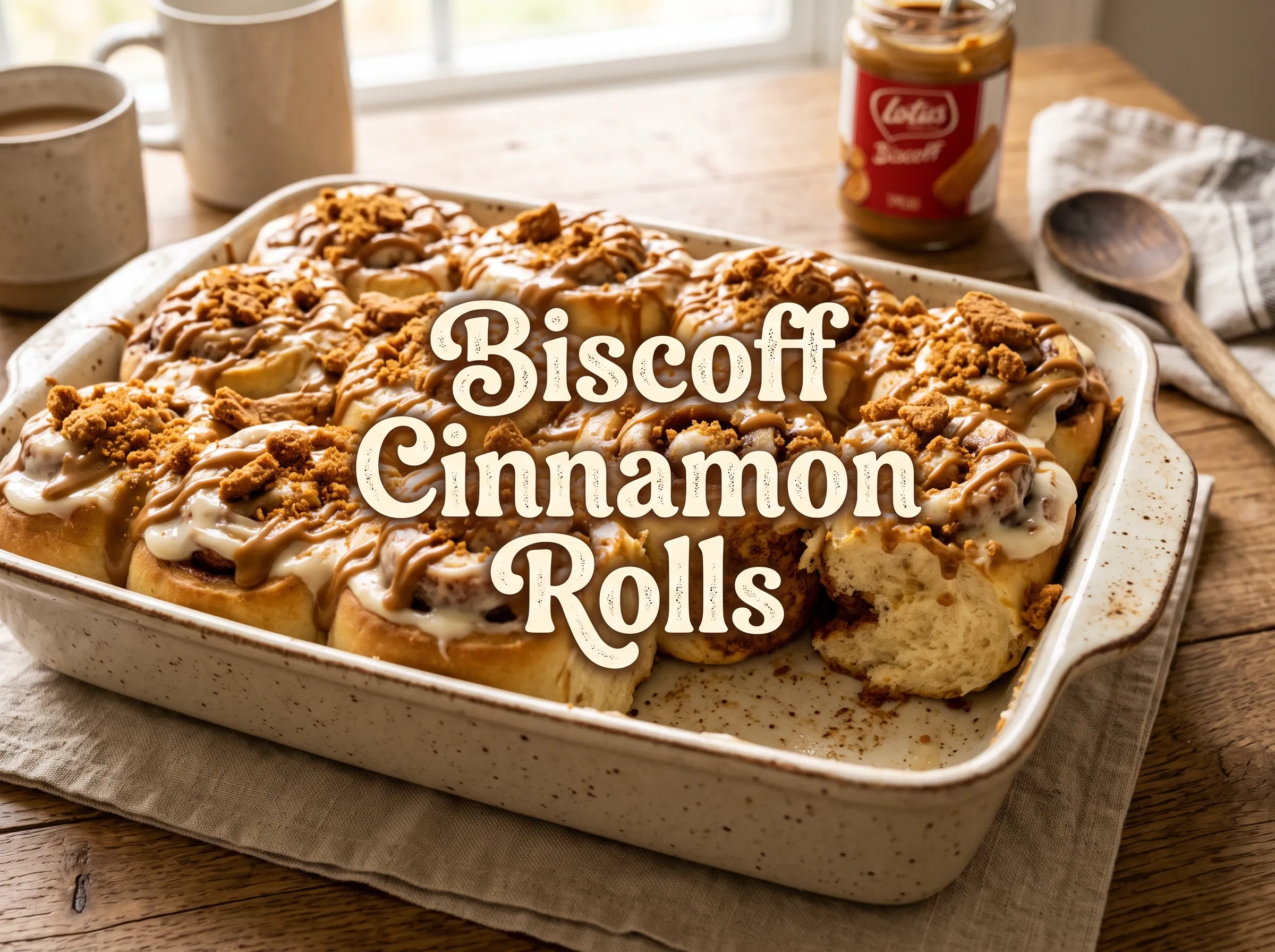
Soft, fluffy, buttery, and packed with the warm flavor of cinnamon and caramelized Biscoff cookies, these Biscoff Cinnamon Rolls are the ultimate cozy baking treat.
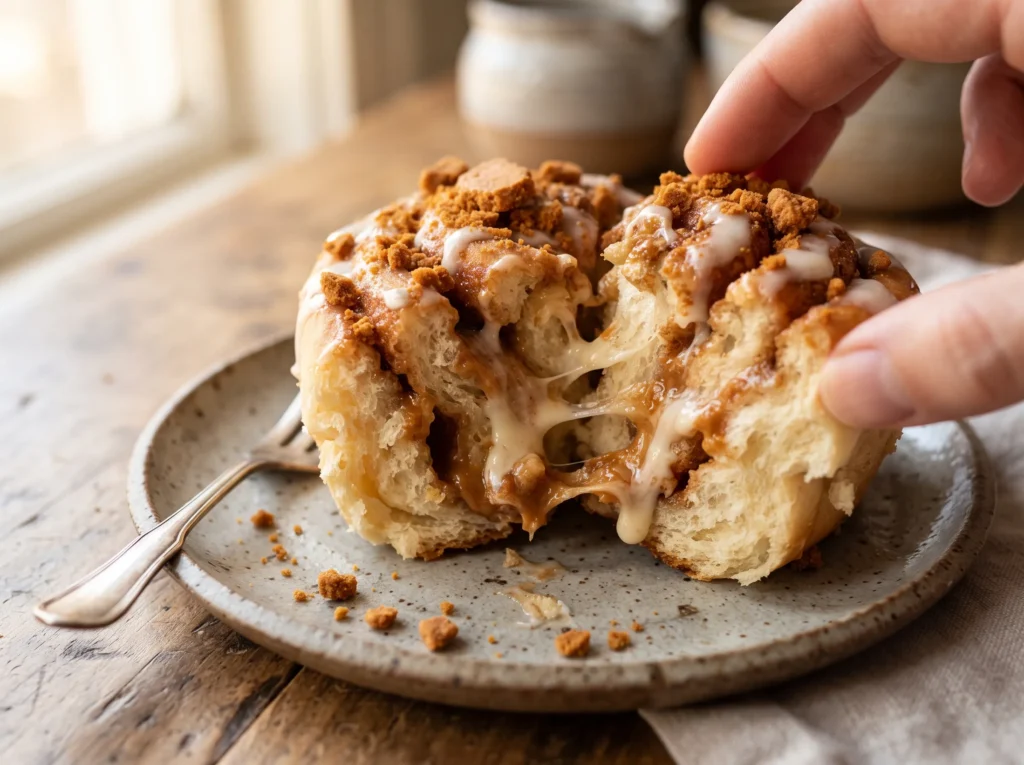
Each roll has a tender homemade dough, a rich Biscoff cookie butter filling, and a creamy glaze that melts into the warm swirls. Crushed Biscoff biscuits add a delicate crunch and an extra layer of cookie flavor.
The best part is that this recipe keeps the process simple. No complicated techniques or unusual ingredients are needed, making these rolls a great choice for beginners and busy home bakers.
Serve them warm for breakfast, brunch, afternoon tea, or dessert. They are especially delicious with a cup of coffee, tea, or a cold glass of milk.
For another cozy baking idea, pair these rolls with a batch of easy homemade chocolate chip cookies for a dessert spread everyone can enjoy.
Ingredients
For the Cinnamon Roll Dough
- 3 ¼ cups (405 g) all-purpose flour, plus extra for dusting
- 2 ¼ teaspoons (7 g) instant yeast
- ¼ cup (50 g) granulated sugar
- ½ teaspoon salt
- ¾ cup (180 ml) warm whole milk
- 1 large egg, room temperature
- 4 tablespoons (56 g) unsalted butter, melted and slightly cooled
- 1 teaspoon vanilla extract
For the Biscoff Filling
- ½ cup (120 g) smooth Biscoff cookie butter
- 4 tablespoons (56 g) unsalted butter, softened
- ½ cup (100 g) light brown sugar, packed
- 1 ½ teaspoons ground cinnamon
- 6 Biscoff biscuits, finely crushed
For the Creamy Glaze
- 4 ounces (115 g) cream cheese, softened
- 2 tablespoons (28 g) unsalted butter, softened
- ¾ cup (90 g) powdered sugar
- 2 tablespoons milk
- ½ teaspoon vanilla extract
- 2 tablespoons smooth Biscoff cookie butter, gently warmed
Optional Topping
- 3 Biscoff biscuits, roughly crushed
- 2 tablespoons warmed Biscoff cookie butter for drizzling
Tools Needed
- Large mixing bowl
- Measuring cups and spoons or kitchen scale
- Wooden spoon or silicone spatula
- Rolling pin
- 9 × 13-inch baking dish
- Small bowl
- Pastry brush or spoon
- Sharp knife or unflavored dental floss
- Wire cooling rack
How to Make Biscoff Cinnamon Rolls
1. Prepare the Dough
Add the flour, instant yeast, sugar, and salt to a large mixing bowl. Stir until the dry ingredients are evenly combined.
Pour in the warm milk, egg, melted butter, and vanilla extract. Mix until a soft, slightly sticky dough forms.
The milk should feel warm but not hot. Very hot milk can interfere with the yeast.
2. Knead the Dough
Transfer the dough to a lightly floured surface. Knead for about 7–9 minutes until the dough becomes smooth, soft, and elastic.
A little stickiness is normal. Avoid adding too much extra flour because this can make the finished rolls dense instead of fluffy.
The dough should spring back gently when pressed with a fingertip.
3. Let the Dough Rise
Place the dough in a lightly greased bowl. Cover it with a clean kitchen towel or plastic wrap.
Leave it in a warm, draft-free spot for about 60–90 minutes, or until it has roughly doubled in size.
The exact rising time depends on the temperature of the kitchen. A warmer room will usually make the dough rise faster.
While the dough rises, prepare the filling and lightly grease a 9 × 13-inch baking dish.
4. Make the Biscoff Filling
Add the softened butter, brown sugar, and cinnamon to a small bowl. Mix until smooth and creamy.
Keep the Biscoff cookie butter at room temperature so it spreads easily. If it feels too firm, warm it very gently for a few seconds.
Set the crushed Biscoff biscuits aside. They will be sprinkled over the filling before the dough is rolled.
5. Roll Out the Dough
Once the dough has doubled in size, gently punch it down to release excess air.
Transfer it to a lightly floured surface. Roll it into a rectangle approximately 16 × 12 inches.
Try to keep the dough an even thickness from edge to edge. This helps the rolls bake evenly.
6. Add the Filling
Spread the softened butter, brown sugar, and cinnamon mixture evenly over the dough.
Spread the Biscoff cookie butter over the top. A spoon or small offset spatula makes this easier.
Sprinkle the crushed Biscoff biscuits evenly across the surface.
Leave a small border around the edges so the filling does not spill out too much when the dough is rolled.
For an extra-rich variation, a thin layer of cookie butter can be added right across the center of the dough before sprinkling the crushed biscuits.
7. Roll the Dough
Starting from one of the longer sides, roll the dough into a tight log.
Roll gently and evenly without squeezing the dough too firmly. A loose roll can cause the filling to escape, while an overly tight roll may prevent the dough from expanding properly.
Pinch the seam lightly to help keep the log closed.
8. Cut the Rolls
Use a sharp knife to cut the log into 12 equal pieces.
For especially neat rolls, use unflavored dental floss. Slide the floss underneath the log, bring both ends upward, cross them over the top, and pull to create a clean cut.
Place the rolls in the prepared baking dish with the cut sides facing upward.
Leave a little space between each roll. They will expand as they rise.
9. Let the Rolls Rise Again
Cover the baking dish loosely and let the rolls rest for about 30–45 minutes.
They should look noticeably puffier and softer.
This second rise helps create the light, airy texture that makes homemade cinnamon rolls so irresistible.
For another simple sweet breakfast, try these soft and fluffy banana muffins.
10. Bake the Rolls
Preheat the oven to 350°F (175°C).
Bake the rolls for 22–28 minutes, or until the tops are lightly golden and the center rolls are cooked through.
Avoid overbaking. The rolls should look golden on top while remaining soft in the middle.
If the tops begin browning too quickly, loosely cover the dish with foil for the remaining baking time.
11. Make the Creamy Glaze
While the rolls are baking, prepare the glaze.
Beat the softened cream cheese and butter until smooth. Add the powdered sugar, milk, and vanilla extract.
Mix until creamy and spreadable.
Gently warm the Biscoff cookie butter until it becomes loose enough to drizzle. Stir it into the glaze or reserve it for the topping, depending on the desired finish.
12. Finish the Rolls
Let the baked rolls cool in the dish for about 5–10 minutes.
Spread the cream cheese glaze over the warm rolls. The gentle heat will make the glaze soft and creamy, allowing it to sink into the cinnamon swirls.
Drizzle with warmed Biscoff cookie butter and sprinkle with crushed Biscoff biscuits.
Serve warm for the softest texture.
Tips & Variations
Use Warm, Not Hot, Milk
Milk that is too hot can affect the yeast. It should feel comfortably warm to the touch.
A temperature around 105–110°F (40–43°C) is ideal for a yeast-based dough.
Do Not Add Too Much Flour
The dough should be soft and slightly tacky after kneading.
Adding large amounts of flour may make the finished cinnamon rolls heavy and dry. Lightly flour the work surface instead of adding lots of flour directly to the dough.
Give the Dough Enough Time to Rise
Rising time can vary depending on room temperature.
Instead of relying only on the clock, look for visual signs. The dough should become noticeably larger and puffy.
Use Softened Butter for the Filling
Cold butter can tear the dough while spreading.
Soft butter creates a smooth layer that combines beautifully with the brown sugar and cinnamon.
Do Not Overfill the Rolls
Biscoff cookie butter is rich and creamy, so a generous but even layer is enough.
Too much filling can make the rolls difficult to roll and may cause excessive leakage during baking.
For Extra Gooey Rolls
Place the rolls close together in the baking dish. As they rise and bake, the sides will touch and create soft, fluffy edges.
For an even richer result, add 2–3 tablespoons of heavy cream around the rolls just before baking.
For a Stronger Cinnamon Flavor
Increase the ground cinnamon to 2 teaspoons.
The combination of cinnamon, brown sugar, and caramelized cookie butter creates a warm, bakery-style flavor.
For More Biscoff Crunch
Add another 2–3 crushed Biscoff biscuits to the filling or sprinkle extra crumbs over the glaze.
The soft dough and creamy filling contrast beautifully with the slightly crisp cookie pieces.
Make Smaller Rolls
For a larger batch of smaller treats, cut the dough into 16 pieces instead of 12.
Begin checking them a few minutes earlier because smaller rolls may bake faster.
Make Them Without Cream Cheese
For a simple alternative, skip the cream cheese and make a quick Biscoff drizzle.
Mix ½ cup powdered sugar with 2 tablespoons warmed Biscoff cookie butter and 1–2 tablespoons milk until smooth.
This creates a sweet, glossy topping with a stronger cookie butter flavor.
Halal-Friendly Ingredient Check
The recipe is naturally alcohol-free and uses no wine, spirits, or other alcoholic ingredients.
For strict halal requirements, check the packaging of the vanilla extract, cream cheese, Biscoff products, and other processed ingredients available in the local market. Use halal-certified products when certification is required.
For another easy treat without complicated ingredients, serve these rolls alongside homemade vanilla cupcakes.
Storage & Serving
These cinnamon rolls are best served warm on the day they are baked.
Store completely cooled leftovers in an airtight container at room temperature for up to 2 days. Keep them away from direct sunlight and heat.
Because the glaze contains cream cheese, refrigerate the rolls if keeping them longer than a day.
In the refrigerator, they can be stored in an airtight container for up to 4 days.
To serve, warm an individual roll in the microwave for about 10–20 seconds. This helps soften the dough and makes the Biscoff filling creamy again.
For oven reheating, place the rolls in a covered baking dish and warm them at 300°F (150°C) for about 8–12 minutes.
Freezing Biscoff Cinnamon Rolls
The baked rolls can be frozen for up to 2 months.
For the best texture, freeze the rolls without the glaze. Wrap each roll tightly, place them in a freezer-safe container or bag, and freeze.
Thaw overnight in the refrigerator, then warm gently before adding fresh glaze and Biscoff crumbs.
The unbaked rolls can also be frozen after shaping. Arrange them in a freezer-safe baking dish, cover tightly, and freeze.
Thaw them in the refrigerator overnight, allow them to become puffy at room temperature, then bake according to the recipe.
Serving Ideas
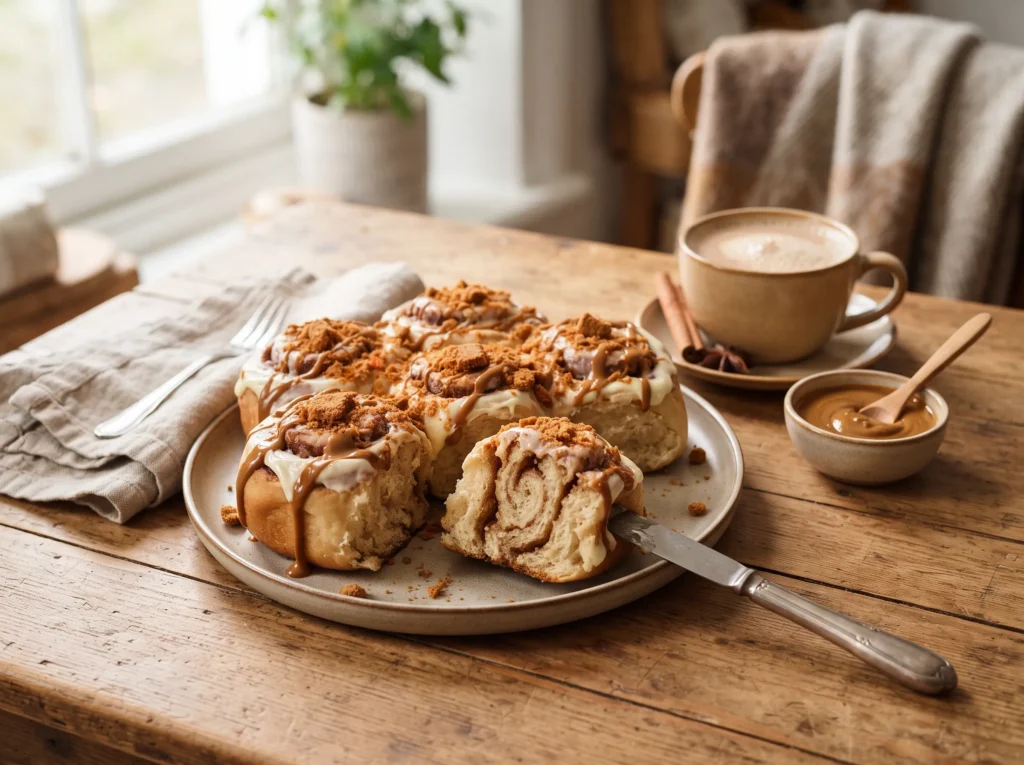
Serve warm Biscoff cinnamon rolls with:
- Hot chai
- Black tea
- Coffee
- Cold milk
- A scoop of vanilla ice cream
- Fresh berries
- Sliced bananas
- Extra Biscoff cookie butter
A light dusting of powdered sugar can also be added if a less creamy topping is preferred.
For a brunch table, these rolls pair well with easy homemade pancakes and fresh fruit.
Frequently Asked Questions
Can Biscoff cinnamon rolls be made the night before?
Yes. Shape the rolls and place them in the baking dish. Cover tightly and refrigerate overnight.
The next morning, allow them to sit at room temperature until puffy before baking. This makes them convenient for breakfast or brunch.
Why are the cinnamon rolls not fluffy?
Dense rolls are usually caused by too much flour, insufficient rising time, or overbaking.
The dough should remain soft and slightly tacky, and both rising stages should be allowed to finish properly.
Can regular cinnamon spread be used instead of Biscoff?
Yes. Regular cinnamon-brown sugar filling can replace the Biscoff filling, although the rolls will have a more traditional cinnamon roll flavor.
For the closest Biscoff taste, use smooth cookie butter in both the filling and topping.
Can crunchy Biscoff spread be used?
Yes, but smooth cookie butter is easier to spread evenly.
Crunchy cookie butter can be used if a little extra texture is desired.
Can these cinnamon rolls be made without eggs?
Yes. Replace the egg with about 3 tablespoons of plain yogurt or an appropriate egg substitute.
The texture may be slightly different, but the rolls can still turn out soft and delicious.
Can the dough be prepared without a stand mixer?
Absolutely.
The dough can be mixed and kneaded by hand. It takes a few extra minutes, but no special mixer is necessary.
How do you know when the cinnamon rolls are fully baked?
The tops should be lightly golden, and the center should look set rather than wet or doughy.
An instant-read thermometer can also be used. The center of a fully baked roll should generally reach around 190°F (88°C).
Can the cream cheese glaze be made ahead?
Yes. Prepare the glaze and refrigerate it in an airtight container for up to 3 days.
Allow it to soften at room temperature and stir well before spreading over the warm rolls.
What can be used instead of cream cheese?
A simple powdered sugar and milk glaze works well.
For stronger Biscoff flavor, add a little warmed cookie butter to the glaze.
Why does the filling leak out?
Some filling movement is normal, but excessive leakage usually happens when the dough is overfilled or rolled too loosely.
Spread the filling evenly and leave a small border around the edges before rolling.
Conclusion
These Biscoff Cinnamon Rolls bring together everything that makes a homemade sweet treat special: soft, fluffy dough, buttery cinnamon sugar, creamy cookie butter, and crisp Biscoff crumbs.
The recipe is simple enough for beginners while still delivering that impressive bakery-style finish. Warm from the oven with a thick layer of creamy glaze, each roll is rich, fragrant, and wonderfully gooey.
Make a batch for breakfast, weekend brunch, afternoon tea, or a comforting dessert. With a few basic ingredients and some patience during the rising time, soft homemade Biscoff cinnamon rolls are easy to achieve.
Save the recipe, bake a batch, and share these delicious rolls with family and friends.