Cream Sugar Bread
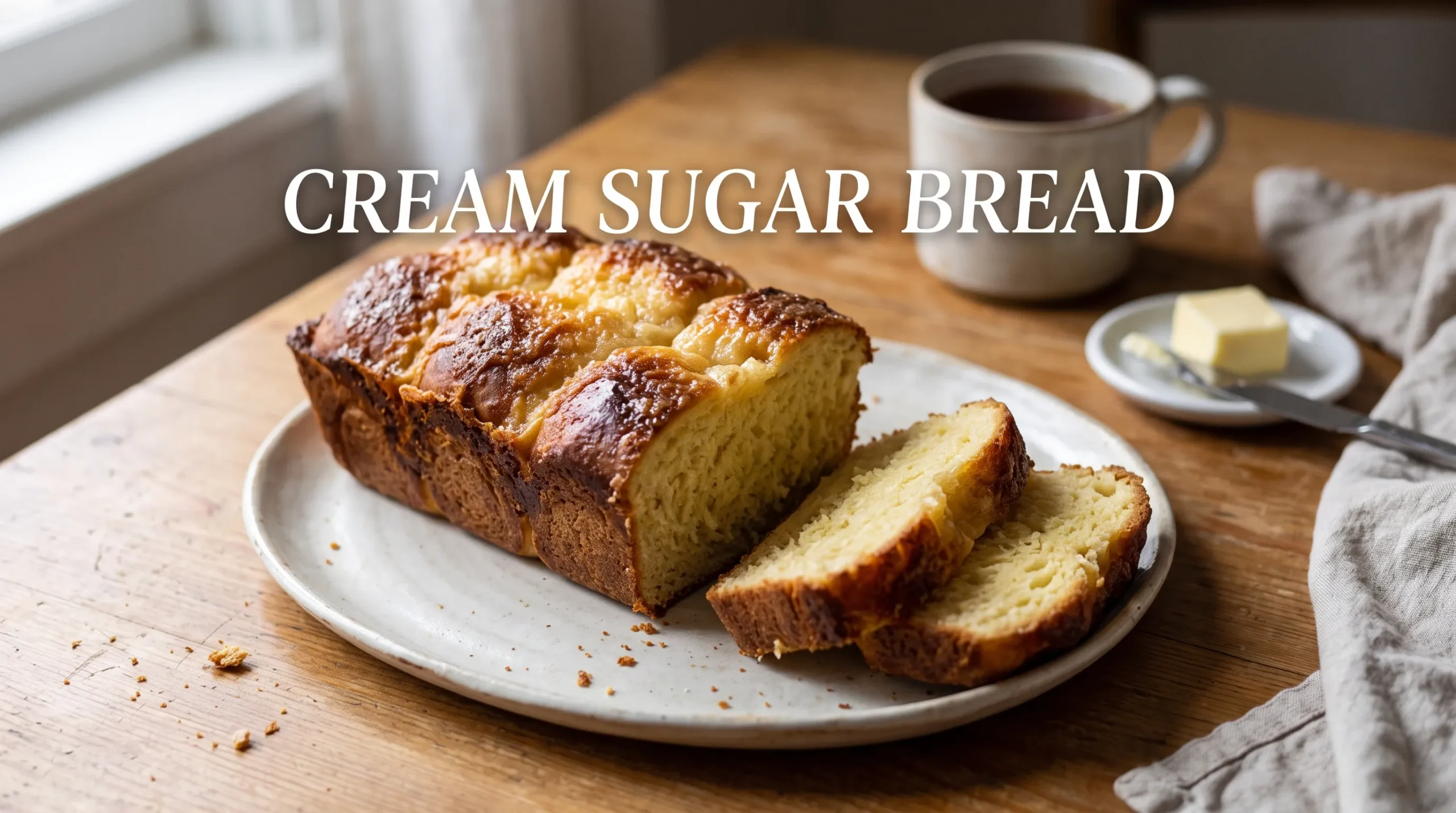
Soft, fluffy bread with a sweet, creamy sugar topping makes this Cream Sugar Bread a simple treat that feels special without requiring complicated baking skills.
The bread has a tender, lightly sweet center and a delicate golden crust. A creamy sugar mixture spreads over the top before baking, creating a rich, slightly crisp finish that contrasts beautifully with the soft crumb underneath.
This easy sweet bread is ideal for beginners because the ingredients are simple and the shaping process is straightforward. It works beautifully for breakfast, afternoon tea, a weekend snack, or a homemade treat for the family.
The dough is enriched with milk, butter, and egg for a soft texture. The sweet cream topping adds extra richness and gives the finished loaf its signature flavor.
For another comforting homemade bake, try these soft homemade dinner rolls. They are fluffy, versatile, and easy enough for beginner bakers.
Ingredients
For the Bread Dough
- 3 cups all-purpose flour, plus 2 to 3 tablespoons if needed
- 2 ¼ teaspoons instant yeast
- ¼ cup granulated sugar
- ½ teaspoon salt
- ¾ cup warm whole milk, about 105°F (40°C)
- 1 large egg, room temperature
- 4 tablespoons unsalted butter, melted and slightly cooled
- 1 teaspoon alcohol-free vanilla extract
For the Cream Sugar Topping
- 4 tablespoons unsalted butter, softened
- ⅓ cup granulated sugar
- 3 tablespoons heavy cream
- 2 tablespoons all-purpose flour
- 1 teaspoon alcohol-free vanilla extract
- Pinch of salt
For Brushing
- 1 tablespoon melted unsalted butter
Tools and Equipment
- 9-inch round or square baking pan
- Large mixing bowl
- Small mixing bowl
- Measuring cups and spoons
- Wooden spoon or silicone spatula
- Clean kitchen towel
- Rolling pin, optional
- Pastry brush
- Cooling rack
Step-by-Step Instructions
1. Warm the Milk
Pour the milk into a small bowl or measuring cup.
Warm it until it feels comfortably warm, not hot. Very hot milk can damage the yeast and prevent the dough from rising properly.
2. Mix the Dry Ingredients
Add the flour, instant yeast, sugar, and salt to a large mixing bowl.
Whisk or stir until evenly combined.
3. Add the Wet Ingredients
Add the warm milk, egg, melted butter, and alcohol-free vanilla extract.
Stir with a wooden spoon or spatula until a soft, slightly sticky dough forms.
4. Knead the Dough
Transfer the dough to a lightly floured surface.
Knead for about 7 to 10 minutes, until the dough becomes smooth, elastic, and soft.
If the dough feels extremely sticky, add flour 1 tablespoon at a time. Avoid adding too much flour because it can make the bread dense.
5. Let the Dough Rise
Place the dough in a lightly greased bowl.
Cover it with a clean kitchen towel and leave it in a warm, draft-free place for about 60 to 90 minutes.
The dough should become noticeably larger and close to double in size.
6. Prepare the Baking Pan
Lightly grease a 9-inch round or square baking pan with butter.
Set it aside while preparing the risen dough.
7. Shape the Bread
Gently press down the risen dough to release excess air.
Shape it into a round or slightly flattened loaf that fits comfortably inside the prepared pan.
For smaller portions, divide the dough into 8 equal pieces and arrange them close together in the pan.
8. Add the Second Rise
Cover the shaped dough loosely with a clean kitchen towel.
Let it rest for another 30 to 45 minutes, or until it looks puffy and soft.
This second rise helps create a lighter, fluffier crumb.
9. Prepare the Cream Sugar Topping
Place the softened butter, sugar, heavy cream, flour, alcohol-free vanilla extract, and salt in a small bowl.
Mix until smooth and creamy.
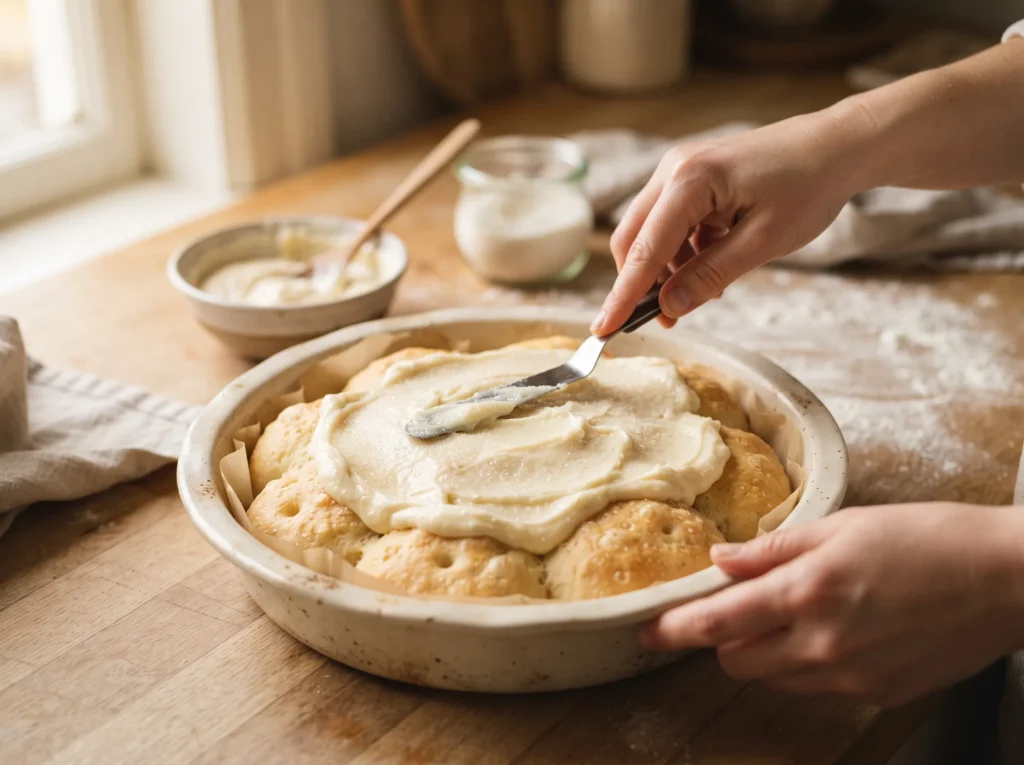
The topping should be thick enough to spread but soft enough to glide over the dough.
10. Heat the Oven
Preheat the oven to 350°F (175°C).
Allow the oven to fully preheat before baking so the bread rises and browns evenly.
11. Spread the Topping
Gently spread the cream sugar mixture over the top of the risen dough.
Cover the surface evenly, reaching close to the edges without pressing heavily into the dough.
12. Bake the Bread
Place the pan in the preheated oven.
Bake for 25 to 32 minutes, or until the top is golden brown and the bread looks fully set.
If the top begins browning too quickly, loosely cover it with aluminum foil during the final part of baking.
13. Brush with Butter
Remove the bread from the oven and let it rest in the pan for about 5 minutes.
Brush the warm surface lightly with melted butter for an extra-soft, glossy finish.
14. Cool Before Slicing
Transfer the bread to a cooling rack.
Allow it to cool for at least 15 to 20 minutes before slicing. Cutting immediately can cause the soft crumb to compress.
15. Serve
Slice the bread into wedges or squares, depending on the shape of the pan.
Serve warm or at room temperature with tea, coffee, warm milk, or fresh fruit.
Tips & Variations for Cream Sugar Bread
Keep the Milk Warm, Not Hot
The milk should feel pleasantly warm when touched.
Milk that is too hot can weaken or kill the yeast, while milk that is too cool may slow the rising process.
Measure Flour Carefully
Too much flour is one of the most common causes of heavy homemade bread.
For the most accurate result, spoon flour into a measuring cup and level the top instead of scooping directly from the flour container.
Expect a Soft Dough
This dough should feel soft and slightly tacky before kneading.
Resist the temptation to add a large amount of flour. A slightly soft dough generally produces a more tender finished bread.
Give the Dough Enough Time to Rise
Rising time depends on room temperature.
In a warm kitchen, the dough may rise faster. In a cool kitchen, it may need additional time.
Use the dough’s appearance rather than the clock as the main guide. It should become visibly puffy and nearly double in volume.
Use Softened Butter for the Topping
The butter should be soft enough to mix easily.
Cold butter can leave small lumps, while melted butter may make the topping too thin.
Do Not Press Hard When Spreading
The topping should sit gently on the dough.
Pressing too firmly can deflate the air bubbles created during the second rise.
Add Cinnamon for a Warm Flavor
For a cinnamon version, add ½ teaspoon ground cinnamon to the cream sugar topping.
The cinnamon adds a warm, fragrant note without changing the basic preparation.
Add Coconut
For a lightly tropical variation, sprinkle 2 tablespoons of unsweetened shredded coconut over the topping before baking.
The coconut becomes lightly toasted and adds a pleasant chewy texture.
Add Sesame Seeds
A tablespoon of sesame seeds can be sprinkled over the topping before baking.
This creates a delicate nutty flavor and a slightly crisp surface.
Make Small Individual Breads
Divide the dough into 8 to 10 pieces and arrange them in a greased round or square pan.
Spread a small amount of topping over each piece before baking. The result is easy-to-pull-apart sweet bread with golden edges.
Use Brown Sugar
Replace half of the white sugar in the topping with light brown sugar.
This gives the topping a deeper caramel-like flavor and slightly darker color.
Use Whole Wheat Flour Carefully
For a slightly heartier loaf, replace up to ½ cup of the all-purpose flour with whole wheat flour.
Avoid replacing all the flour because the bread may become noticeably heavier.
Use an Alcohol-Free Vanilla Extract
Vanilla flavoring can vary by brand.
For a strictly alcohol-free version, choose an alcohol-free vanilla extract or vanilla flavoring with suitable halal-friendly ingredients.
Choose Halal-Friendly Dairy
Butter, milk, and cream are naturally suitable ingredients when sourced appropriately.
For strict dietary requirements, check product labels and choose halal-certified products when certification is important.
Avoid Overbaking
The bread should be golden and cooked through without becoming dry.
Overbaking can turn the soft crumb firm and reduce the creamy texture of the topping.
Let the Bread Cool Slightly
Freshly baked bread continues setting as it cools.
Allowing it to rest before slicing helps the crumb stay fluffy instead of becoming compressed or gummy.
For another sweet homemade option, see these easy milk bread recipes, which offer a similarly soft texture.
Storage & Serving
Room Temperature Storage
Store completely cooled Cream Sugar Bread in an airtight container or tightly wrapped food-safe bag.
It can be kept at room temperature for up to 2 days in a cool, dry kitchen.
Keep the bread away from direct sunlight and heat.
Refrigerator Storage
Refrigeration is not necessary for short-term storage and can make homemade bread feel firmer.
If the kitchen is very warm or the bread needs to be kept longer, refrigerate it in an airtight container for up to 4 days.
Allow refrigerated slices to come closer to room temperature before serving, or warm them briefly.
Freezing Instructions
Cream Sugar Bread can be frozen for up to 2 months.
Allow the bread to cool completely before wrapping individual slices or the whole loaf tightly in plastic wrap, followed by a freezer-safe bag or container.
Thaw overnight in the refrigerator or at room temperature for a few hours.
Warm individual slices gently before serving to bring back some of the soft texture.
How to Reheat
Place a slice in the microwave for about 10 to 15 seconds.
For several slices, warm them in a 300°F (150°C) oven for about 5 to 8 minutes.
Avoid overheating because it can dry out the bread.

Simple Serving Ideas
Cream Sugar Bread is delicious on its own because the topping provides plenty of sweetness.
For breakfast, serve it with fresh berries, sliced bananas, or a spoonful of plain yogurt.
For afternoon tea, pair it with black tea, green tea, or a creamy cup of coffee.
A light dusting of powdered sugar can also make the bread look extra inviting.
For a richer dessert, serve warm slices with a small scoop of vanilla ice cream.
Frequently Asked Questions
What is Cream Sugar Bread?
Cream Sugar Bread is a soft sweet bread topped with a creamy mixture of butter, sugar, cream, and flour.
The topping becomes lightly golden during baking while the bread underneath remains soft and fluffy.
Can Cream Sugar Bread Be Made Without Eggs?
Yes.
For an egg-free version, replace the egg with ¼ cup of plain unsweetened yogurt or a suitable commercial egg replacer.
The texture may be slightly different, but the bread can still be soft and tender.
Can Instant Yeast Be Replaced With Active Dry Yeast?
Yes.
Use the same amount of active dry yeast, but dissolve it in the warm milk with a small pinch of the sugar first. Let it stand for about 5 to 10 minutes before continuing.
Why Did the Bread Turn Out Dense?
Dense bread can result from too much flour, insufficient kneading, inactive yeast, or inadequate rising time.
Allow the dough to become visibly puffy before baking and avoid adding excessive flour.
Can the Dough Be Prepared the Night Before?
Yes.
The dough can be covered and refrigerated after kneading for a slow overnight rise.
Let it sit at room temperature for about 30 to 45 minutes before shaping and continuing with the recipe.
Can Heavy Cream Be Replaced?
For the topping, evaporated milk can be used as an alternative.
The topping may be slightly less rich, but it will still provide a creamy texture.
Why Is the Topping Runny?
The butter may have been too warm, or the cream may have been added too quickly.
Add a small amount of flour, about 1 teaspoon at a time, until the topping reaches a soft spreading consistency.
Can the Bread Be Made Less Sweet?
Yes.
Reduce the sugar in the dough to 3 tablespoons and the topping sugar to ¼ cup.
The bread will still have a pleasant sweetness while allowing the buttery flavor to stand out more.
Can the Bread Be Made Without Vanilla?
Yes.
Vanilla adds warmth but is not essential to the structure of the recipe.
It can simply be omitted or replaced with a small pinch of cinnamon.
How Do You Know When the Bread Is Fully Baked?
The top should be golden brown, and the bread should feel set rather than wet or doughy.
An instant-read thermometer inserted into the center should register around 190°F (88°C) when the bread is fully baked.
Conclusion
Cream Sugar Bread is a wonderfully simple homemade bake with a soft, fluffy center and a sweet, buttery topping that becomes lightly golden in the oven.
The dough uses everyday ingredients, while the cream sugar topping adds a rich finish without requiring a separate frosting or complicated decoration.
With a little patience during the rising stages, even beginner bakers can create bread that looks inviting and tastes freshly made.
Serve it warm for breakfast, enjoy it with afternoon tea, or turn a few slices into an easy dessert. The combination of tender bread, creamy sweetness, and a delicate golden crust makes every bite comforting.
For a simple, cozy bake that is easy to customize, Cream Sugar Bread is a recipe worth keeping on the regular baking list.