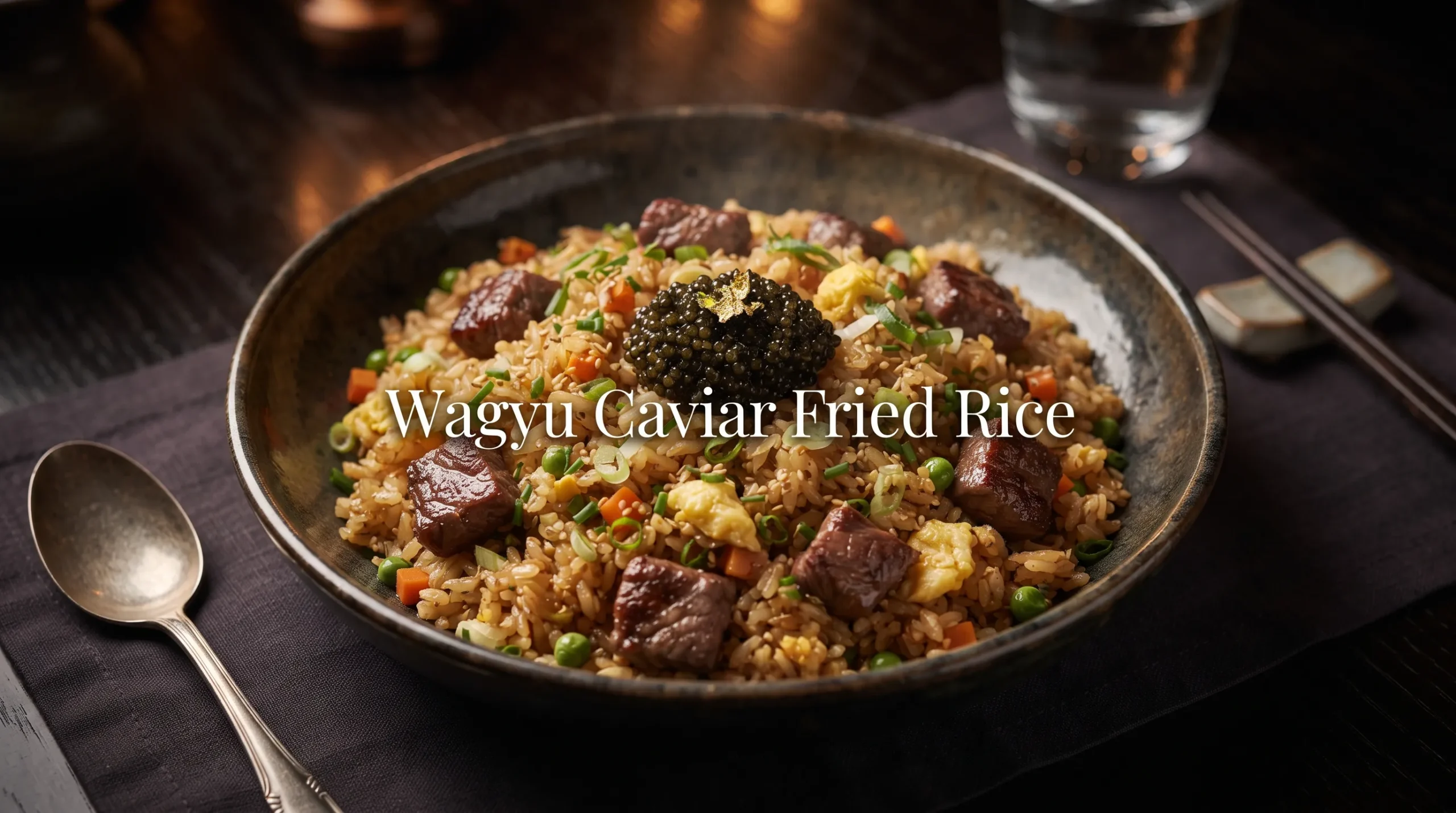
Wagyu Caviar Fried Rice
Tender Wagyu beef, fluffy fried rice, crisp vegetables, savory seasoning, and delicate caviar come together in this luxurious Wagyu Caviar Fried Rice.
Every bite brings a satisfying mix of textures. The rice stays light and separate, the Wagyu adds rich, juicy flavor, and the caviar provides a delicate pop of briny freshness.
Despite its elegant appearance, this dish is surprisingly simple to prepare. A hot skillet, cold cooked rice, quality beef, and a few flavorful ingredients are all that are needed.
The secret is keeping the cooking quick. High heat helps create lightly toasted rice without making it greasy or soft. The Wagyu is cooked separately so it stays tender and flavorful before being folded back into the finished rice.
For a halal-friendly version, use halal-certified Wagyu beef and caviar made from a halal-permitted fish species. Avoid caviar products containing alcohol-based flavorings or non-halal ingredients, and check packaged sauces carefully.
This Wagyu Caviar Fried Rice is ideal for a special dinner, elegant weekend meal, or impressive family gathering. It also pairs beautifully with simple sides such as fresh cucumber salad, crispy chicken bites, or homemade spring rolls.
Ingredients
For the Wagyu Beef
- 8 ounces (225 g) halal-certified Wagyu beef, thinly sliced or cut into small bite-size pieces
- 1/4 teaspoon salt
- 1/4 teaspoon black pepper
- 1 teaspoon neutral cooking oil
For the Fried Rice
- 3 cups (about 600 g) cooked and chilled long-grain white rice
- 2 large eggs
- 1 tablespoon neutral cooking oil
- 1/2 cup finely diced carrots
- 1/2 cup frozen green peas, thawed
- 2 green onions, thinly sliced
- 2 cloves garlic, finely minced
- 1 teaspoon finely grated fresh ginger
- 2 tablespoons halal-friendly soy sauce
- 1 tablespoon halal-friendly oyster-style sauce or mushroom stir-fry sauce
- 1 teaspoon toasted sesame oil
- 1/4 teaspoon white pepper
- 1/4 teaspoon black pepper
For the Caviar Topping
- 2 tablespoons halal-friendly caviar or fish roe from a halal-permitted fish species
- 1 green onion, thinly sliced
- 1 teaspoon toasted sesame seeds
- 1 teaspoon finely chopped chives, optional
Optional Garnish
- Thinly sliced cucumber
- Fresh chives
- Lemon wedges
- A few small pieces of cooked Wagyu beef
Tools and Equipment
- Large wok or heavy skillet
- Small nonstick skillet
- Wooden spoon or spatula
- Sharp knife
- Cutting board
- Small bowls
- Measuring spoons
- Fine grater
- Serving bowl or plates
Step-by-Step Instructions
1. Prepare the Rice
Use fully cooked rice that has been chilled.
Break apart any large clumps with clean hands or a fork before cooking. Cold, separated rice gives fried rice a fluffy texture and helps prevent a mushy result.
2. Prepare the Wagyu
Cut the Wagyu into small, bite-size pieces if it is not already sliced.
Season lightly with salt and black pepper. Keep the seasoning simple because the sauces and caviar will add plenty of flavor later.
3. Prepare the Vegetables
Dice the carrots into small pieces so they cook quickly.
Thaw the peas and slice the green onions. Keep the garlic and ginger ready beside the stove because the cooking process moves quickly once the pan becomes hot.
4. Cook the Wagyu
Heat a large wok or heavy skillet over medium-high to high heat.
Add 1 teaspoon of neutral oil, followed by the Wagyu pieces.
Cook for about 1 to 2 minutes per side, depending on thickness, until browned on the outside and cooked to the desired doneness.
Transfer the Wagyu to a clean plate.
Avoid overcooking the beef. Wagyu contains flavorful fat that can become less tender if cooked for too long.
5. Scramble the Eggs
Reduce the heat slightly.
Add 1 tablespoon of oil to the same wok if needed.
Crack the eggs into the hot pan and gently scramble them until just set but still soft.
Break the eggs into small pieces with a spatula.
Transfer them to a plate or push them to one side of the wok.
6. Cook the Aromatics
Add the garlic and grated ginger to the hot wok.
Stir for about 20 to 30 seconds, just until fragrant.
Do not let the garlic become dark brown because it can develop a bitter flavor.
7. Add the Vegetables
Add the diced carrots and peas.
Stir-fry for about 1 to 2 minutes until the carrots become slightly tender while still keeping a little crunch.
Add half of the sliced green onions and stir briefly.
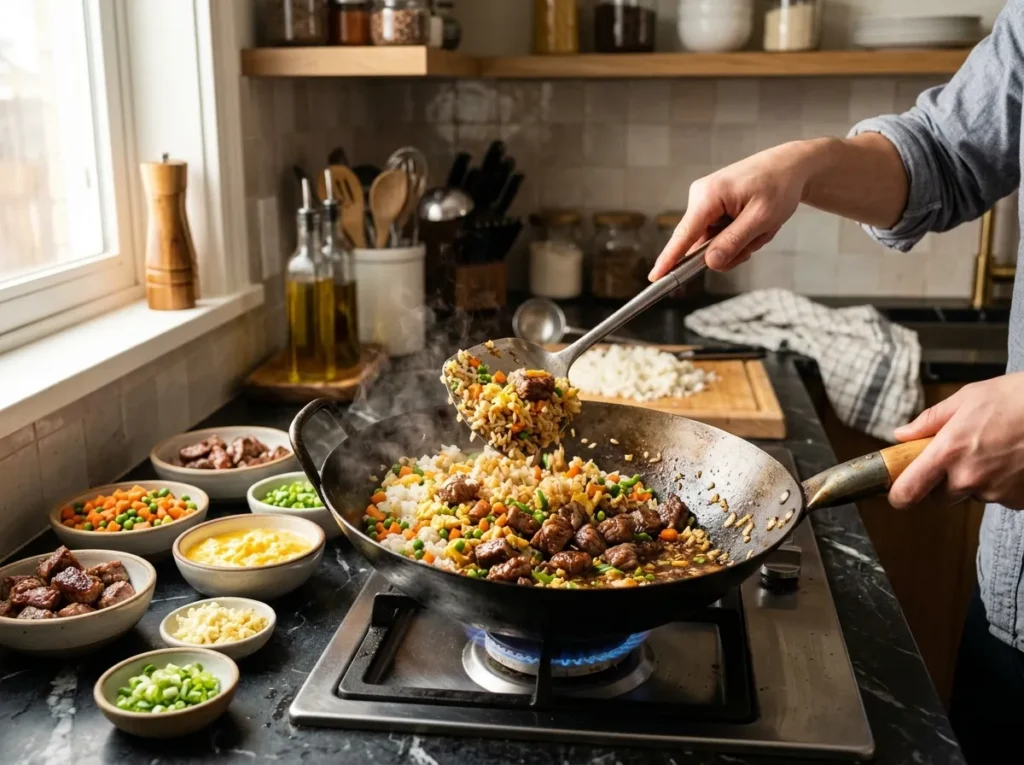
8. Add the Cold Rice
Add the chilled rice to the wok.
Use a spatula to gently break apart any remaining clumps.
Stir-fry for 2 to 3 minutes, tossing the rice frequently so the grains become hot and lightly toasted.
9. Season the Rice
Pour the soy sauce around the hot sides of the wok rather than directly into one spot in the rice.
Add the halal-friendly oyster-style sauce or mushroom stir-fry sauce, toasted sesame oil, white pepper, and black pepper.
Toss everything together until the rice is evenly seasoned.
The rice should look lightly glossy rather than wet.
10. Add the Eggs and Wagyu
Return the scrambled eggs to the wok.
Add the cooked Wagyu pieces.
Gently toss everything together for about 30 to 60 seconds.
The goal is to warm the beef without cooking it for too long.
11. Taste and Adjust
Taste a small spoonful of the fried rice.
Add a little more soy sauce if needed, but keep the seasoning balanced. The caviar will add a salty, briny flavor when served.
If the rice tastes too rich, a few drops of fresh lemon juice can brighten the finished dish.
12. Add the Caviar
Turn off the heat before adding the caviar.
Divide the fried rice between serving bowls.
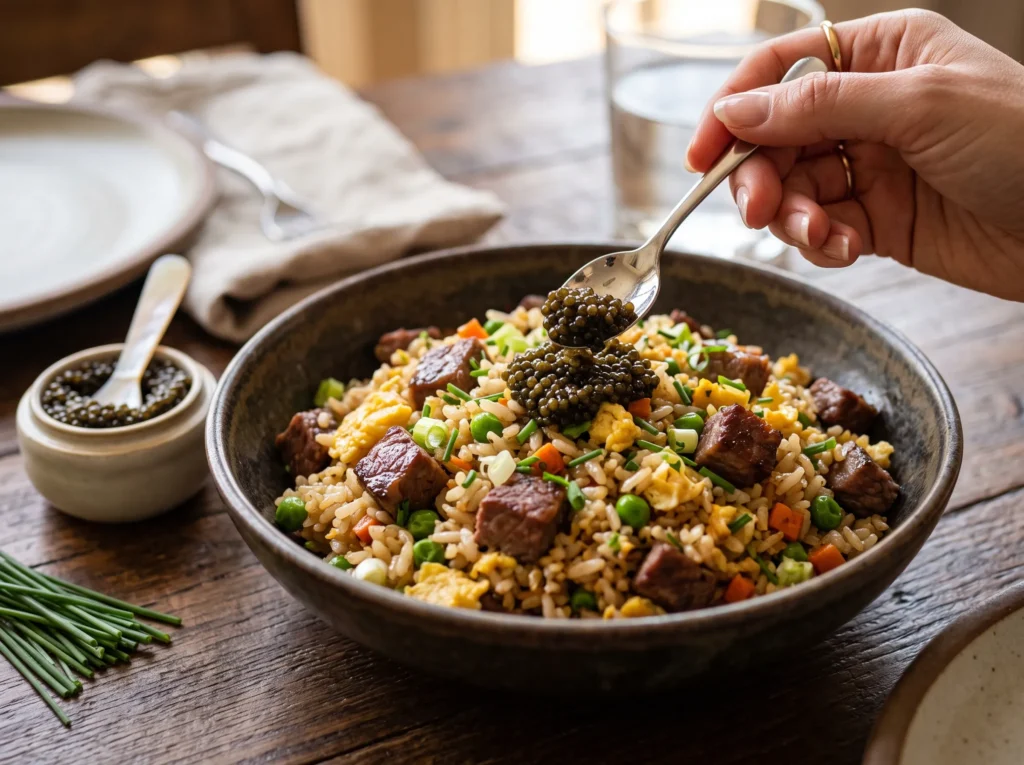
Spoon small portions of caviar over the top instead of stirring it aggressively into the hot rice.
This preserves the delicate texture and lets the caviar remain a distinct finishing ingredient.
13. Garnish and Serve
Sprinkle the remaining green onions and toasted sesame seeds over the rice.
Add finely chopped chives if desired.
Serve immediately while the rice is fluffy, the Wagyu is tender, and the caviar is cool and delicate.
Tips & Variations for Wagyu Caviar Fried Rice
Use Cold Rice
Freshly cooked rice contains more moisture and can easily become sticky in a hot wok.
For the best fried rice texture, cook the rice several hours ahead or the day before and refrigerate it until completely chilled.
Choose Long-Grain Rice
Long-grain white rice works particularly well because the grains remain separate after frying.
Jasmine rice is another excellent choice if a slightly fragrant rice is preferred.
Keep the Rice Dry
Avoid adding extra water or sauce while stir-frying.
Too much liquid can turn the rice soft and heavy instead of fluffy and lightly crisp.
Cook the Wagyu Separately
Wagyu has plenty of natural fat and flavor.
Cooking the beef separately gives it a beautiful browned surface while preventing it from becoming overcooked while the rice finishes.
Do Not Overcrowd the Wok
If the pan is too full, the ingredients may steam instead of fry.
For a smaller wok or skillet, cook the ingredients in batches and combine everything at the end.
Keep the Caviar Off the Heat
Caviar is best treated as a finishing ingredient.
Adding it after the heat is turned off helps preserve its delicate texture and fresh briny flavor.
Use the Right Amount of Sauce
Fried rice should taste savory without becoming wet.
Start with the listed amount of soy sauce and stir-fry sauce, then add more only if necessary.
Make It Extra Crispy
For crispy-bottom fried rice, spread the cooked rice across the hot skillet and leave it undisturbed for 30 to 60 seconds before tossing.
Repeat once or twice to create small golden, toasted patches.
Add More Vegetables
Broccoli florets, diced bell peppers, sweet corn, mushrooms, or finely chopped cabbage can be added.
Keep the pieces small so the vegetables cook quickly without releasing too much water.
Make It Spicy
Add 1/2 teaspoon of halal-friendly chili garlic sauce or a pinch of crushed red pepper.
A few thin slices of fresh chili also work well.
The heat creates a nice contrast with the rich Wagyu and creamy egg.
Use Another Beef Cut
If halal-certified Wagyu is unavailable, use halal-certified ribeye or another tender beef cut.
The flavor will be slightly different, but the cooking technique remains the same.
Caviar Substitutions
For a more affordable version, use halal-friendly fish roe from a permitted fish species.
Salmon roe can provide larger, brighter pops, while smaller roe gives a more delicate finish.
Always check the product ingredients and preparation method, especially for flavored or packaged caviar.
Avoid Over-Seasoning
Wagyu is naturally rich, while caviar and soy sauce both contribute saltiness.
A lighter hand with the seasoning allows the beef and caviar to remain the focus.
Common Mistakes to Avoid
Do not use warm, freshly cooked rice straight from the pot.
Avoid adding caviar while the wok is still over high heat, and do not cook the Wagyu for too long.
Another common mistake is using too much sauce. Fried rice should have a savory coating, not a pool of liquid at the bottom of the pan.
Storage & Serving
Refrigerator Storage
Allow leftover fried rice to cool promptly and transfer it to an airtight container.
Refrigerate within 2 hours of cooking and use within 3 to 4 days.
Store the caviar separately whenever possible. This keeps its texture fresher and prevents it from becoming warm during reheating.
Reheating
Reheat the fried rice thoroughly in a hot skillet or wok.
Add a small splash of water if the rice has become dry, then stir-fry until steaming hot throughout.
Add fresh caviar only after the rice has been reheated and slightly cooled.
Freezing
The Wagyu fried rice can be frozen without the caviar topping.
Transfer cooled rice to a freezer-safe container and freeze for up to 1 month for the best texture.
Thaw safely in the refrigerator before reheating.
Fresh caviar should not be frozen as part of the finished dish unless the product specifically states that freezing is suitable.
Serving Ideas
Serve the fried rice in shallow bowls so the colorful ingredients and caviar are easy to see.
A few thin cucumber slices provide cool, crisp contrast to the warm rice.
For an elegant meal, serve small portions alongside Asian-style cucumber salad, crispy vegetable spring rolls, or sesame garlic green beans.
For a richer presentation, arrange a few thin slices of cooked Wagyu over the top before adding the caviar.
Frequently Asked Questions
What is Wagyu Caviar Fried Rice?
Wagyu Caviar Fried Rice is a luxurious fried rice dish made with tender Wagyu beef and finished with caviar or fish roe. The combination brings rich beef flavor, fluffy rice, and delicate briny notes together in one dish.
Can regular beef be used instead of Wagyu?
Yes. A tender halal-certified ribeye or another well-marbled beef cut works well. Wagyu simply provides a richer flavor and softer texture.
What type of rice is best for fried rice?
Long-grain white rice, especially jasmine rice, is an excellent choice. Chilled cooked rice is preferable because the grains are firmer and less likely to become sticky.
Can freshly cooked rice be used?
It can, but the texture may be softer. If fresh rice is the only option, spread it thinly on a tray and allow excess steam to escape before using it.
What type of caviar is halal-friendly?
Use caviar or fish roe from a fish species considered permissible and choose a product without alcohol-based ingredients or other non-halal additives. Product labeling and certification should be checked when necessary.
Can salmon roe be used?
Yes, if the product meets the desired halal requirements. Salmon roe has larger, juicy beads and a more pronounced pop than many smaller types of roe.
Does caviar need to be cooked?
No. Caviar is normally used as a finishing ingredient. For this recipe, it is added after the heat is turned off.
Why does fried rice become mushy?
Excess moisture is the most common reason. Warm rice, too much sauce, overcrowding the pan, or adding watery vegetables can all make the finished rice soft.
Can the recipe be made without eggs?
Yes. Simply omit the eggs and add extra vegetables such as mushrooms, peas, or finely diced peppers.
What can replace oyster sauce?
A halal-friendly mushroom stir-fry sauce is an easy substitute. Check the label to make sure it contains no alcohol or other ingredients that do not fit halal requirements.
Can the Wagyu be cooked to medium?
The desired doneness can vary based on the cut and personal preference, but food safety should always take priority. Use a reliable food thermometer and follow safe beef-cooking practices.
Can this recipe be made in a regular frying pan?
Yes. A large, heavy skillet works well. Cook in smaller batches if necessary so the pan stays hot enough to fry rather than steam the rice.
Conclusion
This Wagyu Caviar Fried Rice turns simple fried rice into an elegant meal without making the cooking process complicated.
Fluffy rice, tender halal-certified Wagyu, soft scrambled eggs, crisp vegetables, and savory seasonings create a rich and satisfying base. The final spoonful of caviar adds a delicate briny pop that makes every bite feel special.
The recipe is flexible enough for a weeknight dinner but impressive enough for entertaining. Keep the rice cold, the skillet hot, and the caviar off the heat until serving.
For a restaurant-style dish made with straightforward ingredients and simple techniques, this Wagyu Caviar Fried Rice is a delicious choice. Serve it fresh, add a few crisp vegetables on the side, and enjoy a luxurious homemade meal.