Smoked Honey Glazed Beef Shoulder
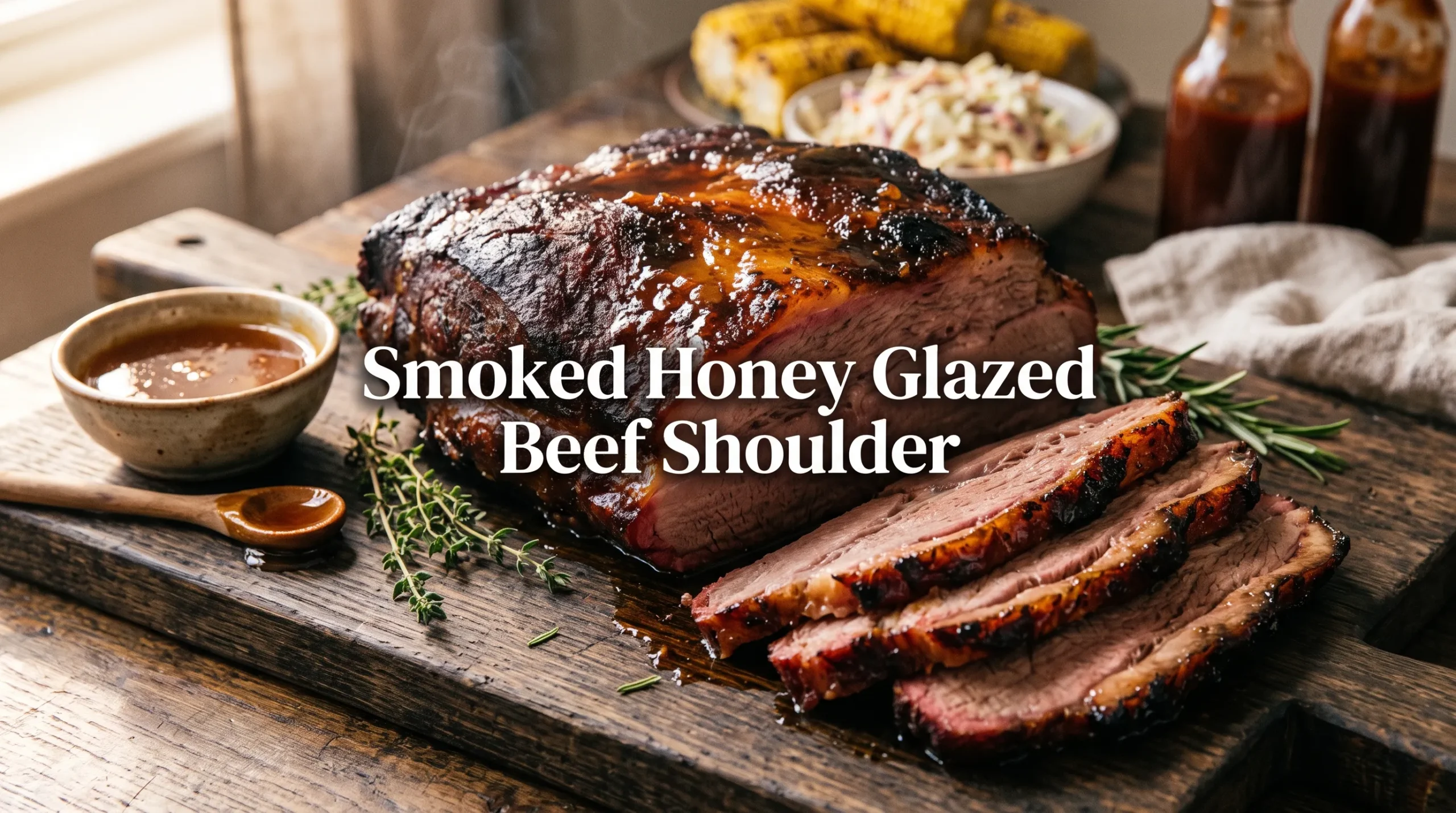
Tender, smoky, juicy, and coated in a glossy honey glaze, this Smoked Honey Glazed Beef Shoulder brings big barbecue flavor to the home kitchen.
The beef cooks slowly until it becomes wonderfully tender, while a sweet honey glaze creates a rich, sticky exterior. A simple spice rub adds warmth and depth without making the recipe complicated.
This recipe is designed as a halal-friendly alternative to smoked pork shoulder. Beef shoulder provides the hearty texture needed for long, slow smoking while keeping the dish suitable for halal-conscious home cooks when certified halal beef and halal ingredients are used.
The process is straightforward: season the beef, smoke it low and slow, add the honey glaze near the end, and rest before slicing or shredding.
The result is tender meat with a smoky crust, caramelized edges, a sweet-savory finish, and plenty of rich juices. It is ideal for weekend meals, family gatherings, sandwiches, wraps, rice bowls, or a relaxed barbecue-style dinner.
For a complete meal, serve it with easy homemade coleslaw or crispy roasted potatoes.
Ingredients
For the Beef
- 4 to 5 pounds (1.8 to 2.3 kg) halal beef shoulder, preferably boneless
- 2 tablespoons olive oil
- 2 tablespoons smoked paprika
- 1 tablespoon brown sugar
- 2 teaspoons garlic powder
- 2 teaspoons onion powder
- 1 teaspoon ground black pepper
- 1 1/2 teaspoons fine salt
- 1 teaspoon ground cumin
For the Honey Glaze
- 1/2 cup (170 g) honey
- 2 tablespoons apple cider vinegar
- 1 tablespoon Dijon mustard
- 1 tablespoon olive oil
- 1 teaspoon smoked paprika
- 1/2 teaspoon garlic powder
For Smoking
- Wood chunks or pellets suitable for beef, such as oak, hickory, or a mild fruitwood
- Water, if required by the smoker
Tools and Equipment
- Smoker or pellet grill
- Digital meat thermometer
- Small mixing bowl
- Measuring spoons
- Basting brush
- Large cutting board
- Sharp knife
- Aluminum foil or butcher paper
- Small saucepan
- Serving platter
Step-by-Step Instructions for Smoked Honey Glazed Beef Shoulder
1. Prepare the beef
Remove the beef shoulder from the refrigerator about 30 to 45 minutes before cooking.
Pat the surface dry with paper towels. Trim away any large, hard pieces of fat or loose pieces of meat.
A thin layer of fat can remain because it helps protect the meat during the long cooking process.
2. Make the spice rub
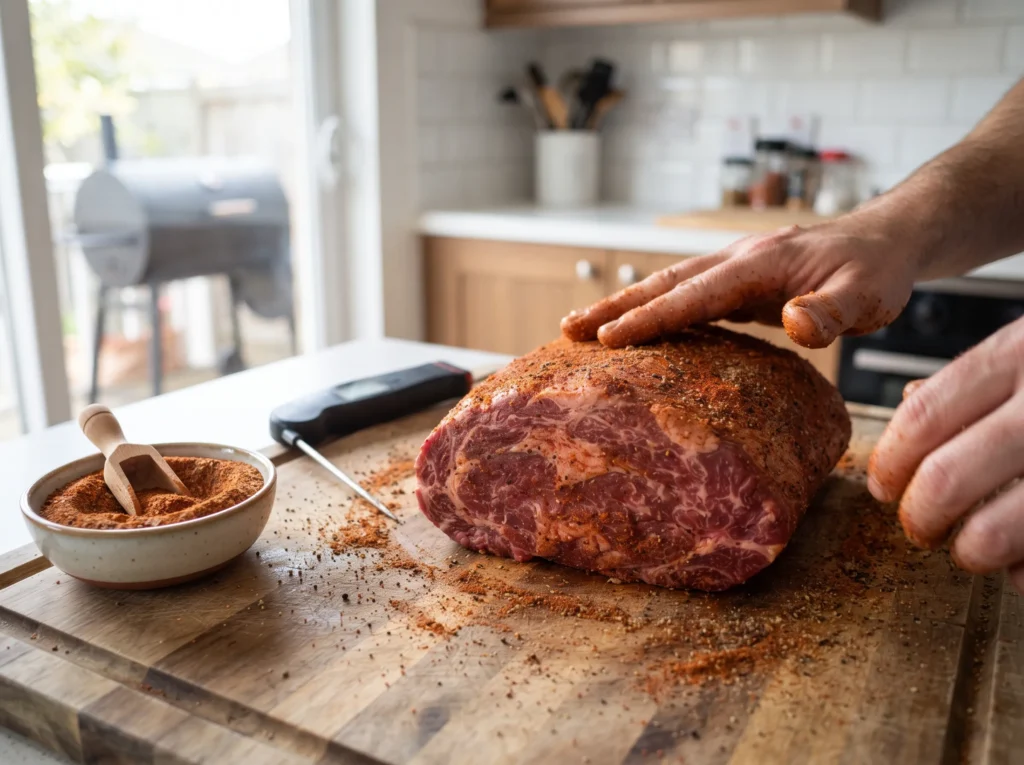
Add the smoked paprika, brown sugar, garlic powder, onion powder, black pepper, salt, and cumin to a small bowl.
Stir until the spices are evenly combined.
The mixture should smell smoky, warm, slightly sweet, and savory.
3. Coat the beef
Brush the beef shoulder lightly with olive oil.
Sprinkle the spice mixture evenly over every side of the meat. Press the seasoning gently into the surface so it sticks well.
For the best flavor, make sure the top, bottom, and sides are completely covered.
4. Preheat the smoker
Preheat the smoker to 250°F (120°C).
Add the chosen smoking wood according to the manufacturer’s instructions.
Oak gives the beef a deep, classic smoky flavor. Hickory creates a stronger smoke profile, while fruitwood produces a gentler, slightly sweet aroma.
5. Start smoking
Place the seasoned beef shoulder directly on the smoker grate.
Position the thicker part of the meat where the smoker temperature is most stable.
Close the lid and allow the beef to smoke undisturbed for the first few hours.
Avoid repeatedly opening the smoker because heat and smoke escape each time the lid is lifted.
6. Monitor the temperature
Insert a digital meat thermometer into the thickest part of the beef.
Smoke until the internal temperature reaches approximately 160°F to 170°F (71°C to 77°C) and the outside has developed a deep, flavorful crust.
The exact timing can vary depending on the size and shape of the beef shoulder.
7. Prepare the honey glaze
While the beef is smoking, add the honey, apple cider vinegar, Dijon mustard, olive oil, smoked paprika, and garlic powder to a small saucepan.
Warm over low heat for about 2 to 3 minutes, stirring until smooth.
Do not boil the glaze. The goal is simply to combine the ingredients and make the mixture easy to brush onto the beef.
8. Wrap the beef
Once the beef has developed a dark, smoky crust and reached around 160°F to 170°F internally, carefully remove it from the smoker.
Place the beef on a large sheet of foil or butcher paper.
Brush the top and sides generously with the honey glaze.
Wrap the beef tightly to help retain moisture during the remaining cooking time.
9. Continue cooking
Return the wrapped beef to the smoker.
Continue cooking until it becomes very tender and reaches approximately 195°F to 205°F (90°C to 96°C).
Temperature is a useful guide, but tenderness is more important than a single exact number.
A thermometer or skewer should slide into the meat with very little resistance when the beef is ready.
10. Add another layer of glaze
For an especially glossy finish, carefully unwrap the beef during the final stage of cooking.
Brush another thin layer of honey glaze over the surface.
Return the beef to the smoker uncovered for about 10 to 15 minutes to allow the glaze to set.
Watch closely because honey can darken quickly.
11. Rest the beef
Transfer the finished beef to a cutting board.
Loosely cover it with foil and allow it to rest for 30 to 45 minutes.
Resting gives the juices time to redistribute and makes the meat easier to slice or pull apart.
12. Slice or shred
For sliced beef, cut across the grain into thick or thin slices.
For a pulled-beef texture, use two forks or clean heat-resistant gloves to gently shred the meat.
Serve while warm with the extra honey glaze on the side.
Tips & Variations
Choose the right beef shoulder
A well-marbled halal beef shoulder is ideal for this recipe.
Some pieces of beef shoulder contain more connective tissue than others. That connective tissue breaks down during slow cooking and helps create the tender, rich texture associated with smoked barbecue.
Keep the smoker temperature steady
A steady temperature is more important than constantly adjusting the smoker.
Small fluctuations are normal, but large temperature swings can extend the cooking time and make the final texture less predictable.
Use a thermometer
A digital meat thermometer makes this recipe much easier for beginners.
Instead of relying only on cooking time, monitor the internal temperature and check tenderness near the end.
Do not rush the cooking process
Beef shoulder contains connective tissue that needs time to soften.
If the meat reaches a certain temperature but still feels tough, it usually needs more cooking time rather than less.
Continue cooking until it becomes tender.
Do not apply the honey glaze too early
Honey contains natural sugars that can brown and burn when exposed to high heat for a long period.
Applying the glaze toward the end keeps the flavor sweet and the exterior glossy without allowing it to scorch.
Let the crust develop
The dark exterior is one of the most flavorful parts of smoked beef.
Avoid wrapping the meat too early. Allowing the seasoned surface to spend enough time exposed to smoke helps create a rich, savory crust.
Use a mild wood for a balanced flavor
Strong woods can overpower the honey glaze.
Oak is a dependable choice for a rich beef flavor. Apple or another mild fruitwood works well when a softer smoke character is preferred.
Make the glaze sweeter
For a sweeter barbecue-style finish, increase the honey slightly.
A little extra honey creates a thicker, more caramelized coating, but keep a close eye on the beef during the final uncovered stage.
Make the glaze tangier
Add another teaspoon of apple cider vinegar for a brighter finish.
The acidity helps balance the sweetness of the honey and richness of the beef.
Add gentle heat
For a spicy version, add a small amount of crushed red pepper or halal-friendly hot sauce to the glaze.
Keep the amount modest so the smoky beef and honey remain the main flavors.
Make it garlic-forward
For a stronger savory flavor, increase the garlic powder in the glaze slightly.
Fresh garlic can also be used, but finely minced garlic needs careful attention because it can burn more easily during the final glazing stage.
Common mistakes to avoid
Using too much smoke: Heavy smoke can create a bitter flavor.
Skipping the thermometer: Cooking time alone is unreliable because beef shoulders vary in size.
Glazing too early: The honey can burn before the meat becomes tender.
Cutting immediately: Skipping the resting period can cause more juices to escape.
Slicing with the grain: Cutting along the muscle fibers can make tender beef seem chewy.
Adding too much salt: The spice rub should season the beef without overpowering the naturally rich flavor.
Storage & Serving
How to store leftovers
Allow the cooked beef to cool slightly before storing it.
Place leftovers in an airtight container and refrigerate within 2 hours of cooking.
Properly refrigerated cooked beef can generally be enjoyed within 3 to 4 days.
Keep some of the cooking juices with the meat when possible. They help prevent leftovers from becoming dry.
How to reheat smoked beef
Reheat gently rather than using very high heat.
Place the beef in a covered oven-safe dish with a small splash of water or reserved cooking juices. Heat at 300°F (150°C) until warmed through.
For shredded beef, a covered skillet over low heat also works well.
Can smoked beef be frozen?
Yes. Place cooled beef in a freezer-safe airtight container or freezer bag.
For the best quality, use frozen leftovers within about 2 to 3 months.
Thaw overnight in the refrigerator before reheating.
How to serve it
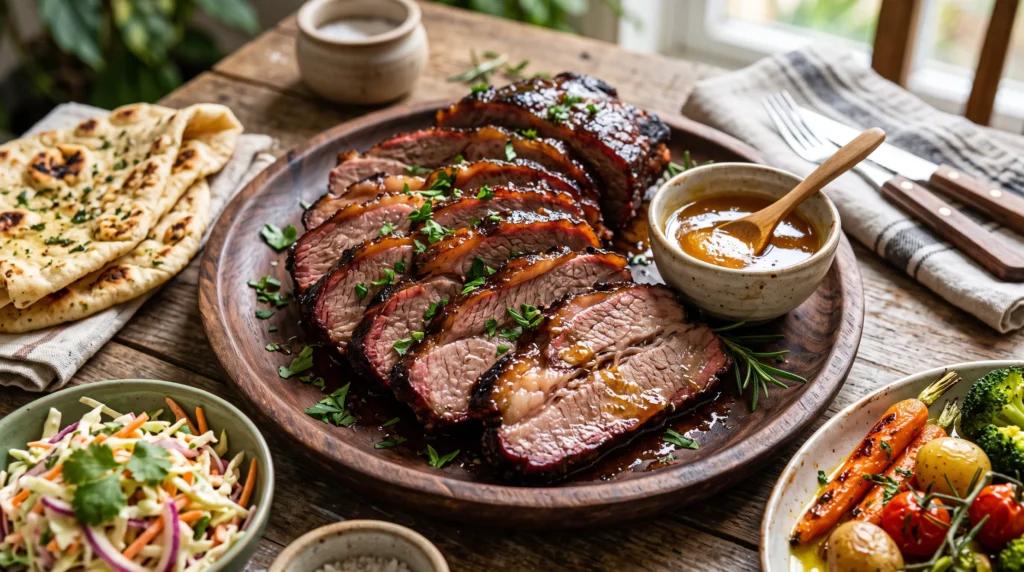
Serve sliced beef with roasted potatoes, coleslaw, corn, salad, or warm flatbread.
For sandwiches, pile shredded beef onto toasted buns and add crunchy coleslaw for contrast.
The sweet honey glaze also works beautifully with creamy sides and fresh vegetables.
For another family-friendly meal idea, serve the beef alongside creamy mashed potatoes and roasted vegetables.
Make a barbecue-style platter
Arrange sliced or shredded beef on a large serving platter.
Add pickles, fresh salad, warm bread, roasted potatoes, and a small bowl of extra honey glaze.
The combination of smoky, sweet, tangy, crisp, and creamy textures creates a satisfying spread.
Frequently Asked Questions
1. Is Smoked Honey Glazed Beef Shoulder halal?
It can be halal when the beef is certified halal and all other ingredients, including mustard, vinegar, seasonings, and smoking products, are halal-friendly.
Always check packaged ingredients for certification or alcohol-based additives when required by personal dietary standards.
2. Can beef shoulder be smoked without wrapping?
Yes. Smoking it unwrapped for the entire cooking process can create a thicker, darker crust.
However, wrapping partway through cooking can help retain moisture and shorten the final cooking stage.
3. Why is smoked beef shoulder tough?
Toughness usually means the connective tissue has not broken down enough.
If the beef has reached a high internal temperature but still feels firm when tested, continue cooking until it becomes tender.
4. Can this recipe be made in an oven?
Yes. The beef can be cooked slowly in an oven at around 250°F (120°C).
However, an oven will not provide the same authentic smoky flavor unless a suitable food-safe smoking method is used.
5. What is the best wood for smoking beef shoulder?
Oak is an excellent all-purpose choice because it provides a rich but balanced smoky flavor.
Hickory creates a stronger smoke character, while fruitwoods such as apple give a gentler finish.
6. Can honey be replaced?
Maple syrup can be used as an alternative sweetener if desired.
The flavor will be slightly different, and the glaze may have a thinner consistency depending on the brand.
7. Can the beef be prepared the day before?
Yes. The beef can be smoked, rested, cooled, and refrigerated ahead of time.
For serving, gently reheat the beef covered with a little cooking juice or glaze.
8. Why did the honey glaze become too dark?
Honey contains natural sugars that caramelize quickly.
If the glaze becomes too dark, apply a thinner coating and reduce the time the beef spends uncovered after glazing.
9. Should the beef be sliced or shredded?
Both options work.
Slice the beef across the grain when a more structured barbecue presentation is preferred. Shred it when making sandwiches, wraps, tacos, or rice bowls.
10. How much beef shoulder is needed per person?
A useful starting point is about 1/2 pound (225 g) of raw beef per person, especially when serving several side dishes.
Increase the amount for larger appetites or when the beef is the main component of the meal.
Conclusion
Smoky beef, a sticky honey glaze, and a tender texture make this Smoked Honey Glazed Beef Shoulder a satisfying centerpiece for a relaxed family meal.
The slow-smoking method allows the beef to develop a deep crust while the honey glaze adds a glossy, sweet-savory finish. With a thermometer and a little patience, even beginner home cooks can achieve tender, flavorful results.
Serve it sliced with roasted vegetables or shred it for sandwiches, wraps, and rice bowls. The leftovers are just as useful and can be refrigerated or frozen for another meal.
For a simple halal-friendly barbecue centerpiece packed with smoky, rich, juicy flavor, Smoked Honey Glazed Beef Shoulder is an excellent recipe to try and share.