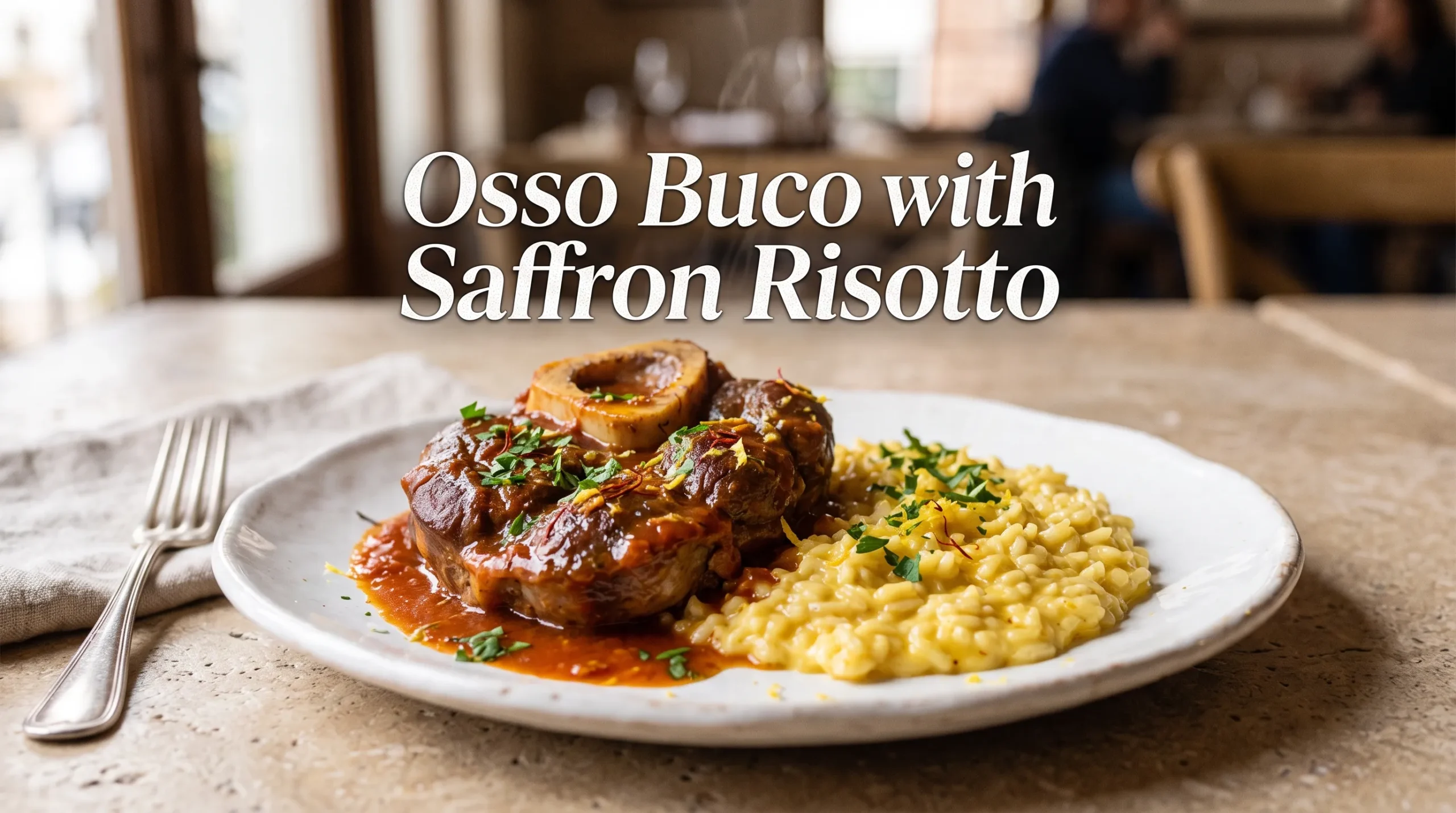
Osso Buco with Saffron Risotto
Tender, slow-cooked meat, a rich savory sauce, and creamy saffron rice come together in one beautiful comfort-food dinner. Osso Buco with Saffron Risotto looks impressive enough for a special occasion but is surprisingly simple to prepare at home.
The meat becomes wonderfully soft as it gently braises, while the marrow inside the bone adds extra richness to the sauce. The risotto is creamy without being heavy, with saffron giving the rice a warm golden color and delicate floral flavor.
There is no alcohol needed for this version. A combination of beef stock, tomato paste, aromatics, and a little lemon creates plenty of depth while keeping the recipe halal-friendly.
The best part is that most of the cooking happens in the oven. Once the veal shanks are browned and the braising liquid is prepared, the oven does the slow work of turning the meat soft and tender.
For another comforting Italian-inspired dinner, pair this dish with a simple creamy garlic mashed potato recipe or a fresh Italian chopped salad. A light homemade garlic bread recipe also makes a delicious addition.
Ingredients
For the Osso Buco
- 4 veal shanks, about 10–12 ounces (280–340 g) each, preferably 1½–2 inches thick
- 1½ teaspoons fine salt, divided
- 1 teaspoon black pepper
- ½ cup all-purpose flour, for light coating
- 2 tablespoons olive oil
- 1 tablespoon unsalted butter
- 1 medium yellow onion, finely diced
- 2 medium carrots, finely diced
- 2 celery stalks, finely diced
- 4 garlic cloves, minced
- 2 tablespoons tomato paste
- 2 cups halal-certified beef stock, plus more if needed
- 1 cup crushed tomatoes
- 1 teaspoon dried thyme
- 1 small bay leaf
- ½ teaspoon ground black pepper
- ½ teaspoon sugar, optional
- 1 teaspoon lemon zest
- 1 tablespoon fresh lemon juice
- 2 tablespoons chopped fresh parsley
For the Saffron Risotto
- 1½ cups Arborio rice
- 4 cups halal-certified chicken or vegetable stock
- ½ teaspoon saffron threads
- 2 tablespoons warm water
- 2 tablespoons unsalted butter, divided
- 1 small yellow onion, finely diced
- 2 garlic cloves, finely minced
- ½ cup finely grated Parmesan cheese
- ½ teaspoon fine salt, or to taste
- ¼ teaspoon black pepper
- 1 tablespoon fresh lemon juice
- 1 tablespoon chopped fresh parsley, for garnish
For Garnish
- 1 tablespoon chopped fresh parsley
- ½ teaspoon finely grated lemon zest
- A few saffron threads, optional
- Freshly cracked black pepper
Tools and Equipment
- Large Dutch oven or heavy oven-safe pot with a lid
- Large saucepan for the stock
- Large skillet or sauté pan
- Wooden spoon
- Tongs
- Small bowl
- Ladle
- Sharp knife
- Cutting board
- Measuring cups and spoons
- Fine grater or microplane
Step-by-Step Instructions
Prepare the Veal Shanks
- Pat the veal shanks completely dry with paper towels. Dry meat browns much better and develops a deeper crust.
- Season both sides of the veal with 1 teaspoon of salt and 1 teaspoon of black pepper.
- Spread the flour in a shallow dish. Lightly coat each veal shank with flour, then shake off the excess.
- Heat the olive oil in a large Dutch oven over medium-high heat.
- Add the veal shanks in a single layer. Work in batches if necessary so the pot does not become crowded.
- Brown the shanks for about 3–4 minutes per side. The outside should develop a deep golden-brown crust.
- Transfer the browned shanks to a plate. Keep the browned bits in the bottom of the pot because they add valuable flavor to the sauce.
Build the Braising Sauce
- Reduce the heat to medium and add the butter to the same Dutch oven.
- Add the diced onion, carrots, and celery. Cook for 5–7 minutes, stirring occasionally, until the vegetables soften.
- Add the minced garlic and cook for about 30 seconds. Avoid browning the garlic too much.
- Stir in the tomato paste. Cook for 1–2 minutes until it becomes slightly darker and smells rich and savory.
- Pour in the beef stock and crushed tomatoes.
- Stir the bottom of the pot with a wooden spoon, scraping up the browned pieces.
- Add the dried thyme, bay leaf, remaining ½ teaspoon salt, and optional sugar.
- Bring the mixture to a gentle simmer. Taste the liquid and adjust the seasoning if necessary.
Braise the Osso Buco
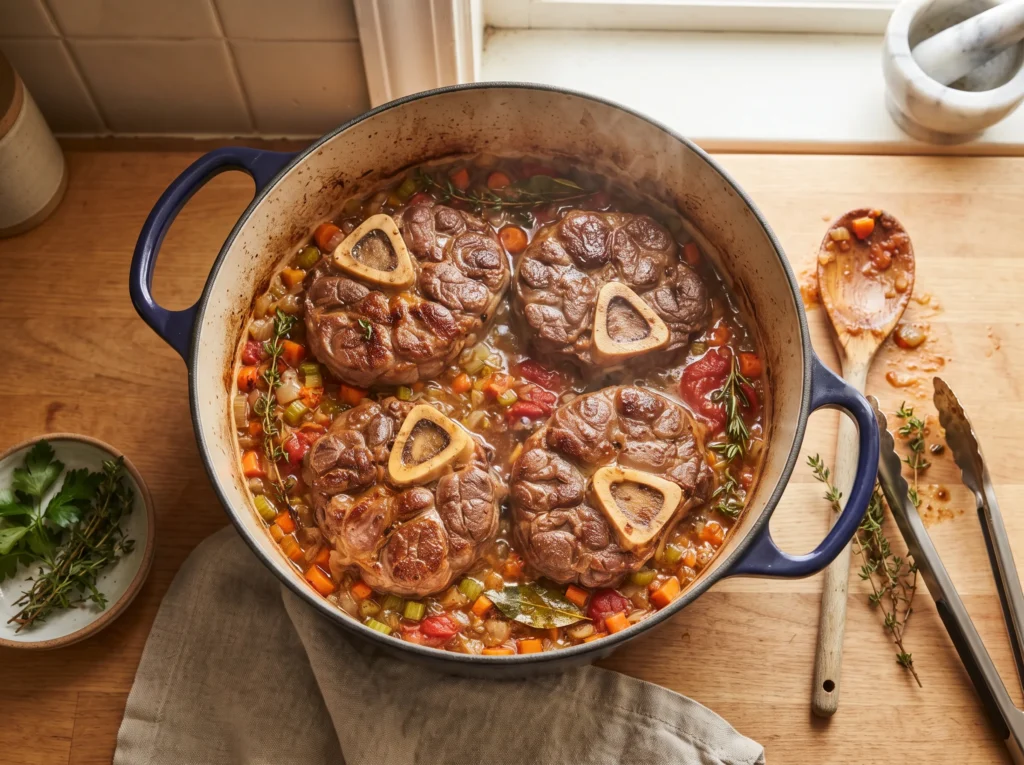
- Return the browned veal shanks to the Dutch oven. The liquid should come about halfway to two-thirds up the sides of the meat.
- Cover the pot tightly with the lid.
- Transfer the Dutch oven to a preheated 325°F (165°C) oven.
- Cook for about 2 to 2½ hours, turning the shanks gently once halfway through cooking.
- Check the meat after 2 hours. It should be very tender and nearly falling from the bone when pierced with a fork.
- If the sauce looks too thin, remove the lid during the final 15–20 minutes of cooking.
- Remove the bay leaf and thyme stems if using fresh thyme.
- Stir the lemon zest and lemon juice into the sauce. These ingredients brighten the rich braising liquid without adding any alcohol.
- Sprinkle the chopped parsley over the finished osso buco.
Prepare the Saffron
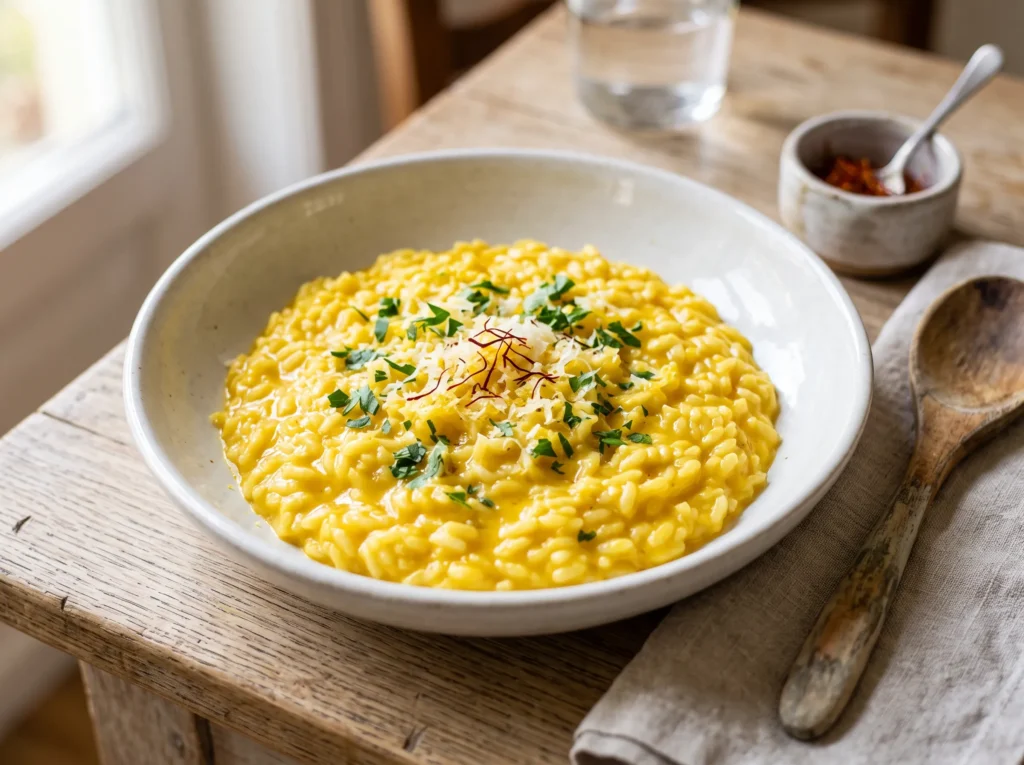
- Place the saffron threads in a small bowl.
- Add 2 tablespoons of warm water and gently crush the saffron between your fingers or with the back of a spoon.
- Let the saffron sit for 5–10 minutes. This helps release its golden color and delicate aroma.
Prepare the Risotto
- Pour the chicken or vegetable stock into a saucepan and warm it over low heat. Keep the stock hot but do not let it boil aggressively.
- Melt 1 tablespoon of butter in a large skillet or wide saucepan over medium heat.
- Add the diced onion and cook for 3–4 minutes until soft and translucent.
- Add the minced garlic and cook for about 30 seconds.
- Add the Arborio rice. Stir continuously for 1–2 minutes so every grain is lightly coated with butter.
- Pour in the saffron and warm water. Stir until the rice takes on a beautiful golden color.
- Add about ½ cup of hot stock to the rice. Stir gently until most of the liquid has been absorbed.
- Continue adding the hot stock about ½ cup at a time. Stir after each addition and wait until most of the liquid has been absorbed before adding more.
- Continue this process for about 18–22 minutes. The rice should become creamy while remaining slightly firm in the center.
- Taste a grain of rice. It should be tender but still have a very slight bite.
- Remove the risotto from the heat.
- Stir in the remaining 1 tablespoon butter and grated Parmesan cheese.
- Season with salt and black pepper.
- Add the lemon juice and stir gently. The finished risotto should be creamy and able to spread softly across the plate rather than stand stiffly.
Assemble and Serve
- Spoon a generous portion of saffron risotto onto each plate.
- Place one tender veal shank beside or slightly over the risotto.
- Spoon some of the rich tomato-braised sauce over the meat.
- Finish with chopped parsley, a little lemon zest, and freshly cracked black pepper.
- Serve immediately while the risotto is creamy and the osso buco is hot.
Osso Buco with Saffron Risotto: Tips & Variations
Choose the Right Veal Shanks
Look for veal shanks with a good amount of meat surrounding the central bone. The bone is important because the marrow contributes richness to the finished dish.
Shanks that are around 1½–2 inches thick work particularly well because they stay moist during the long braising process.
Dry the Meat Before Browning
Patting the veal dry is a small step that makes a noticeable difference. Excess moisture can cause the meat to steam instead of brown.
A deep golden crust gives the final sauce a richer, more savory flavor.
Do Not Skip the Browning
The meat does not need to be cooked through during the initial browning. The goal is simply to develop color on both sides.
Avoid crowding the pot. Too many shanks at once can lower the temperature and prevent proper browning.
Keep the Risotto Stock Hot
Cold stock can interrupt the cooking process and make it harder to achieve smooth, creamy risotto.
Keep the stock in a nearby saucepan over low heat so it is ready whenever another ladleful is needed.
Stir the Risotto Regularly
Risotto needs attention, but it does not require constant vigorous stirring.
Gentle, frequent stirring helps release starch from the Arborio rice, creating the naturally creamy texture associated with good risotto.
Do Not Overcook the Risotto
The ideal risotto should be creamy and soft but not mushy. The center of each grain should retain a slight bite.
Remember that the rice continues cooking for a short time after being removed from the heat.
Use Chicken or Vegetable Stock
Chicken stock gives the risotto a fuller flavor, while vegetable stock creates a lighter option.
For a completely vegetarian risotto, use vegetable stock and serve it separately from the osso buco.
Make It With Beef Shanks
Veal shanks can be replaced with beef shanks if preferred. Beef generally needs more cooking time and has a stronger, deeper flavor.
Check the meat after about 2½ hours and continue cooking until it is fork-tender.
Make the Risotto Dairy-Free
For a dairy-free version, replace the butter with olive oil and use a suitable dairy-free Parmesan-style cheese.
The risotto will still be creamy from the starch released by the Arborio rice.
Add More Vegetables
Extra finely diced carrots or celery can be added to the braising sauce.
For a slightly different flavor, finely chopped mushrooms can also be sautéed separately and stirred into the sauce near the end.
Avoid Too Much Liquid
The braising liquid should not completely cover the veal shanks. Keeping the liquid around halfway to two-thirds up the meat allows the shanks to gently braise while the exposed portion develops flavor.
If the liquid becomes too low during cooking, add a small amount of warm stock.
Avoid Adding Parmesan Too Early
Parmesan is best stirred into the risotto after the rice has finished cooking.
Adding it too early can make the risotto overly thick and interfere with the smooth texture.
Balance the Richness
Osso buco is naturally rich, so the lemon zest and lemon juice are important.
A small amount adds brightness and helps balance the buttery marrow, savory sauce, and creamy risotto.
Storage & Serving
How to Store Osso Buco
Allow the osso buco to cool slightly before transferring it to an airtight container.
Store the meat and sauce in the refrigerator for up to 3–4 days.
The sauce may become thicker when chilled because of the natural gelatin released during braising. This is completely normal.
How to Store Saffron Risotto
Risotto is best served immediately, but leftovers can be refrigerated in an airtight container for up to 3 days.
The rice will become firmer as it chills. Add a splash of stock or water when reheating and warm it gently over low to medium heat.
Can Osso Buco Be Frozen?
Yes. The cooked veal and sauce can be frozen in an airtight freezer-safe container for up to 3 months.
For the best texture, freeze the osso buco separately from the risotto.
Thaw overnight in the refrigerator and reheat gently on the stovetop or in a covered oven-safe dish.
Can Risotto Be Frozen?
Risotto can be frozen, but its texture will not be quite as creamy after thawing.
If freezing is necessary, cool it quickly, place it in a freezer-safe container, and use it within about 1 month for the best quality.
Simple Serving Ideas
Serve one osso buco shank with a generous spoonful of saffron risotto and plenty of the tomato-rich sauce.
A crisp green salad provides a refreshing contrast to the soft, rich meat.
Roasted green beans, steamed broccoli, or lightly sautéed spinach also work well.
For a more traditional presentation, add a small spoonful of finely chopped parsley and lemon zest just before serving.
Frequently Asked Questions
What does osso buco mean?
Osso buco is an Italian dish made with cross-cut veal shanks. The name refers to the bone and marrow at the center of the shank.
The meat is traditionally braised slowly until tender, allowing the connective tissue and marrow to create a rich, flavorful sauce.
Is Osso Buco with Saffron Risotto halal?
It can be made halal-friendly by using halal-certified veal and stock and avoiding wine or other alcoholic ingredients.
This recipe is completely alcohol-free and uses beef stock in the braise and chicken or vegetable stock for the risotto.
Always check packaged stock and cheese labels for halal suitability when required.
Can chicken be used instead of veal?
Chicken is not a direct substitute because it cooks much faster and does not have the same bone structure or connective tissue.
For a closer alternative, beef shanks are a better choice. They can be braised using the same general method but may require additional cooking time.
Why is osso buco tough?
Tough osso buco usually needs more cooking time. The connective tissue needs enough time to break down and become soft.
Keep the oven temperature moderate and continue braising until the meat is fork-tender.
Why is the risotto not creamy?
The rice may not have released enough starch, or too much stock may have been added at once.
Adding hot stock gradually and stirring regularly helps create the creamy consistency without needing large amounts of cream.
Can regular white rice be used for risotto?
Regular long-grain white rice is not ideal because it does not contain the same amount of starch as Arborio rice.
Arborio, Carnaroli, or Vialone Nano rice will give a much better creamy texture.
Can saffron be replaced?
Turmeric can provide a similar golden color, but it does not have the same delicate floral flavor as saffron.
For the most authentic flavor, saffron threads are the better choice. If necessary, use a small pinch of good-quality saffron powder.
Why does the risotto need lemon juice?
Lemon juice adds acidity that balances the creamy butter and Parmesan.
Only a small amount is needed. The goal is to brighten the flavor rather than make the risotto taste strongly lemony.
How can osso buco be made ahead?
The osso buco can be braised a day ahead and refrigerated with its sauce.
Reheat it gently in a covered pot or oven until hot. Prepare the saffron risotto shortly before serving because freshly cooked risotto has the best texture.
What should osso buco look like when finished?
The meat should be extremely tender and easy to pierce with a fork.
The sauce should be thick enough to coat the back of a spoon but still loose enough to spoon over the meat and risotto.
Conclusion
Soft, tender veal, a rich tomato-braised sauce, and creamy golden rice make Osso Buco with Saffron Risotto a wonderfully comforting dinner.
The recipe may look restaurant-worthy, but the method is straightforward. Brown the meat, build the sauce, let the oven do the slow cooking, and prepare the risotto while the shanks finish.
The combination of rich marrow, tender meat, fragrant saffron, creamy Arborio rice, and fresh lemon creates a balanced plate that feels special without requiring complicated techniques.
For the best result, serve the dish hot with plenty of sauce, fresh parsley, and a little lemon zest.
This alcohol-free, halal-friendly version is an excellent choice for a family dinner, weekend meal, or special gathering. Give Osso Buco with Saffron Risotto a try and enjoy a warm, satisfying Italian-inspired meal at home.