Honey Fig Danish
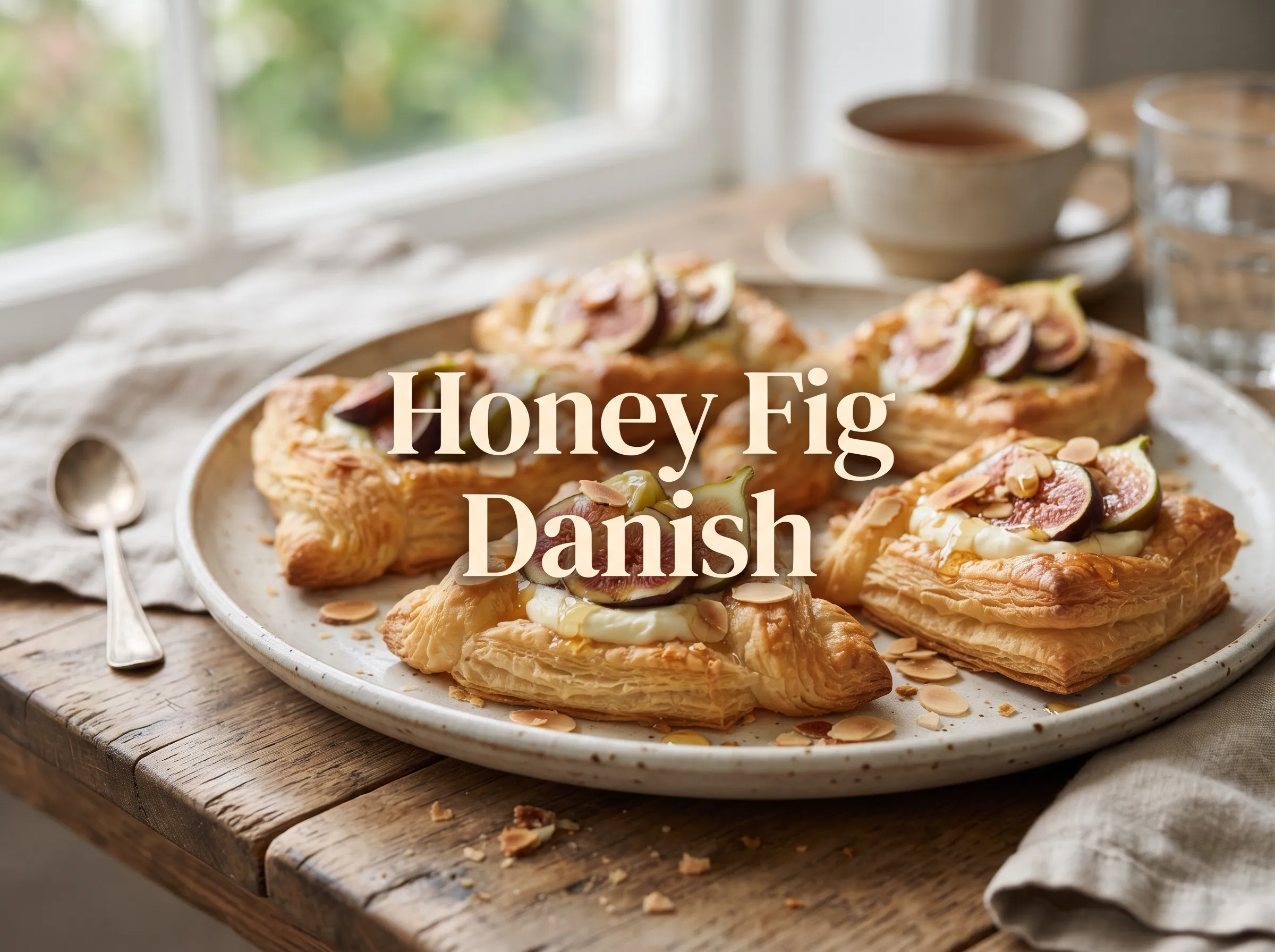
A Honey Fig Danish is the kind of pastry that looks impressive but is surprisingly simple to make. Flaky puff pastry wraps around a smooth, creamy filling, sweet figs, and a light drizzle of golden honey.
Each bite brings together crisp pastry, soft fruit, rich cream cheese, and delicate floral sweetness. The edges turn beautifully golden in the oven while the figs become tender and jammy.
This easy pastry is perfect for breakfast, brunch, afternoon tea, or a sweet snack. Using ready-made puff pastry keeps the process simple, making this recipe especially friendly for beginners and busy home cooks.
The combination of figs and honey gives these Danish pastries a naturally elegant flavor without needing complicated ingredients or techniques. For another easy breakfast idea, pair these pastries with a simple homemade breakfast recipe.
Ingredients
For the Danish Pastries
- 1 sheet frozen puff pastry, about 8 ounces (225 g), thawed according to package directions
- 4 fresh figs, thinly sliced
- 4 ounces (115 g) cream cheese, softened
- 2 tablespoons granulated sugar
- 1/2 teaspoon pure vanilla extract
- 1 tablespoon honey
- 1 tablespoon all-purpose flour
- 1 large egg
- 1 tablespoon milk
- 1 tablespoon sliced almonds, optional
- 1 teaspoon granulated sugar, for sprinkling
- Pinch of salt
For the Honey Finish
- 1 tablespoon honey
- 1 teaspoon warm water
Tools Needed
- Baking sheet
- Parchment paper
- Mixing bowl
- Small bowl
- Fork or pastry brush
- Sharp knife or pizza cutter
- Spoon or small spatula
- Wire cooling rack
Step-by-Step Instructions
1. Prepare the oven and baking sheet
Preheat the oven to 400°F (200°C).
Line a baking sheet with parchment paper. This helps prevent the pastry from sticking and makes cleanup much easier.
2. Prepare the cream cheese filling
Add the softened cream cheese, 2 tablespoons of sugar, vanilla extract, 1 tablespoon of honey, flour, and a pinch of salt to a small bowl.
Mix until smooth and creamy. The filling should be soft enough to spread but not runny.
If the cream cheese is still firm, let it sit at room temperature for a few extra minutes before mixing.
3. Prepare the egg wash
Crack the egg into a small bowl and add the milk.
Beat with a fork until well combined. Set aside for brushing over the pastry later.
The egg wash gives the Danish pastries their glossy, golden-brown finish.
4. Cut the puff pastry
Place the thawed puff pastry on a lightly floured work surface.
Cut it into 4 equal rectangles. For smaller pastries, cut each rectangle diagonally to create triangles, but rectangles are easier for beginners.
Transfer the pastry pieces to the prepared baking sheet, leaving space between each one.
5. Create a border
Using a sharp knife, lightly score a smaller rectangle inside each pastry piece.
Leave about a 1/2-inch border around the edges. Do not cut completely through the pastry.
This simple border helps create a raised, flaky edge around the creamy center.
6. Add the cream cheese mixture
Spoon about 1 tablespoon of the cream cheese filling into the center of each pastry.
Spread it gently inside the scored border.
Avoid adding too much filling. A thin, even layer helps the pastry puff properly and prevents the filling from spilling over the sides.
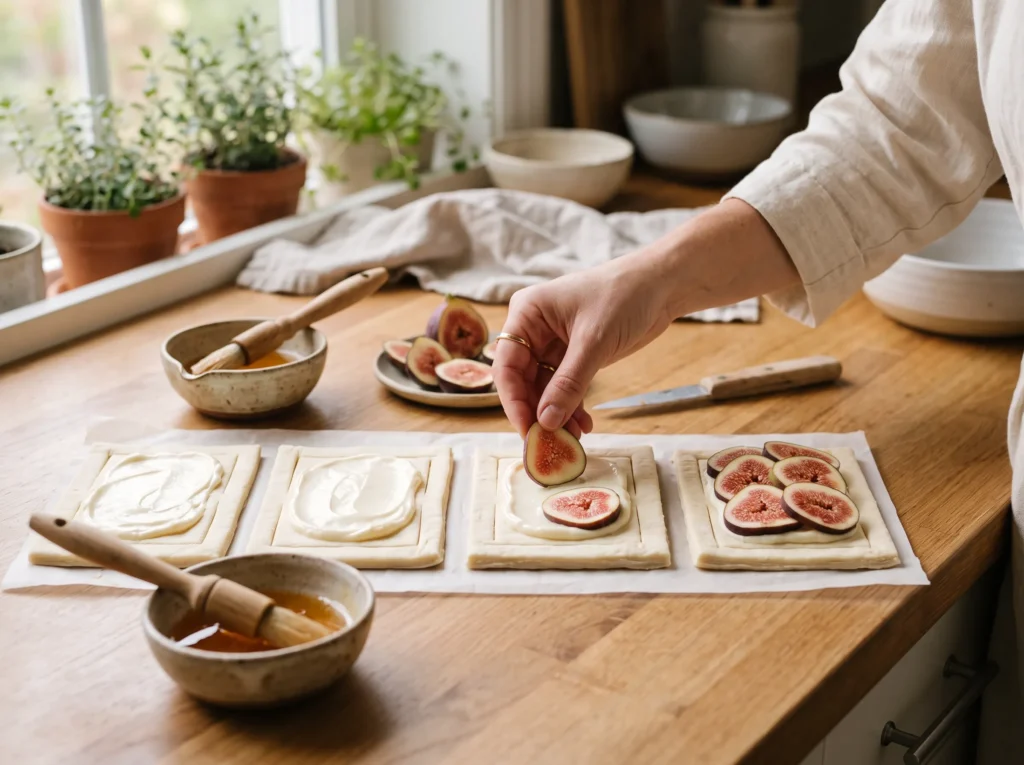
7. Arrange the figs
Place the thinly sliced figs over the cream cheese filling.
Arrange 3 to 5 slices on each pastry, depending on their size. Slightly overlapping the slices creates a beautiful bakery-style appearance.
Fresh figs work best because they become tender and juicy while baking.
8. Add sugar and almonds
Sprinkle a little granulated sugar over the figs.
If using almonds, scatter a few sliced almonds over each pastry.
The almonds add a gentle crunch that contrasts nicely with the soft figs and creamy filling.
9. Brush the pastry edges
Use a pastry brush to lightly coat the exposed puff pastry edges with the egg wash.
Try to keep the egg wash on the pastry rather than letting it pool around the edges.
Too much egg wash can make the pastry edges darker than desired.
10. Bake the Danish pastries
Place the baking sheet in the preheated oven.
Bake for 18 to 22 minutes, or until the pastry is puffed, crisp, and deeply golden around the edges.
The cream cheese should look set, while the figs should be soft and slightly caramelized.
11. Prepare the honey glaze
While the pastries bake, combine 1 tablespoon of honey with 1 teaspoon of warm water.
Stir until smooth.
The small amount of water makes the honey easier to drizzle over the warm pastries.
12. Finish with honey
Remove the pastries from the oven and let them cool on the baking sheet for about 5 minutes.
Transfer them to a wire rack, then lightly drizzle the warm pastries with the honey mixture.
Serve while slightly warm or allow them to cool completely.
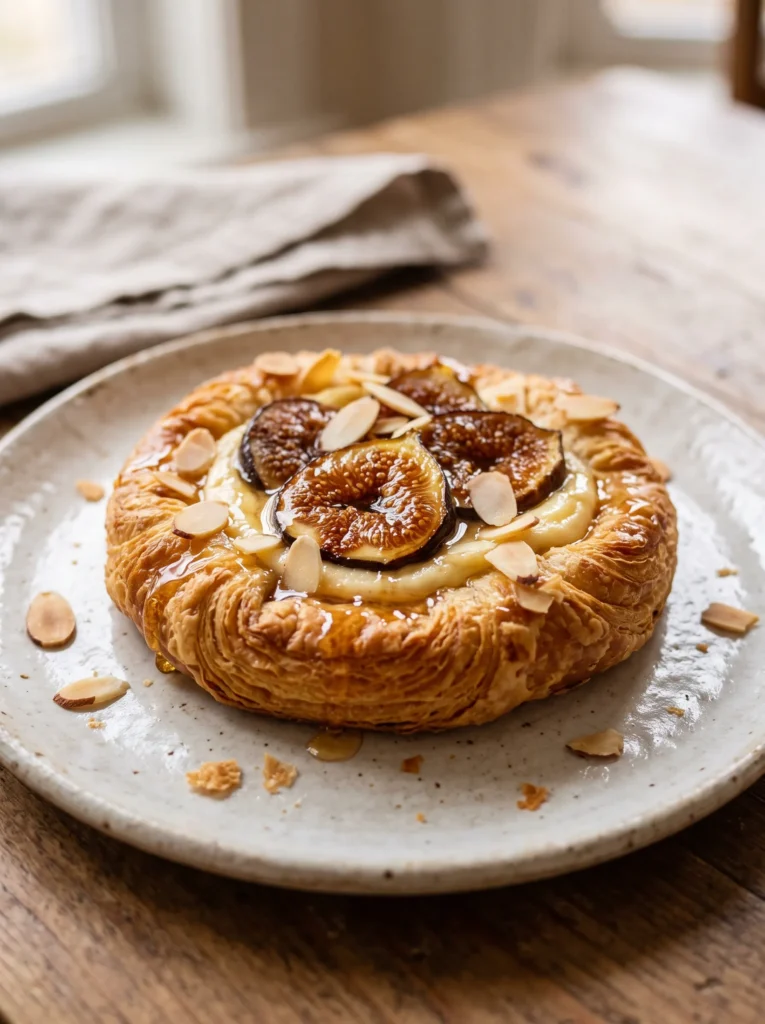
The finished pastry should have a crisp, buttery exterior, a creamy center, and tender fig slices with a soft honey sweetness.
Tips & Variations
Keep the puff pastry cold
Puff pastry rises best when it goes into a hot oven while still cool.
If the pastry becomes soft or sticky while working, place the baking sheet in the refrigerator for 10 to 15 minutes before baking.
Do not overfill the pastries
A generous-looking layer of filling may be tempting, but too much can spread during baking.
Keep the cream cheese mixture inside the scored center for a neat finish.
Use ripe but firm figs
Very soft figs can release a lot of moisture during baking.
Choose figs that are ripe and sweet but still firm enough to slice cleanly.
Try dried figs
Fresh figs provide the best texture, but dried figs can work in a pinch.
Finely chop 3 to 4 dried figs and scatter them over the cream cheese filling. If they are very dry, soak them briefly in warm water, then drain and pat dry.
Make it extra creamy
For a richer filling, replace 1 tablespoon of cream cheese with 1 tablespoon of thick plain yogurt.
This adds a subtle tang and creates a softer filling.
For another creamy breakfast treat, try serving the pastries alongside a homemade yogurt breakfast bowl.
Add citrus flavor
A little finely grated orange or lemon zest pairs beautifully with figs and honey.
Add about 1/2 teaspoon of zest to the cream cheese mixture.
The citrus gives the pastry a fresh, bright flavor without making it overly sweet.
Swap the almonds
Sliced almonds can be replaced with finely chopped walnuts or pecans.
For a nut-free version, simply leave them out. The pastry will still be crisp and delicious.
Use pears instead of figs
Thinly sliced ripe pear makes an excellent seasonal substitute.
Keep the slices fairly thin so they soften at the same rate as the pastry.
Choose a different sweetener
Honey is the star flavor here, but pure maple syrup can be used in the cream cheese filling.
For the finishing drizzle, honey is recommended because its floral sweetness works especially well with baked figs.
Avoid soggy pastry
Fresh figs contain moisture, so avoid using thick slices.
Thin slices and a moderate amount of cream cheese help keep the pastry crisp underneath.
Also, make sure the oven is fully preheated before the Danish goes in.
Give the pastries space
Leave at least 1 inch of space between each Danish on the baking sheet.
Good airflow helps the puff pastry cook evenly and become light and crispy.
Watch the final few minutes
Ovens can vary, so start checking around the 18-minute mark.
The pastries are ready when the edges are puffed and golden and the bottoms look crisp.
If the tops brown too quickly, loosely cover them with foil for the final few minutes.
Storage & Serving
Honey Fig Danish pastries are best served fresh while the puff pastry is crisp and the figs are still soft and juicy.
For breakfast, serve one alongside coffee, tea, milk, or fresh fruit.
They also make a lovely addition to a weekend brunch spread. For more brunch inspiration, add easy homemade brunch ideas to the menu.
Refrigerator Storage
Allow leftover Danish pastries to cool completely before storing.
Place them in an airtight container and refrigerate for up to 3 days.
The pastry will soften slightly in the refrigerator, but reheating restores much of its crisp texture.
How to Reheat
For the best texture, reheat the pastries in a 350°F (175°C) oven for about 5 to 8 minutes.
An air fryer can also be used at 325°F (165°C) for about 3 to 5 minutes.
Avoid microwaving when possible. It heats the filling quickly but can make puff pastry soft and chewy.
Freezer Storage
Baked Danish pastries can be frozen for up to 2 months.
Place completely cooled pastries on a baking sheet and freeze until firm. Transfer them to a freezer-safe container or bag.
Reheat directly from frozen in a 350°F (175°C) oven until hot and crisp.
For another make-ahead pastry option, see an easy freezer-friendly pastry recipe.
Serving Ideas
Serve the Danish slightly warm with an extra thin drizzle of honey.
Fresh berries, sliced pears, or a simple fruit salad make easy side dishes.
For dessert, add a spoonful of thick plain yogurt or a small scoop of vanilla ice cream.
Frequently Asked Questions
1. Can fresh figs be replaced with another fruit?
Yes. Pears, apples, peaches, plums, and nectarines can all work well.
Choose fruit that is ripe but firm, and slice it thinly so it cooks evenly with the pastry.
2. Can frozen puff pastry be used?
Yes. Frozen puff pastry is ideal for this recipe and makes preparation much easier.
Thaw it according to the package instructions, but keep it cool until ready to use.
3. Why did the puff pastry not rise?
The pastry may not rise properly if it became too warm before baking or if the oven was not fully preheated.
Cold pastry and a hot oven are important for creating those flaky layers.
4. Can the Danish be made without cream cheese?
Yes. Thick plain yogurt can be used as a lighter alternative, although the filling will have a slightly different texture.
Mascarpone can also be used for a richer filling if desired.
5. Are fresh figs sweet enough for this recipe?
Ripe figs are naturally sweet, so only a small amount of additional sugar is needed.
The honey adds another layer of sweetness without overpowering the fruit.
6. Can these pastries be prepared ahead of time?
The cream cheese filling can be prepared up to 1 day ahead and refrigerated.
For the crispiest result, assemble and bake the pastries shortly before serving.
7. Can honey be added before baking?
A small amount can be mixed into the cream cheese filling before baking.
It is better to drizzle the remaining honey after baking because the fresh honey flavor stays brighter and more noticeable.
8. How can the pastry stay crispy after refrigeration?
Reheat refrigerated Danish pastries in the oven or air fryer rather than the microwave.
Dry heat helps bring back the flaky texture.
9. Can this recipe be made nut-free?
Absolutely.
Simply leave out the sliced almonds. No other changes are needed.
10. Can the Danish be made less sweet?
Yes. Reduce the sugar in the cream cheese filling and use a lighter honey drizzle.
The natural sweetness of ripe figs will still give the pastry plenty of flavor.
Conclusion
Crisp puff pastry, creamy vanilla-scented filling, soft figs, and golden honey make this pastry feel special without requiring complicated baking skills.
The simple assembly also makes it a practical choice for relaxed breakfasts, weekend brunches, or an afternoon sweet treat.
For the best texture, serve the pastries fresh and slightly warm, when the pastry is still beautifully flaky and the figs are tender.
With just a handful of easy ingredients, this Honey Fig Danish brings a bakery-style finish to the home kitchen. It is simple enough for beginners and delicious enough to make again and again.
Give the recipe a try, add a little extra honey if desired, and share these golden pastries with family or friends.