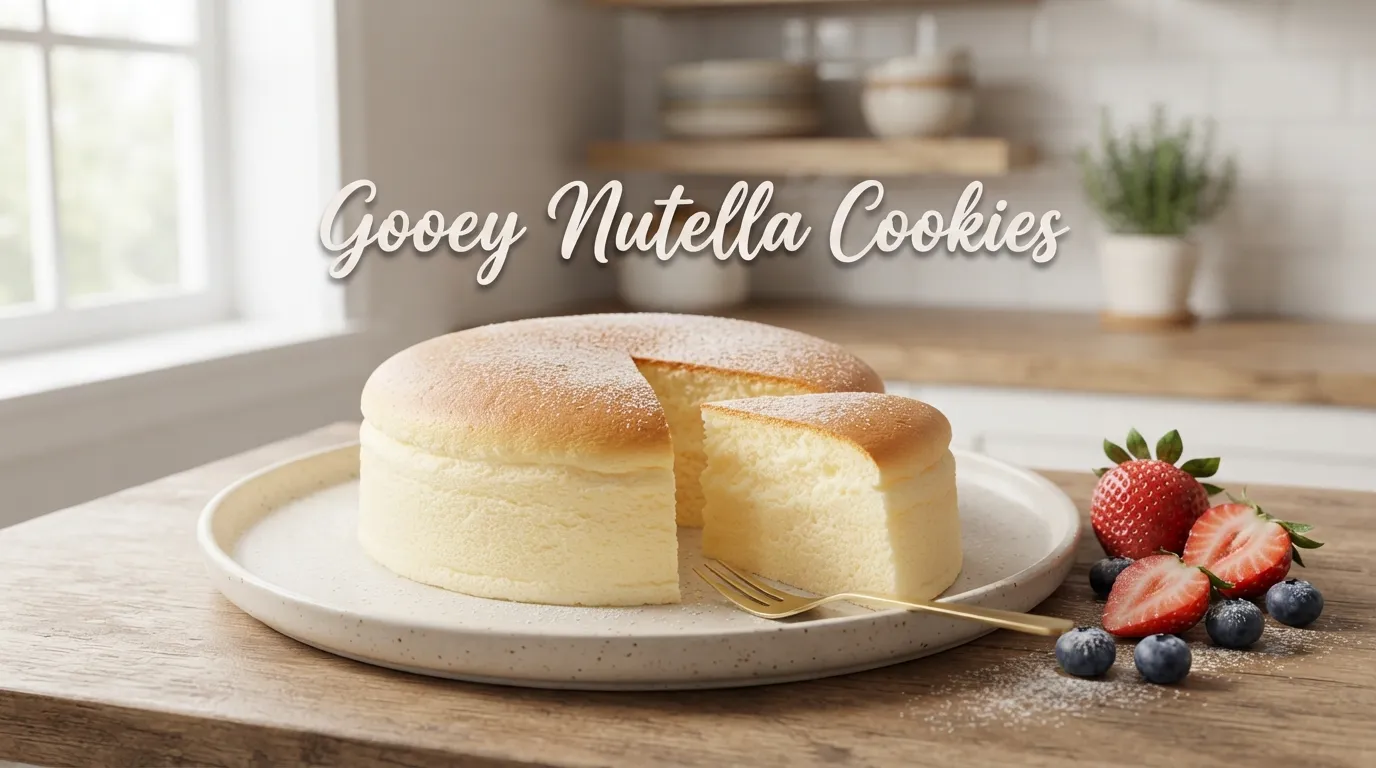
Fluffy Japanese Cheesecake
Soft, airy, creamy, and gently jiggly, Fluffy Japanese Cheesecake is a dessert that feels almost too light to be a cheesecake.
Unlike a dense baked cheesecake, this Japanese-style cheesecake has a delicate soufflé-like texture. Cream cheese gives it a rich, slightly tangy flavor, while whipped egg whites create the signature fluffy crumb.
The result is a golden-topped cake that feels soft when pressed and melts gently in the mouth. It is sweet without being overly heavy, making it a lovely choice for afternoon tea, family gatherings, birthdays, or weekend baking.
The recipe uses simple ingredients and straightforward techniques. The most important part is handling the whipped egg whites gently and baking the cake slowly.
For another soft and creamy dessert, try this easy classic cheesecake recipe.
Ingredients
For the Cheesecake
- 200 g full-fat cream cheese, softened
- 50 g unsalted butter
- 100 ml whole milk
- 6 large eggs, separated
- 100 g granulated sugar
- 60 g cake flour
- 20 g cornstarch
- 1 teaspoon vanilla extract
- 1 tablespoon lemon juice
- 1/4 teaspoon salt
For the Baking Pan
- 1 tablespoon unsalted butter, for greasing
- 1 tablespoon parchment paper or baking paper
- Hot water, for the water bath
Tools & Equipment
- 20 cm round cake pan
- Large mixing bowl
- Medium mixing bowl
- Small saucepan
- Hand mixer or stand mixer
- Fine-mesh sieve
- Rubber spatula
- Whisk
- Baking tray large enough for a water bath
- Parchment paper
- Kitchen scale
- Cooling rack
Step-by-Step Instructions
1. Prepare the Oven and Pan
Preheat the oven to 150°C (300°F).
Grease the inside of a 20 cm round cake pan with butter. Line the bottom with parchment paper.
If the pan has a removable bottom, wrap the outside securely with two layers of aluminum foil to prevent water from entering during baking.
2. Separate the Eggs
Separate the six eggs while they are cold, placing the whites in a large clean mixing bowl and the yolks in a separate bowl.
Allow the egg whites to come closer to room temperature before whipping.
Make sure there is no egg yolk or grease in the whites. Even a small amount can make them difficult to whip properly.
3. Make the Cream Cheese Mixture
Add the softened cream cheese, butter, and milk to a small saucepan.
Heat over very low heat, stirring gently until the cream cheese and butter have melted and the mixture becomes smooth.
Do not let the mixture boil.
Remove the saucepan from the heat and let the mixture cool slightly.
4. Add the Egg Yolks
Add the six egg yolks to the warm cream cheese mixture.
Whisk gently until smooth.
Add the vanilla extract and lemon juice. Stir until evenly combined.
The mixture should look creamy and silky.
5. Sift the Dry Ingredients
Sift the cake flour, cornstarch, and salt into the cream cheese mixture.
Whisk gently until no dry patches remain.
Avoid vigorous mixing. Overmixing can make the batter heavier than necessary.
6. Whip the Egg Whites
Place the egg whites in a clean mixing bowl.
Beat on medium speed until foamy.
Gradually add the granulated sugar in three additions while continuing to beat.
Whip until the meringue reaches soft to medium peaks. The mixture should look glossy, and the peaks should bend slightly at the tip.
Do not whip the egg whites until they become extremely stiff and dry.
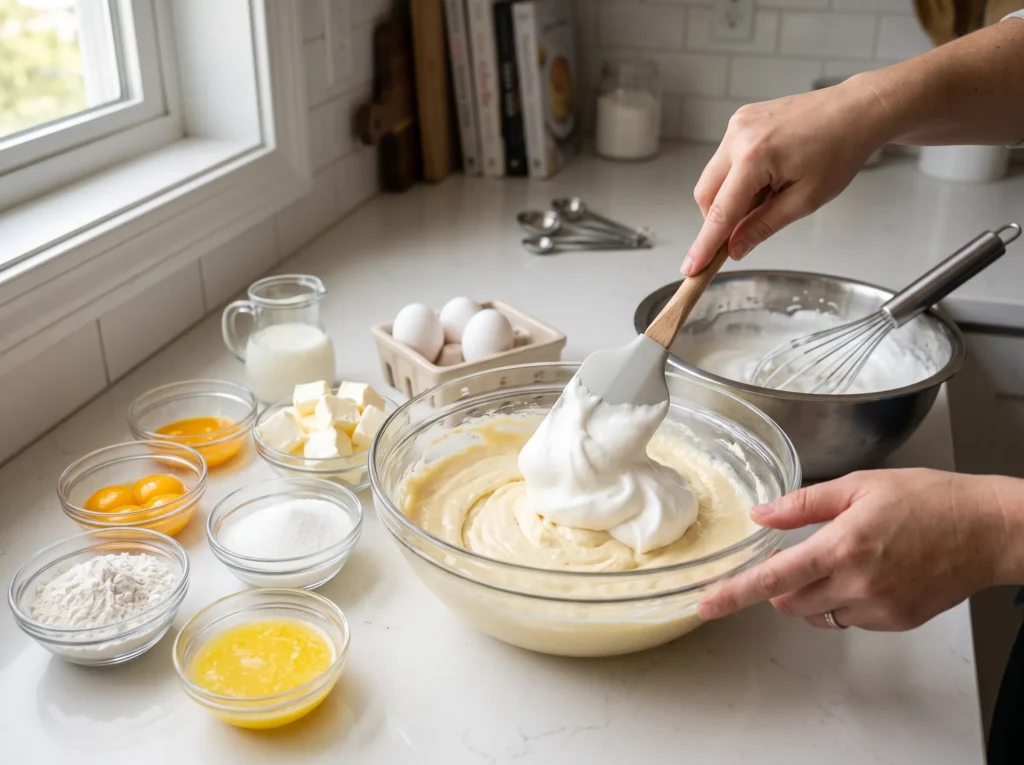
7. Fold the Meringue Into the Batter
Add about one-third of the whipped egg whites to the cream cheese batter.
Fold gently with a rubber spatula to loosen the mixture.
Add another third and fold carefully.
Finally, add the remaining egg whites and fold until the batter is evenly combined.
Use a gentle scoop-and-fold motion rather than stirring quickly.
8. Pour Into the Pan
Pour the batter into the prepared cake pan.
Tap the pan very lightly on the counter once or twice to release large air bubbles.
Do not bang the pan repeatedly because this can remove too much of the air created by the whipped egg whites.
9. Prepare the Water Bath
Place the cake pan inside a larger baking tray.
Pour hot water into the larger tray until it reaches approximately 2–3 cm up the sides of the cake pan.
The water bath creates gentle, moist heat and helps the cheesecake bake evenly.
10. Bake the Cheesecake
Place the water bath in the preheated oven.
Bake at 150°C (300°F) for approximately 55–65 minutes.
The top should become lightly golden, and the center should have a gentle wobble.
Avoid opening the oven repeatedly during baking because sudden temperature changes can cause the cake to collapse.
11. Cool Gradually
Turn off the oven when the cheesecake is baked.
Leave the oven door slightly open and allow the cheesecake to rest inside for about 10–15 minutes.
This gradual cooling helps reduce the risk of a sudden collapse.
Remove the cake from the oven and let it cool in the pan for another 10–15 minutes.
12. Remove and Serve
Carefully remove the cheesecake from the pan.
Let it cool completely on a wire rack.
For a slightly firmer texture, refrigerate it for 1–2 hours before slicing.
Use a sharp knife to cut clean slices.
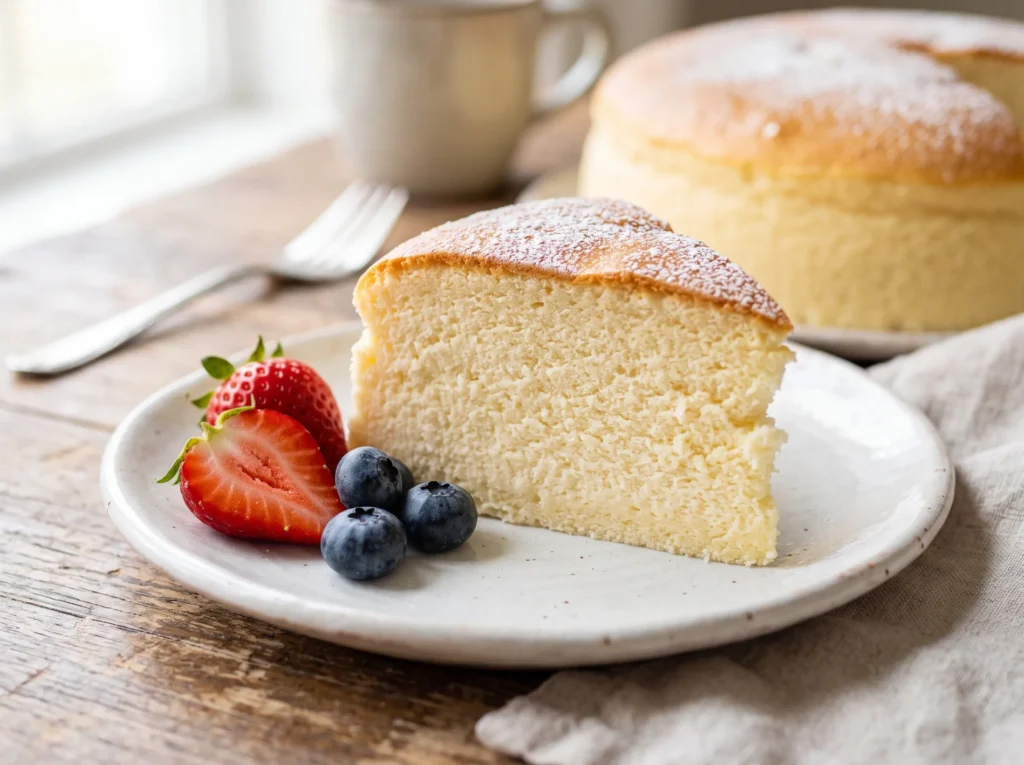
Serve plain or with fresh berries and a light dusting of powdered sugar.
For another elegant dessert option, try a simple homemade vanilla sponge cake.
Fluffy Japanese Cheesecake Tips & Variations
Use Room-Temperature Cream Cheese
Softened cream cheese blends much more smoothly with the butter and milk.
Cold cream cheese can leave small lumps in the batter, making the final texture less silky.
Do Not Overheat the Cream Cheese Mixture
The milk, butter, and cream cheese only need gentle heat.
Boiling the mixture can affect its texture and may make it harder to combine smoothly with the egg yolks.
Keep the Egg Whites Clean
The mixing bowl and beaters should be completely clean and dry.
Any grease or traces of egg yolk can prevent the whites from forming a stable meringue.
Stop at Soft to Medium Peaks
Very stiff egg whites are not ideal for this cake.
A glossy meringue with peaks that gently bend gives the batter enough structure while still allowing easy folding.
Fold, Do Not Stir
Fast stirring knocks air out of the whipped egg whites.
Fold slowly with a rubber spatula until the batter looks smooth and evenly mixed.
A few tiny streaks of meringue are better than overmixing.
Use Cake Flour for a Softer Crumb
Cake flour has a lower protein content than regular flour, helping create a tender and delicate texture.
If cake flour is unavailable, use plain all-purpose flour, but sift it well with the cornstarch.
Do Not Skip the Water Bath
The water bath provides gentle, moist heat.
It helps prevent the edges from becoming too dry before the center has finished baking.
Avoid Sudden Temperature Changes
A Japanese cheesecake can shrink if it goes directly from a hot oven into a cold room.
Cooling it gradually helps maintain a better shape and softer texture.
Add Citrus Flavor
For a brighter variation, add a little finely grated lemon zest to the cream cheese mixture.
Orange zest can also provide a gentle citrus aroma.
Make a Matcha Version
Replace 1 tablespoon of the cake flour with 1 tablespoon of good-quality matcha powder.
Sift it with the remaining dry ingredients for a softly flavored green tea cheesecake.
Add Fresh Berries
Fresh strawberries, blueberries, or raspberries provide a juicy contrast to the creamy cake.
Keep the topping light so the delicate cheesecake remains the star.
For a fruit-forward dessert, this easy strawberry dessert recipe makes another simple option.
Storage & Serving
Store leftover cheesecake in an airtight container in the refrigerator.
It is best enjoyed within 3–4 days for the freshest flavor and texture.
The cake may become slightly firmer after refrigeration, but the crumb should remain soft and moist.
For the best texture, let a chilled slice sit at room temperature for about 10–15 minutes before serving.
Japanese cheesecake can also be frozen.
Wrap individual slices tightly in plastic wrap, then place them in a freezer-safe container or bag. Freeze for up to 1 month for the best quality.
Thaw the slices overnight in the refrigerator.
Serve the cheesecake plain for a delicate creamy flavor, or add fresh berries and a small dusting of powdered sugar.
A spoonful of lightly whipped cream can also be served alongside it.
Avoid heavy toppings that can overpower the light texture of the cake.
Frequently Asked Questions
1. Why did the Japanese cheesecake collapse?
Some shrinking is normal, but a large collapse can happen when the meringue is overbeaten, the batter is overmixed, the cake is underbaked, or the temperature changes too quickly after baking.
2. Why is the cheesecake not fluffy?
The most common reason is loss of air during mixing. Egg whites should be whipped properly and folded gently into the batter without vigorous stirring.
3. Can all-purpose flour be used?
Yes. Replace the cake flour with an equal amount of all-purpose flour and keep the cornstarch in the recipe. Sifting the dry ingredients helps create a lighter crumb.
4. Can cream cheese spread be used?
Full-fat block-style cream cheese is preferred because it generally has a firmer, more consistent texture. If using a spreadable variety, choose one without added herbs or strong flavorings.
5. Does Japanese cheesecake need to be refrigerated?
It does not need immediate refrigeration while still warm, but once cooled, leftovers should be refrigerated in an airtight container.
6. Can the cheesecake be made without a water bath?
It is possible, but the texture and baking result may be less reliable. A water bath helps provide gentle heat and reduces the chance of dry edges or cracks.
7. How do you know when Japanese cheesecake is done?
The top should be lightly golden, the cake should look set, and the center should have a gentle wobble. A skewer inserted near the center should come out mostly clean.
8. Can Japanese cheesecake be frozen?
Yes. Individual slices can be wrapped tightly and frozen for up to about one month. Thaw them slowly in the refrigerator before serving.
Conclusion
Light as a cloud, creamy in the center, and beautifully soft, Fluffy Japanese Cheesecake is a wonderful dessert for anyone who enjoys a delicate alternative to traditional cheesecake.
The key is simple: prepare a smooth cream cheese batter, whip the egg whites gently, fold carefully, and bake slowly in a water bath.
Once those steps are mastered, the result is a golden, airy cheesecake with a tender crumb and rich cream cheese flavor.
Serve it plain, add fresh berries, or finish it with a light dusting of powdered sugar.
This Fluffy Japanese Cheesecake is simple enough for a home baking day and special enough to share at celebrations. Slice it gently, serve it fresh, and enjoy that soft, jiggly texture.