
Cinnamon Sugar Donut Holes
Golden on the outside, soft and cake-like in the center, and coated in a sweet cinnamon-sugar mixture, these Cinnamon Sugar Donut Holes are an irresistible homemade treat.
The batter comes together with simple pantry ingredients, and the small size makes these donut holes quick to fry. There is no need for complicated shaping or special decorating skills.
Each bite has a lightly crisp exterior followed by a tender, fluffy middle. The warm cinnamon sugar adds just the right amount of sweetness and makes these little treats especially comforting.
These homemade donut holes are perfect for breakfast, an afternoon snack, a weekend dessert, or a simple sweet treat for guests. Serve them warm for the best texture and aroma.
The recipe is also beginner-friendly. Once the oil reaches the right temperature, the donut holes fry quickly and evenly, making this an easy way to make bakery-style treats at home.
Ingredients
For the Donut Holes
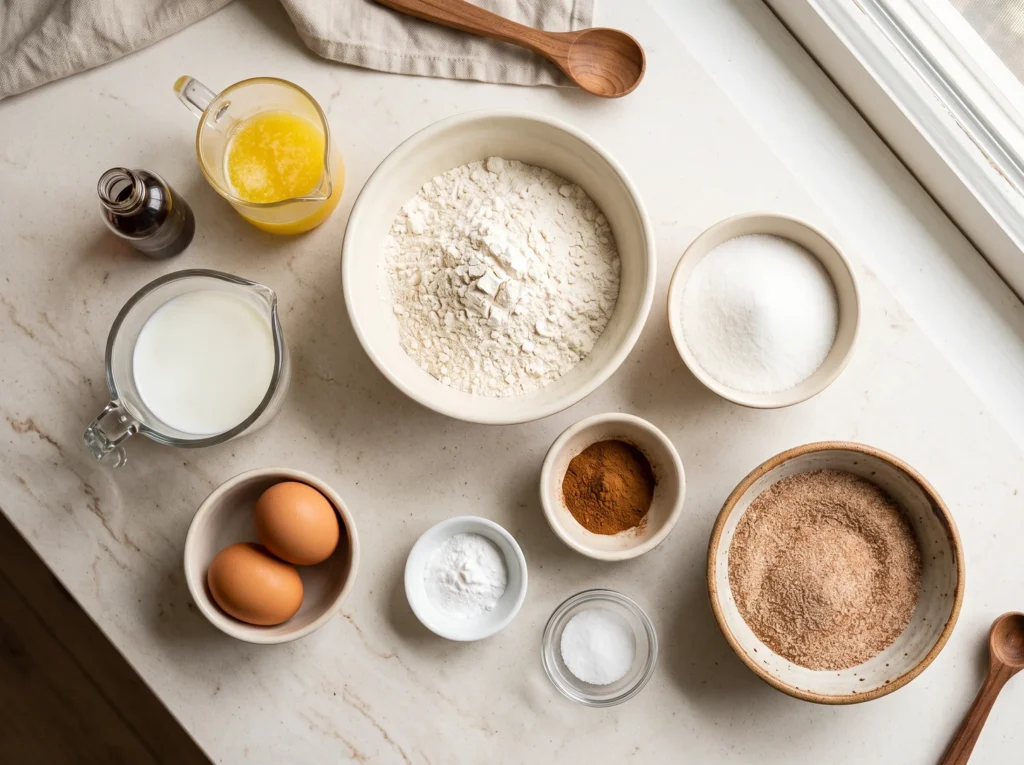
- 1 ¾ cups all-purpose flour
- ½ cup granulated sugar
- 2 teaspoons baking powder
- ½ teaspoon salt
- ½ teaspoon ground cinnamon
- 1 large egg
- ¾ cup whole milk
- 3 tablespoons unsalted butter, melted and slightly cooled
- 1 teaspoon pure vanilla extract
For Frying
- 4 to 5 cups neutral cooking oil, such as sunflower, canola, or vegetable oil
For the Cinnamon Sugar Coating
- ½ cup granulated sugar
- 1 ½ teaspoons ground cinnamon
- 2 tablespoons unsalted butter, melted, optional
The melted butter is optional but helps the cinnamon-sugar mixture cling to the donut holes. For a lighter coating, simply toss the warm donut holes directly in cinnamon sugar.
Tools Needed
- Large mixing bowl
- Medium mixing bowl
- Whisk
- Rubber spatula or wooden spoon
- Small cookie scoop or tablespoon
- Heavy-bottomed saucepan or deep pot
- Cooking thermometer
- Slotted spoon
- Paper towels or a wire rack
- Large bowl for the cinnamon sugar
Step-by-Step Instructions
1. Prepare the Cinnamon Sugar
Add ½ cup granulated sugar and 1 ½ teaspoons ground cinnamon to a bowl.
Stir well until the cinnamon is evenly distributed. Set the mixture aside while preparing the batter.
2. Mix the Dry Ingredients
Add the flour, sugar, baking powder, salt, and cinnamon to a large mixing bowl.
Whisk until everything is evenly combined. Breaking up any small lumps now will help create a smooth batter.
3. Mix the Wet Ingredients
In a separate bowl, whisk together the egg, milk, melted butter, and vanilla extract.
Make sure the melted butter has cooled slightly before adding it to the egg mixture. Very hot butter can affect the egg.
4. Combine the Batter
Pour the wet mixture into the bowl with the dry ingredients.
Gently stir with a rubber spatula or wooden spoon until just combined. The batter should be thick and soft.
Do not overmix. A few small lumps are fine, and gentle mixing helps keep the finished donut holes tender instead of dense.
5. Heat the Oil
Pour the oil into a heavy-bottomed pot, leaving plenty of room at the top.
Heat the oil to 350°F (175°C). Use a cooking thermometer for the most reliable result.
The correct oil temperature is important. Oil that is too cool can make the donut holes greasy, while oil that is too hot can brown the outside before the center cooks.
6. Portion the Batter
Use a small cookie scoop or tablespoon to portion the batter.
Aim for small portions about 1 tablespoon each. Keeping the pieces similar in size helps them cook at the same rate.
Avoid making them too large because the center may remain undercooked while the outside becomes dark.
7. Fry the Donut Holes
Carefully lower a few portions of batter into the hot oil.
Do not overcrowd the pot. Fry in small batches so the oil temperature stays steady.
Cook for about 2 to 3 minutes, gently turning the donut holes as they fry. They should become puffed and golden brown on all sides.
8. Check for Doneness
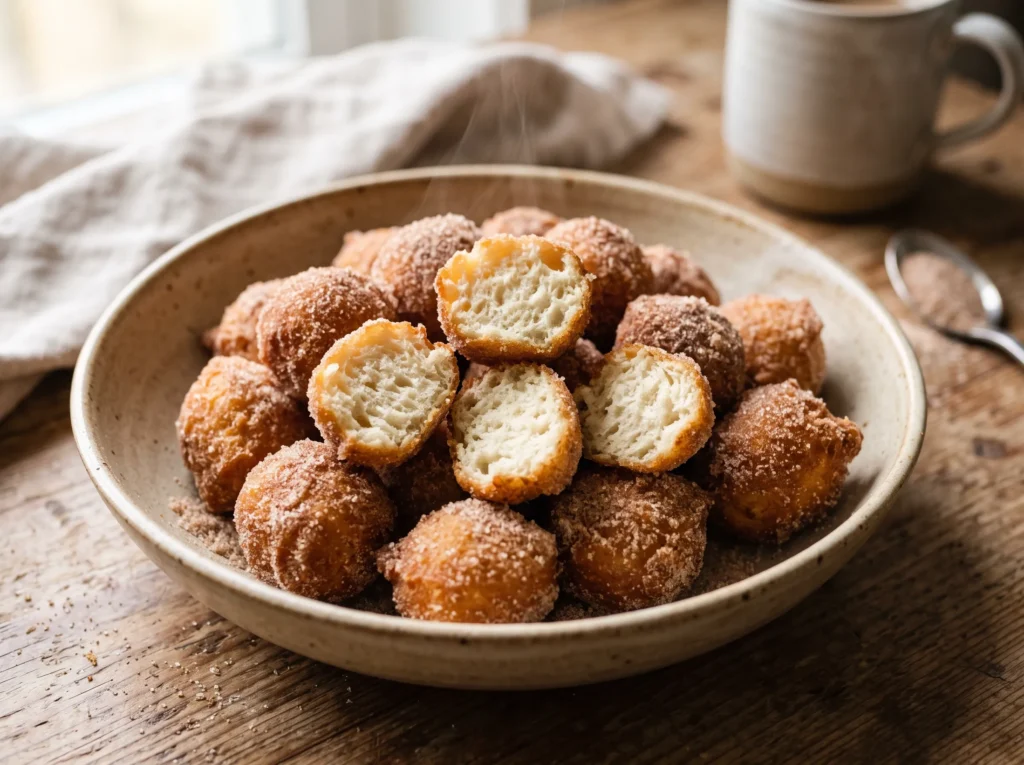
Remove one donut hole and cut it open to check the center if needed.
The inside should look fully cooked, soft, and cake-like rather than wet or gummy.
If the center needs more time, return the remaining pieces to the oil and cook for another 30 to 60 seconds.
9. Drain the Donut Holes
Use a slotted spoon to transfer the cooked donut holes to a wire rack or a plate lined with paper towels.
Let excess oil drain for a short time.
Avoid stacking them while they are very hot because trapped steam can soften the exterior.
10. Coat in Cinnamon Sugar
While the donut holes are still warm, place them in the bowl of cinnamon sugar.
Toss gently until every piece is covered with a generous layer of the sweet, fragrant coating.
For an extra-rich coating, lightly brush the warm donut holes with melted butter before tossing them in cinnamon sugar.
11. Serve Warm
Transfer the coated donut holes to a serving plate.
Serve immediately while they are warm, fluffy, and fragrant. A cup of tea, coffee, or cold milk makes an easy pairing.
Tips & Variations
Keep the Batter Thick
The batter should be thick enough to scoop rather than pour.
If the batter seems unusually thin, add a small amount of flour, about 1 tablespoon at a time. Avoid adding too much flour because that can make the donut holes heavy.
Do Not Overmix
Overmixing develops gluten in the flour and can make the donut holes chewy instead of soft and cake-like.
Stir only until the dry ingredients disappear.
Watch the Oil Temperature
Maintaining an oil temperature close to 350°F is one of the most important steps.
A thermometer makes the process much easier. If the temperature drops after adding batter, allow the oil to heat back up before adding another batch.
Fry Small Batches
Adding too many donut holes at once can lower the oil temperature significantly.
Small batches allow the pieces to move freely and develop an evenly golden exterior.
Use a Small Scoop
A small cookie scoop makes portioning much easier.
It also helps create donut holes that are similar in size, which means they are more likely to finish cooking at the same time.
Avoid Excess Flour
There is no need to heavily flour the scoop or hands because this recipe uses a soft batter rather than a traditional dough.
Adding unnecessary flour can make the finished donut holes dense.
For Extra Cinnamon Flavor
Add another ¼ teaspoon cinnamon to the batter for a warmer, more noticeable cinnamon flavor.
Keep the coating as written so the cinnamon flavor remains balanced rather than overpowering.
For a Sweeter Coating
Increase the cinnamon-sugar coating to ¾ cup sugar if a thicker, sweeter crust is preferred.
The warm exterior will pick up the sugar beautifully.
Try a Vanilla Sugar Coating
For a slightly different flavor, add ½ teaspoon vanilla powder to the cinnamon-sugar mixture.
This creates a delicate vanilla aroma without changing the texture.
Add a Simple Glaze
For a glazed variation, mix ½ cup powdered sugar with 1 to 2 tablespoons milk until smooth.
Dip cooled donut holes into the glaze and allow the excess to drip away.
For a cinnamon-focused version, add a small pinch of ground cinnamon to the glaze.
Make Them More Festive
Serve the donut holes on a platter with small bowls of powdered sugar, cinnamon sugar, or a simple vanilla glaze.
This works especially well for brunches, family gatherings, and dessert tables.
Common Mistakes to Avoid
Using cold oil: The donut holes can absorb too much oil and become greasy.
Using overheated oil: The outside may turn dark before the center is fully cooked.
Making large portions: Large donut holes take longer to cook and are harder to fry evenly.
Overmixing the batter: This can create a tougher, less tender texture.
Coating after they have completely cooled: The cinnamon sugar sticks best while the donut holes are still warm.
Overcrowding the pot: Too many pieces at once can cause uneven cooking and a major temperature drop.
For another easy homemade breakfast idea, pair these treats with [a simple homemade pancake recipe] for a cozy weekend spread.
For a lighter dessert option, consider adding [an easy baked fruit dessert] to the menu.
If a warm cinnamon dessert is on the menu, [a classic cinnamon roll recipe] makes another comforting choice.
Storage & Serving
Cinnamon Sugar Donut Holes taste best on the day they are fried, especially while they are still slightly warm.
Allow leftovers to cool completely before storing them. Place them in an airtight container at room temperature.
They can be kept for about 1 to 2 days at room temperature. The coating may soften over time, but the centers will remain tender.
For longer storage, place cooled donut holes in a freezer-safe container or bag. Separate layers with parchment paper if needed.
Freeze for up to 2 months for the best quality.
To serve frozen donut holes, allow them to thaw at room temperature and then warm them gently in the microwave for a few seconds. They can also be reheated briefly in a low oven.
Avoid reheating them for too long because excessive heat can dry out the soft center.
Easy Serving Ideas
Serve the donut holes warm with a cold glass of milk.
They are also delicious alongside tea or coffee for breakfast or an afternoon snack.
For dessert, arrange them on a platter with a simple vanilla glaze for dipping.
A bowl of fresh berries can add a bright, slightly tart contrast to the rich cinnamon sugar.
For parties, place the donut holes on small skewers or arrange them in a decorative bowl for an easy grab-and-go dessert.
Frequently Asked Questions
Can the donut holes be made without vanilla extract?
Yes. Vanilla adds a pleasant background flavor, but the donut holes will still taste delicious without it.
The cinnamon and sugar provide plenty of flavor on their own.
Why are the donut holes greasy?
Greasy donut holes are usually caused by oil that is too cool.
When the oil temperature is low, the batter stays in the oil longer and absorbs more of it. Keeping the oil around 350°F helps create a lighter exterior.
Why are the centers not cooked?
The pieces may be too large, or the oil may be too hot.
Try making smaller portions and maintaining a steady temperature. If the outside browns very quickly, lower the heat slightly and allow the oil temperature to stabilize.
Can whole wheat flour be used?
Some whole wheat flour can be substituted, but using too much may make the donut holes heavier.
For a softer texture, replace no more than about 25% of the all-purpose flour with whole wheat flour.
Can the donut holes be made without eggs?
An egg-free version is possible, but the texture will change.
A suitable egg substitute can be used according to its package directions. The final donut holes may be slightly less rich and fluffy.
Can plant-based milk be used?
Yes. Unsweetened oat, soy, or almond milk can replace whole milk.
For the closest rich texture, unsweetened oat or soy milk works particularly well.
Can butter be replaced?
Yes. A neutral cooking oil can replace the melted butter in the batter.
The flavor will be slightly less rich, but the donut holes will still have a soft cake-like texture.
How can the cinnamon sugar stick better?
Toss the donut holes while they are still warm.
For a heavier coating, brush them very lightly with melted butter before adding the cinnamon sugar.
Can the batter be prepared ahead of time?
For the best texture, fry the donut holes soon after mixing the batter.
Preparing the batter too far ahead can affect the leavening and result in less fluffy donut holes.
What oil is best for deep-frying donut holes?
A neutral oil with a high smoke point is ideal.
Sunflower, canola, and vegetable oil are suitable choices because they allow the cinnamon and vanilla flavors to remain the focus.
Conclusion
These Cinnamon Sugar Donut Holes are a simple way to make a warm, homemade treat without complicated techniques.
The deep-fried exterior becomes lightly crisp and golden, while the inside stays soft, fluffy, and cake-like. A generous coating of cinnamon sugar adds a sweet, fragrant finish to every bite.
With basic pantry ingredients and a few simple steps, this recipe is easy enough for beginner home cooks and delicious enough for weekend breakfasts, parties, or afternoon snacks.
Serve them warm for the best texture, add a simple glaze for variety, or enjoy them exactly as they are with a favorite hot or cold drink.
A batch of Cinnamon Sugar Donut Holes is best shared fresh, so prepare a generous plate and let everyone grab one while they are still warm.