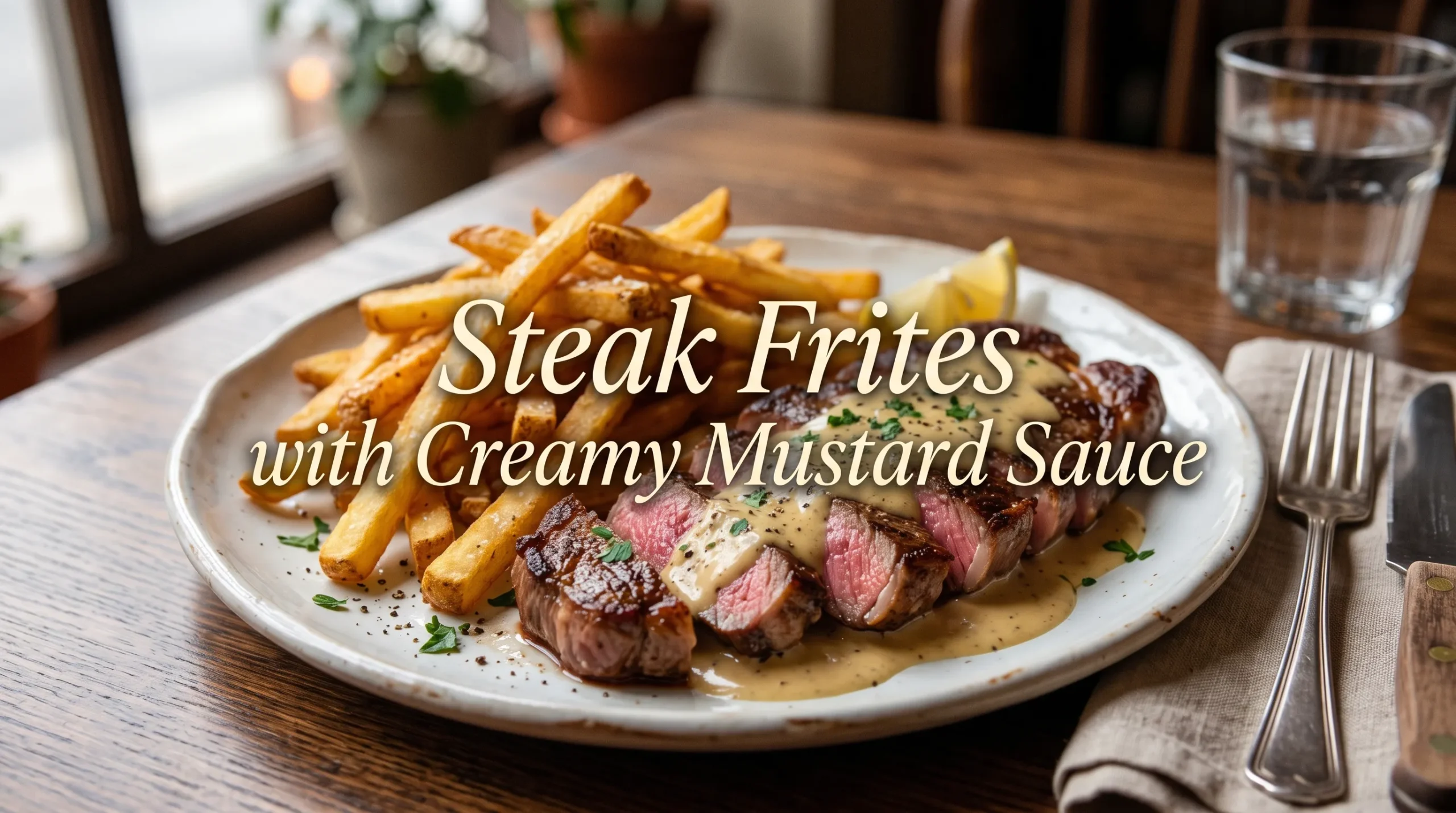
Steak Frites with Creamy Mustard Sauce
Juicy, golden-edged steak served with crisp homemade fries and a silky mustard cream sauce makes an irresistible dinner.
This Steak Frites with Creamy Mustard Sauce brings together tender pan-seared steak, fluffy fries, and a rich sauce with a gentle tangy bite.
The recipe keeps the cooking straightforward enough for a home kitchen. There is no complicated technique, specialty equipment, or alcohol-based sauce required.
The steak is seasoned simply and seared until beautifully browned. The fries become crisp outside and soft inside, creating the perfect contrast with the tender meat.
The creamy mustard sauce comes together in the same skillet used for the steak. A little beef broth adds savory depth, while Dijon mustard gives the sauce its signature sharp flavor.
For another comforting dinner, serve this meal with [a simple roasted vegetable recipe] or start with [a creamy homemade soup recipe].
This recipe is also easy to adjust. Choose a leaner cut for a lighter meal, use frozen fries when time is short, or add fresh herbs for extra flavor.
The finished plate feels restaurant-worthy without requiring restaurant-level effort. The combination of rich steak, crispy potatoes, and creamy sauce makes every bite satisfying.
For the best result, allow the steak to rest before slicing and serve the fries immediately while they are still hot and crunchy.
Ingredients
For the Steak
- 2 boneless beef steaks, about 8 ounces each
- 1 tablespoon olive oil
- 1 teaspoon fine salt
- 1/2 teaspoon freshly ground black pepper
- 1/2 teaspoon garlic powder
- 1/2 teaspoon dried thyme
- 1 tablespoon unsalted butter
For the Crispy Frites
- 1 1/2 pounds russet potatoes
- 2 tablespoons olive oil
- 1 teaspoon fine salt
- 1/2 teaspoon garlic powder
- 1/2 teaspoon smoked paprika
- 1/4 teaspoon black pepper
For the Creamy Mustard Sauce
- 1 tablespoon unsalted butter
- 1 small shallot, finely minced
- 1 teaspoon minced garlic
- 1 cup low-sodium beef broth
- 1/2 cup heavy cream
- 2 tablespoons Dijon mustard
- 1 teaspoon whole-grain mustard
- 1/4 teaspoon black pepper
- 1/4 teaspoon salt, or to taste
- 1 teaspoon fresh lemon juice
- 1 tablespoon chopped fresh parsley
For Garnishing
- 1 tablespoon chopped fresh parsley
- Freshly cracked black pepper
- Lemon wedges, optional
Tools Needed
- Large skillet or cast-iron pan
- Baking sheet
- Parchment paper
- Large bowl
- Small saucepan, optional
- Tongs
- Sharp knife
- Cutting board
- Measuring cups and spoons
- Wire rack, optional
Step-by-Step Instructions
1. Prepare the Potatoes
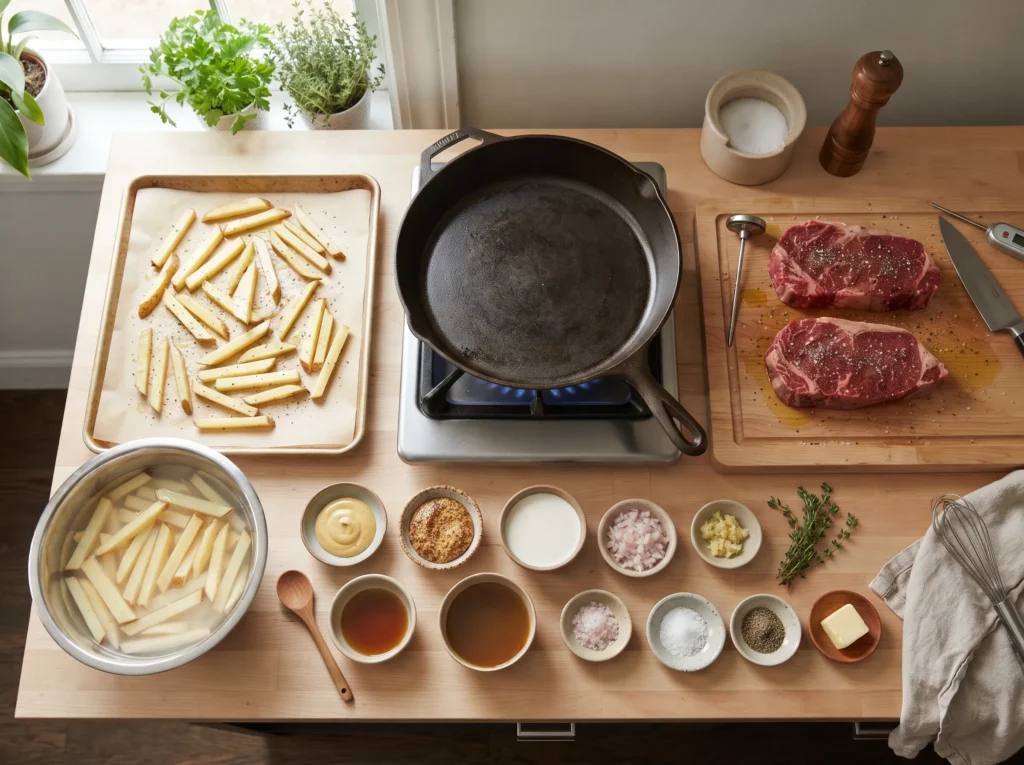
Preheat the oven to 425°F.
Wash and scrub the russet potatoes thoroughly.
Cut them into thin, even sticks about 1/4 inch thick. Keeping the pieces similar in size helps them cook evenly.
2. Soak the Potato Sticks
Place the cut potatoes in a large bowl of cold water.
Let them soak for at least 20 minutes.
Soaking removes some surface starch and helps the potatoes become crisp during baking.
3. Dry the Potatoes
Drain the potatoes thoroughly.
Spread them over a clean kitchen towel or several layers of paper towel and pat them completely dry.
This step is important because excess moisture can prevent the fries from becoming properly crisp.
4. Season the Frites
Place the dried potatoes in a clean bowl.
Add the olive oil, salt, garlic powder, smoked paprika, and black pepper.
Toss until every potato stick has a light coating of oil and seasoning.
5. Bake the Frites
Line a baking sheet with parchment paper.
Spread the potatoes in a single layer with space between the pieces.
Bake for 25 to 30 minutes, turning them halfway through cooking.
Continue baking for another 5 to 10 minutes if needed, until the edges are deep golden and crisp.
6. Prepare the Steak
While the fries cook, pat the steaks dry with paper towels.
Season both sides with salt, black pepper, garlic powder, and dried thyme.
Let the steaks sit at room temperature for about 10 to 15 minutes before cooking.
Dry steaks develop a better browned crust than steaks that are wet on the surface.
7. Heat the Skillet
Place a large skillet over medium-high heat.
Add the olive oil and allow it to become hot but not smoking.
A properly heated pan helps create a rich, golden-brown crust on the steak.
8. Sear the Steak
Place the steaks in the hot skillet.
Cook for about 3 to 4 minutes on the first side without moving them.
Flip and cook for another 3 to 4 minutes for a medium-rare to medium steak, depending on thickness.
For a different level of doneness, adjust the cooking time accordingly.
9. Add the Butter
Add the tablespoon of butter during the final minute of cooking.
Tilt the pan slightly and spoon the melted butter over the steaks several times.
This adds richness and helps deepen the browned exterior.
10. Rest the Steak
Transfer the steaks to a cutting board.
Let them rest for 5 to 10 minutes before slicing.
Resting allows the juices to redistribute through the meat, helping keep the steak tender and juicy.
11. Start the Mustard Sauce
Reduce the skillet heat to medium.
Add the butter and minced shallot.
Cook for about 2 minutes, stirring occasionally, until the shallot becomes soft.
12. Add the Garlic and Broth
Add the minced garlic and cook for about 30 seconds.
Pour in the beef broth and scrape the browned bits from the bottom of the skillet.
Those browned bits add extra savory flavor to the sauce.
13. Make the Creamy Mustard Sauce
Simmer the broth for 3 to 4 minutes so it reduces slightly.
Add the heavy cream, Dijon mustard, and whole-grain mustard.
Stir until the sauce is smooth and creamy.
14. Season the Sauce
Add black pepper and salt to taste.
Stir in the lemon juice.
The small amount of lemon helps balance the richness of the cream and brings out the mustard flavor.
15. Finish the Sauce
Simmer the sauce gently for another 2 to 3 minutes.
Do not let it boil aggressively.
The sauce should become thick enough to lightly coat the back of a spoon while remaining pourable.
Stir in the chopped parsley just before removing the sauce from the heat.
16. Finish the Frites
Remove the fries from the oven when they are golden and crisp.
Taste and add a small pinch of salt if needed.
Serve them immediately for the best texture.
17. Slice the Steak
After resting, slice the steak against the grain into thin pieces.
Cutting against the grain shortens the muscle fibers and makes each bite easier to chew.
18. Assemble and Serve
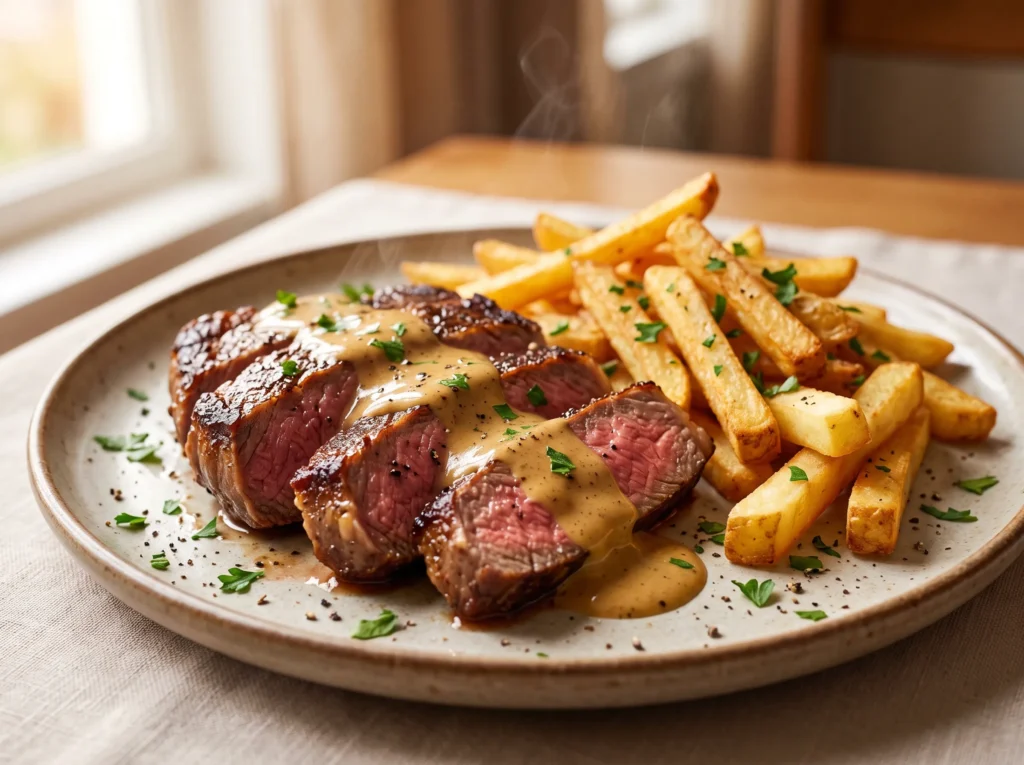
Arrange the steak slices and crispy frites on serving plates.
Spoon the creamy mustard sauce over or beside the steak.
Finish with fresh parsley and freshly cracked black pepper.
Serve immediately while the fries are crisp and the sauce is warm.
Tips & Variations
Choose the Right Steak
Sirloin, ribeye, strip steak, and top sirloin all work well.
Ribeye provides a richer result because of its marbling, while sirloin is a leaner and more budget-friendly choice.
Dry the Steak Well
Pat the steak thoroughly before seasoning.
A dry surface helps the meat develop a deeper brown crust instead of steaming in the skillet.
Let the Pan Get Hot
The skillet should be properly heated before the steak goes in.
If the pan is too cool, the steak may release moisture and fail to develop that flavorful seared exterior.
Do Not Move the Steak Too Much
Allow the first side to sear undisturbed.
Moving the steak repeatedly can interfere with browning and make it harder to develop an even crust.
Use a Meat Thermometer
A meat thermometer provides the most reliable way to check doneness.
For food safety, follow the recommended safe internal temperature for beef based on the cut and local food-safety guidance.
Keep the Sauce Gentle
The creamy mustard sauce should simmer gently.
Aggressive boiling can cause the cream to separate and may make the sauce too thick.
Adjust the Mustard
Dijon mustard provides a sharp, tangy flavor.
For a milder sauce, reduce the Dijon slightly. For a stronger mustard flavor, add another teaspoon after tasting.
Use Whole-Grain Mustard
Whole-grain mustard adds small bursts of texture and flavor.
If unavailable, replace it with additional Dijon mustard.
Make the Sauce Thicker
Simmer the sauce for another minute or two if a thicker consistency is preferred.
Remember that the sauce will continue thickening slightly as it cools.
Make It Lighter
Use half-and-half instead of heavy cream for a lighter sauce.
The sauce will be less rich but still creamy and flavorful.
Use Frozen Fries
When time is limited, frozen oven fries can replace homemade frites.
Cook them according to the package instructions while preparing the steak and sauce.
Add Fresh Herbs
Fresh parsley works beautifully, but chives or a small amount of fresh thyme can also be added.
Avoid using too many herbs because the mustard sauce is meant to remain the main flavor.
Add Mushrooms
Sautéed mushrooms make an excellent addition to the steak.
Cook sliced mushrooms separately until golden, then serve them over the steak with the mustard sauce.
Add Caramelized Onions
Slowly cooked onions provide natural sweetness that balances the tangy mustard.
They can be prepared ahead and added to the finished plate.
Make the Frites Extra Crisp
Avoid overcrowding the baking sheet.
If the potatoes are packed too closely together, they will steam rather than roast.
Use two baking sheets if necessary.
Common Mistakes to Avoid
Do not skip drying the potatoes after soaking.
Do not crowd the fries on the baking sheet.
Do not cut into the steak immediately after cooking.
Do not boil the cream sauce aggressively.
Do not pour the sauce over the fries too early because it can make them soft.
Storage & Serving
How to Store Leftovers
Allow the steak and fries to cool before storing.
Place the steak and sauce in an airtight container and refrigerate within 2 hours of cooking.
The steak and sauce can generally be refrigerated for up to 3 days when stored properly.
Store the Fries Separately
Keep the frites separate from the steak and sauce.
Storing them together allows moisture from the sauce and meat to soften the fries.
How to Reheat Steak
Reheat steak gently in a skillet over low heat.
A small splash of broth can help prevent the meat from drying out.
Avoid prolonged high-heat reheating because it can make the steak tough.
How to Reheat Frites
An air fryer or hot oven is the best option for restoring crispness.
Heat at around 375°F until hot and crisp, turning once if needed.
The microwave is not recommended for the fries because it tends to make them soft.
How to Reheat the Sauce
Warm the mustard sauce gently in a small saucepan.
Add a splash of beef broth or cream if the sauce has thickened too much in the refrigerator.
Stir slowly until smooth and hot.
Can Steak Frites Be Frozen?
The cooked steak can be frozen, but the fries and cream sauce are better prepared fresh.
Freeze sliced steak in an airtight freezer-safe container for up to 2 months for best quality.
Thaw overnight in the refrigerator before reheating.
Serving Suggestions
Serve the steak frites with a crisp green salad for a fresh contrast.
Roasted green beans, asparagus, or steamed vegetables also pair beautifully with the rich mustard sauce.
For another simple side, try [crispy roasted potatoes with fresh herbs] or [a simple garlic green bean recipe].
A small bowl of extra mustard sauce can be served alongside for dipping.
Frequently Asked Questions
1. What cut of steak is best for steak frites?
Sirloin, ribeye, strip steak, and top sirloin are all good choices.
A steak that is reasonably tender and around 1 inch thick is particularly easy to cook evenly at home.
2. Can steak frites be made without a cast-iron skillet?
Yes.
Any heavy-bottomed skillet or good-quality nonstick pan can be used. A cast-iron skillet simply holds heat very well and creates excellent browning.
3. Can the mustard sauce be made without cream?
Yes. Half-and-half can be used for a lighter version.
For a dairy-free alternative, an unsweetened plant-based cooking cream can work, provided its ingredients suit the dietary requirements.
4. Can yellow mustard replace Dijon mustard?
It can, but the flavor will be milder and less complex.
For the closest result, use Dijon mustard or a smooth European-style mustard with a similar tangy profile.
5. Why are the homemade fries not crispy?
The potatoes may not have been dried thoroughly, or the baking sheet may have been overcrowded.
A single layer with enough space between the potato pieces is essential for proper roasting.
6. Can steak frites be made with an air fryer?
Yes.
The frites can be cooked in an air fryer until crisp, while the steak and mustard sauce are prepared in a skillet.
This can make the cooking process faster and reduce oven use.
7. How can the steak stay juicy?
Pat it dry, sear it in a properly heated pan, avoid overcooking, and let it rest before slicing.
Cutting the steak against the grain also improves tenderness when serving.
8. Can the mustard sauce be prepared ahead?
Yes.
Prepare the sauce several hours ahead and refrigerate it in an airtight container.
Reheat it gently and add a small splash of broth or cream if it has become too thick.
9. What can replace beef broth?
Chicken broth can be used, although the flavor will be lighter.
For a vegetarian variation, vegetable broth can be used with a meat-free steak alternative.
10. Is this steak frites recipe alcohol-free?
Yes.
The sauce uses beef broth, cream, Dijon mustard, and lemon juice rather than wine or other alcoholic ingredients.
For a halal-friendly meal, choose halal-certified beef and check packaged ingredients such as mustard and broth according to dietary requirements.
Conclusion
A great steak dinner does not need to be complicated. Tender seared steak, crisp golden frites, and a smooth mustard cream sauce create a satisfying meal with simple cooking techniques.
The homemade fries provide a crispy contrast to the juicy beef, while the creamy mustard sauce adds tangy richness without overpowering the steak.
For the best result, keep the potatoes dry, give the steak a hot skillet, and allow the meat to rest before slicing.
The sauce can be made in the same pan, making cleanup easier and adding the flavorful browned bits from the steak to every spoonful.
Whether served for a relaxed weekend dinner or a special homemade meal, Steak Frites with Creamy Mustard Sauce brings restaurant-style comfort to the table without unnecessary fuss.
Serve it hot, keep the frites crisp, and enjoy every rich, savory bite.