
Seared Scallop & Caviar Risotto
Creamy risotto, golden-brown scallops and delicate pearls of caviar make an impressive combination, but the dish is easier to prepare than it looks.
Seared Scallop & Caviar Risotto brings together soft, creamy Arborio rice with tender scallops that have a beautifully crisp golden crust. A small spoonful of caviar adds a luxurious finish without overpowering the sweet flavour of the seafood.
The secret to good risotto is simple: add warm stock gradually and stir often. This helps the rice release its natural starch, creating a smooth and velvety texture without needing complicated techniques.
The scallops are cooked separately in a hot pan so they can develop a rich golden crust while staying soft and juicy inside. Finished with Parmesan, butter, lemon and fresh chives, every spoonful has a balance of creamy, savoury, bright and delicate flavours.
For another elegant seafood dinner, try this creamy garlic shrimp pasta or serve the risotto with a simple lemon herb salad for a fresh contrast.
This recipe is suitable for home cooks who want a restaurant-style meal without a long ingredient list or difficult preparation.
Ingredients
For the Risotto
- 300 g Arborio or Carnaroli rice
- 1 litre low-sodium seafood or chicken stock, halal-certified if using packaged stock
- 1 tablespoon olive oil
- 1 small shallot, finely chopped
- 2 garlic cloves, finely minced
- 120 ml heavy cream or double cream
- 50 g unsalted butter
- 60 g finely grated Parmesan cheese
- ½ teaspoon salt, plus more to taste
- ¼ teaspoon freshly ground black pepper
- 1 tablespoon fresh lemon juice
- 1 teaspoon finely grated lemon zest
- 2 tablespoons fresh chives, finely chopped
For the Seared Scallops
- 450 g large sea scallops, side muscles removed
- 1 tablespoon olive oil
- 1 tablespoon unsalted butter
- ½ teaspoon salt
- ¼ teaspoon black pepper
- ¼ teaspoon garlic powder
For the Caviar Topping
- 60 g halal-suitable caviar or fish roe
- 1 tablespoon fresh chives, finely chopped
- Lemon wedges, for serving
Optional Garnish
- Extra lemon zest
- A few fresh chive pieces
- A small drizzle of extra virgin olive oil
- Extra Parmesan, served lightly
Tools Needed
- Large heavy-bottomed saucepan or deep skillet
- Medium saucepan for warming the stock
- Large non-stick or stainless-steel frying pan
- Wooden spoon
- Tongs
- Ladle
- Sharp knife and chopping board
- Measuring cups and spoons
- Fine grater
Step-by-Step Instructions
1. Warm the stock
Pour the seafood or chicken stock into a medium saucepan.
Warm it over low heat until steaming but not boiling. Keeping the stock hot helps the rice cook evenly when each portion is added.
Leave the saucepan over low heat while preparing the risotto.
2. Prepare the scallops
Pat the scallops very dry with kitchen paper.
Removing excess moisture is important because wet scallops tend to steam instead of forming a golden crust.
Remove the small side muscle if it is still attached. Season the scallops on both sides with salt, black pepper and garlic powder.
Set them aside while the risotto begins cooking.
3. Cook the shallot and garlic
Heat 1 tablespoon of olive oil in a large heavy-bottomed saucepan over medium heat.
Add the chopped shallot and cook for 2 to 3 minutes until soft and translucent.
Add the minced garlic and cook for another 30 seconds. Keep the heat moderate so the garlic does not become dark or bitter.
4. Toast the rice
Add the Arborio or Carnaroli rice to the saucepan.
Stir continuously for about 1 to 2 minutes. The rice should become lightly glossy and smell slightly nutty.
Toasting the rice helps build flavour while allowing the grains to keep their shape during cooking.
5. Start adding the stock
Add one ladleful of warm stock to the rice.
Stir gently and allow the rice to absorb most of the liquid before adding another ladleful.
Continue adding stock one ladle at a time, stirring frequently.
There is no need to stir aggressively. Gentle, regular stirring is enough to release the rice’s starch and create that classic creamy risotto texture.
6. Continue cooking the risotto
Keep adding warm stock gradually for about 18 to 22 minutes.
The rice should become creamy on the outside while remaining slightly firm in the centre.
Taste a grain near the end of cooking. It should be tender but still have a very slight bite.
If the rice is still firm, add another small ladleful of stock and continue cooking.
7. Add the cream and butter
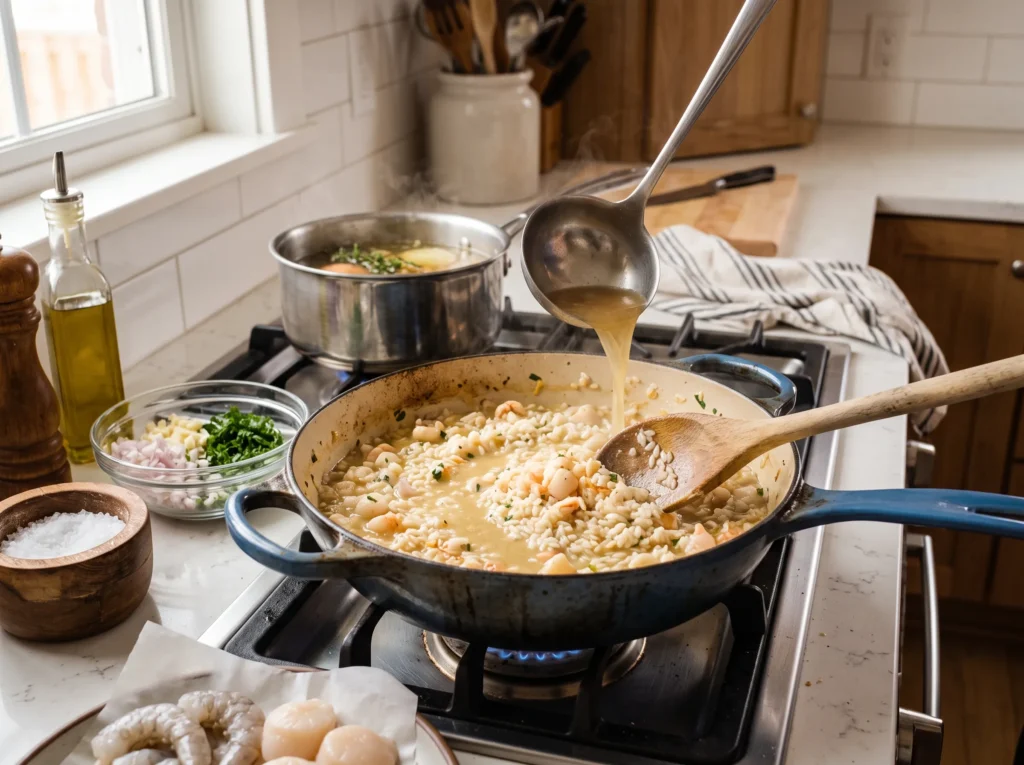
When the rice is nearly cooked, stir in the heavy cream.
Add 30 g of the butter and stir gently until melted.
The risotto should look smooth, glossy and slightly loose. It will continue thickening as it sits, so avoid making it too dry at this stage.
8. Finish the risotto
Turn off the heat.
Stir in the grated Parmesan, lemon juice, lemon zest and chopped chives.
Taste and adjust the salt and black pepper.
If the risotto seems too thick, add a small splash of warm stock until it becomes soft and spoonable.
Keep the risotto covered while the scallops are seared.
9. Heat the scallop pan
Place a large frying pan over medium-high heat.
Allow the pan to become properly hot before adding the oil.
Add 1 tablespoon of olive oil and swirl to coat the surface.
A hot pan is essential for creating a deep golden crust without overcooking the scallops.
10. Sear the scallops
Place the dry, seasoned scallops into the pan, leaving a little space between each one.
Do not move them for about 2 minutes. This allows the bottom to develop a rich golden-brown crust.
Turn the scallops and add 1 tablespoon of butter.
Cook for another 1½ to 2 minutes, spooning a little of the melted butter over the scallops.
The scallops should be opaque and tender in the centre with a beautifully caramelised surface.
11. Check the texture
Remove the scallops from the pan as soon as they are cooked.
Avoid leaving them in the hot pan while preparing the plates. Residual heat can continue cooking them and make them chewy.
The ideal scallop should have a crisp golden outside and a soft, juicy centre.
12. Plate the risotto
Spoon the warm risotto into shallow bowls or wide plates.
Gently spread the risotto so it forms a soft, creamy layer.
Place three or four seared scallops on top of each serving, depending on their size.
13. Add the caviar
Spoon a small amount of caviar or fish roe over and around the scallops.
Do not use too much. Caviar has a naturally bold, briny flavour, so a little is enough to make the dish feel luxurious.
Finish with fresh chives and a small amount of lemon zest.
Serve immediately with lemon wedges.
Tips & Variations for Seared Scallop & Caviar Risotto
Dry the scallops thoroughly
This is one of the most important steps for achieving a crisp crust.
Use kitchen paper to remove as much surface moisture as possible before seasoning. Very wet scallops will release water into the pan and become pale rather than beautifully browned.
Use the right rice
Arborio is easy to find and works very well.
Carnaroli is another excellent choice because it tends to stay creamy while holding its shape during cooking.
Long-grain rice is not recommended because it does not release enough starch to create the traditional risotto texture.
Keep the stock warm
Cold stock lowers the temperature of the rice each time it is added.
Warm stock keeps the cooking process steady and helps the rice absorb the liquid more efficiently.
Do not rinse the rice
Rinsing removes surface starch.
That starch is useful because it helps create the creamy consistency that makes risotto different from ordinary cooked rice.
Do not rush the risotto
Risotto needs time to absorb the stock gradually.
Adding too much liquid at once can make it harder to control the final texture. Small additions create a smoother and more consistent result.
Keep the risotto loose
Perfect risotto should not sit in a stiff mound on the plate.
It should gently spread when the plate is tapped. The texture should be creamy, soft and flowing rather than dry.
Use a gentle hand with Parmesan
Parmesan adds savoury depth and richness.
A moderate amount is enough because the caviar and scallops already bring plenty of flavour. Too much cheese can make the risotto heavy and overpower the seafood.
Add lemon at the end
Lemon juice and zest brighten the rich butter, cream and Parmesan.
Adding them near the end keeps the citrus flavour fresh rather than allowing it to disappear during prolonged cooking.
Do not overcrowd the scallop pan
If too many scallops are placed in the pan at once, the temperature drops and moisture builds up.
Cook in batches if necessary. Each scallop should have enough room to make direct contact with the hot pan.
Make it without cream
Cream is optional rather than essential.
For a lighter version, leave out the cream and use a little extra stock. The rice will still become creamy because of its natural starch, butter and Parmesan.
Try different seafood
Large prawns can replace some or all of the scallops if preferred.
For another seafood variation, this easy prawn risotto recipe makes a comforting alternative with a similar creamy texture.
Choose suitable caviar or roe
Caviar and fish roe can vary widely in ingredients and processing.
For a halal-friendly dish, choose a product clearly labelled as suitable for halal consumption and check the ingredient list carefully.
Avoid products containing alcohol-based flavourings or other unsuitable ingredients.
Storage & Serving
How to store leftover risotto
Risotto is best eaten immediately because the texture is at its creamiest when freshly made.
If leftovers remain, allow them to cool promptly and place them in an airtight container.
Store the risotto and scallops separately in the refrigerator for up to 2 days.
How to reheat risotto
Place the risotto in a saucepan over low heat.
Add a small splash of water or unsalted stock and stir gently until heated through.
The rice will absorb liquid while refrigerated, so adding a little extra liquid helps restore its creamy consistency.
Avoid overheating because this can make the rice dry and the scallops rubbery.
Can risotto be frozen?
Freezing the finished risotto is not recommended when the goal is to preserve its original creamy texture.
The rice can become soft and slightly grainy after thawing, while the cream and cheese may separate.
For the best result, make fresh risotto when possible.
Can scallops be reheated?
Scallops are best served immediately after searing.
If leftovers need to be reheated, warm them gently for a short time. Avoid prolonged cooking because scallops can become firm and chewy very quickly.
Serving suggestions
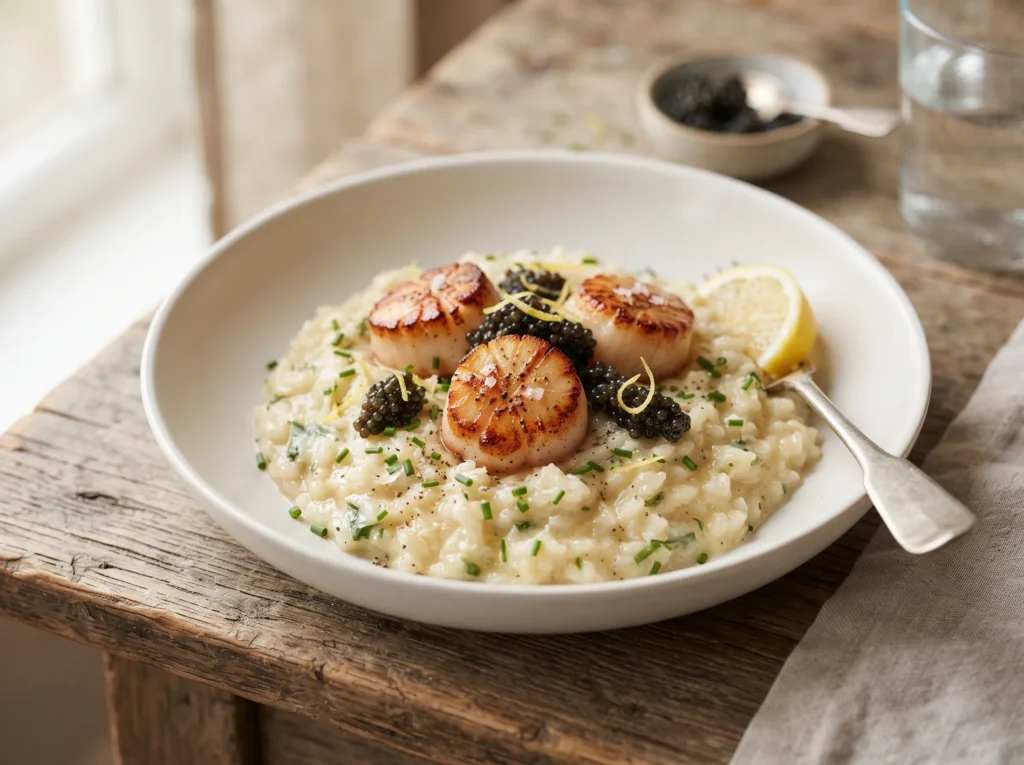
Serve the risotto in wide, shallow bowls so the creamy rice stays warm and the scallops remain the centre of attention.
A crisp green salad, steamed asparagus or lightly roasted vegetables can provide freshness alongside the rich risotto.
A few drops of lemon juice just before eating can also brighten the entire dish.
For a simple starter, consider a fresh cucumber and herb salad before serving the main course.
Frequently Asked Questions
What makes risotto creamy?
Risotto becomes creamy mainly because short-grain rice releases starch as it cooks.
Gradually adding warm stock and stirring regularly helps that starch create a naturally smooth and velvety texture.
Can regular rice be used for this recipe?
Regular long-grain rice is not the best choice.
Arborio or Carnaroli rice contains the starch needed for the creamy texture associated with traditional risotto.
Why are the scallops not browning?
The most common reasons are excess moisture or a pan that is not hot enough.
Dry the scallops thoroughly and allow the pan to become properly hot before adding them.
Should scallops be seasoned before searing?
Yes. A light seasoning of salt, pepper and garlic powder works well.
Avoid heavily seasoning them because the caviar adds additional saltiness to the finished dish.
How many scallops should be served per person?
Three to four large scallops per person usually works well for a main course.
The exact amount depends on scallop size and whether the risotto is being served with additional sides.
Can caviar be left out?
Yes. The risotto and seared scallops are still delicious without caviar.
For a more budget-friendly version, replace the caviar with a small amount of fish roe or simply finish the dish with fresh herbs and lemon zest.
Can milk replace heavy cream?
Milk can be used, but it will produce a lighter and less luxurious result.
For the closest texture without heavy cream, simply omit the cream and rely on the rice starch, butter, Parmesan and stock.
Can chicken stock be used?
Yes. A mild chicken stock can work if seafood stock is unavailable.
Choose a low-sodium halal-certified stock so the natural sweetness of the scallops remains noticeable.
How do you know when scallops are cooked?
Cooked scallops should have a golden crust on the outside and an opaque, tender centre.
They should feel slightly firm but not hard or rubbery when gently pressed.
Is caviar halal?
The halal status of caviar can depend on the type of fish and how the product is processed.
For a halal-friendly recipe, select caviar or fish roe that is clearly certified or labelled halal and check the ingredients before use.
Conclusion
A creamy risotto does not need to be difficult, and beautifully seared scallops can be achieved with just a few simple techniques. Keeping the stock warm, adding it gradually and drying the scallops well are the main steps that make a noticeable difference.
The finished Seared Scallop & Caviar Risotto is creamy, rich and elegant, with sweet tender scallops, savoury Parmesan rice, fresh lemon and delicate caviar in every bite.
Serve it straight from the pan while the risotto is silky and the scallops are warm and golden. With its simple ingredients and impressive presentation, this is a seafood dinner worth trying and sharing.