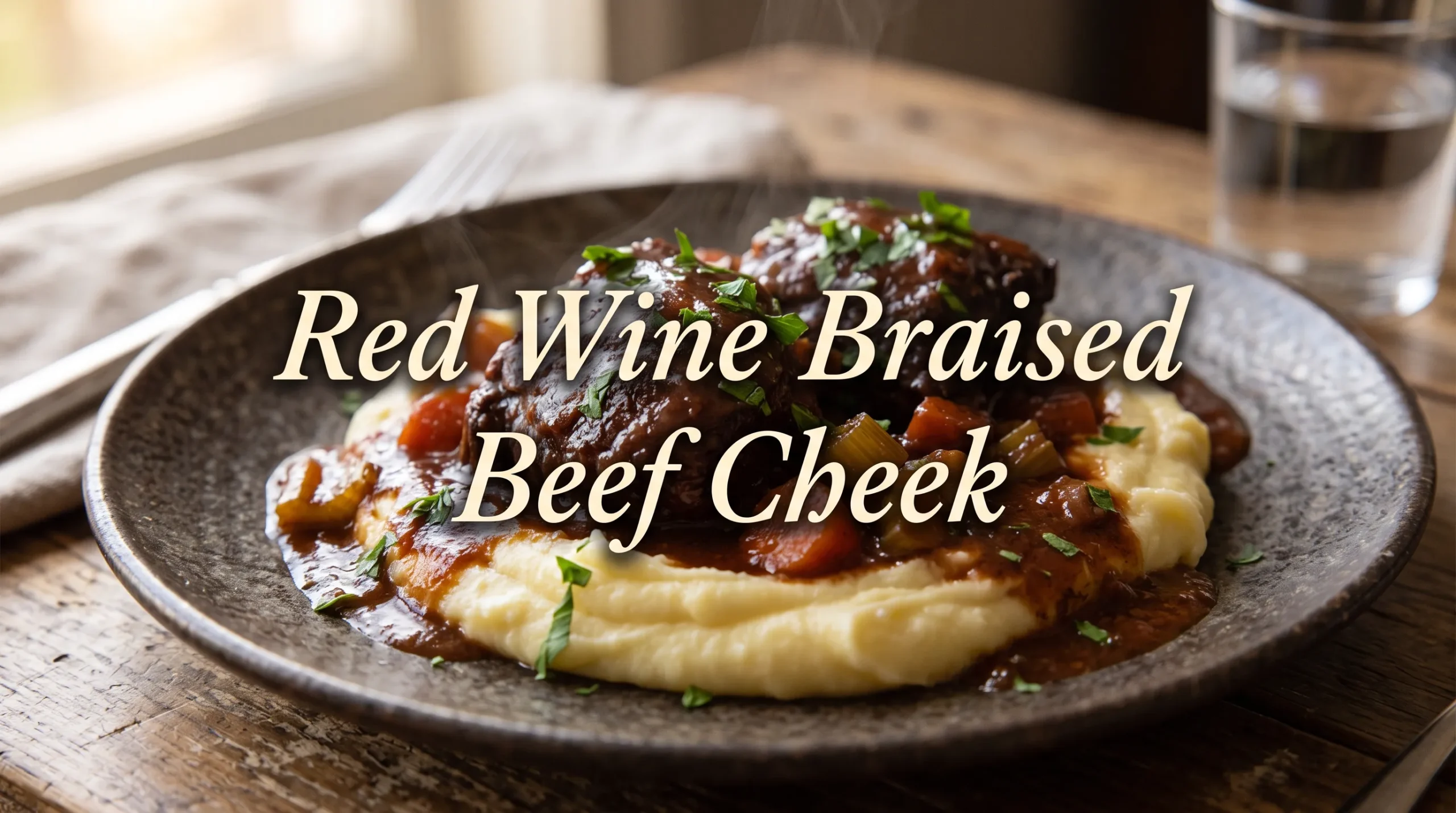
Red Wine Braised Beef Cheek
Tender, deeply savory, and almost buttery-soft, this Red Wine Braised Beef Cheek is the kind of meal that makes a simple dinner feel special.
Beef cheeks are a hardworking cut of meat, which means they start out firm but become incredibly tender when cooked slowly. A long, gentle braise gives the meat time to break down while creating a rich, glossy sauce packed with flavor.
This recipe is completely alcohol-free and halal-friendly. Instead of actual wine, the braising liquid combines unsweetened grape juice, pomegranate juice, beef stock, tomato paste, and aromatic vegetables. The result has the deep color and balanced sweet-tart flavor often associated with wine-braised beef, without using alcohol.
The preparation is straightforward, making it suitable for beginners and busy home cooks who want an impressive meal without complicated techniques. Once the beef is seared and everything goes into the oven, most of the work happens slowly in the background.
Serve the soft beef cheeks with creamy mashed potatoes, fluffy rice, roasted vegetables, or crusty bread. Spoon plenty of the rich sauce over the top for the best bite.
Ingredients
For the Beef Cheeks
- 4 beef cheeks, about 250–300 g each, trimmed
- 1 1/2 teaspoons fine salt
- 1 teaspoon black pepper
- 2 tablespoons olive oil
- 1 large yellow onion, finely chopped
- 2 medium carrots, peeled and chopped
- 2 celery stalks, chopped
- 4 garlic cloves, minced
- 2 tablespoons tomato paste
- 1 cup unsweetened red grape juice
- 1/2 cup unsweetened pomegranate juice
- 2 1/2 cups halal beef stock
- 2 bay leaves
- 1 teaspoon dried thyme
- 1/2 teaspoon smoked paprika
- 1 teaspoon Worcestershire-style sauce that is alcohol-free and halal-friendly
- 1 teaspoon brown sugar, optional
- 1 tablespoon cornstarch
- 2 tablespoons cold water
For Serving
- Creamy mashed potatoes
- Steamed or roasted vegetables
- Fresh chopped parsley
- Extra black pepper, to taste
Tools Needed
- Large oven-safe Dutch oven or heavy casserole
- Tongs
- Wooden spoon
- Sharp knife
- Cutting board
- Small bowl
- Measuring cups and spoons
- Fine-mesh strainer, optional
Step-by-Step Instructions
1. Prepare the beef cheeks
Pat the beef cheeks dry with paper towels. Removing excess moisture helps them develop a deeper, more flavorful crust during searing.
Trim away any thick, tough pieces of surface membrane or excess fat, but do not remove every bit of fat. Some fat helps keep the meat moist during the long braise.
Season all sides with the salt and black pepper.
2. Heat the oven
Preheat the oven to 160°C (325°F).
A low oven temperature is important because beef cheeks need gentle, steady heat to become soft and tender.
3. Sear the beef cheeks
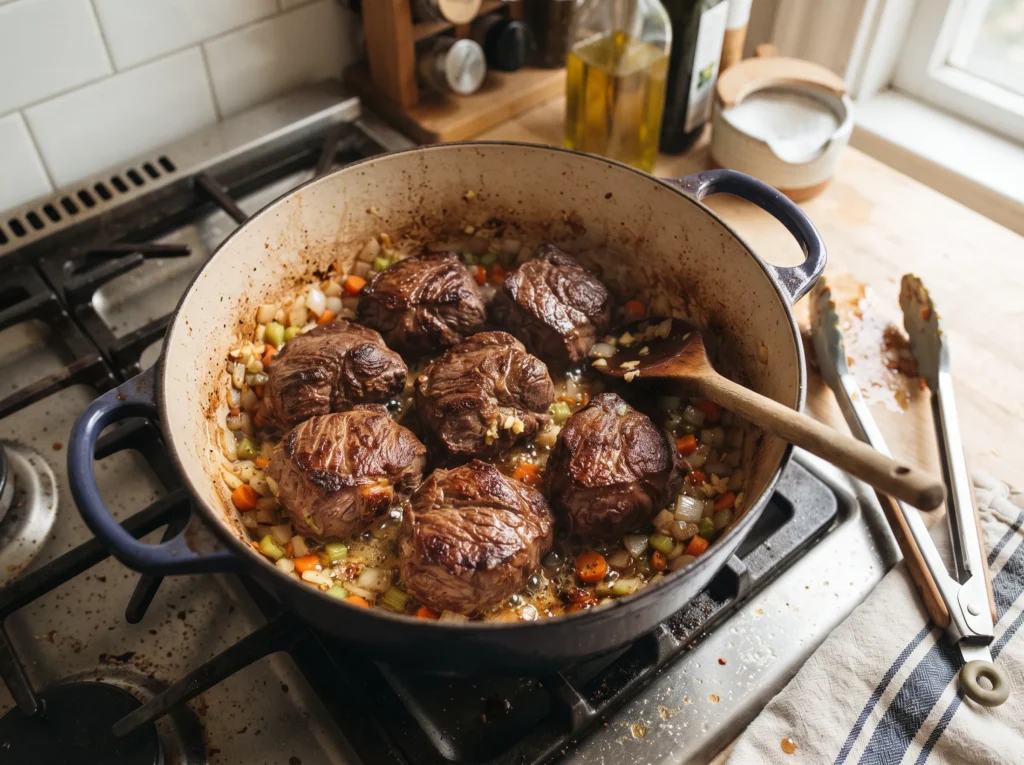
Heat the olive oil in a large Dutch oven over medium-high heat.
Add the beef cheeks in a single layer. Work in batches if necessary so the pan does not become crowded.
Sear for about 3–4 minutes per side, turning until each piece has a deep brown crust.
Transfer the seared beef cheeks to a plate.
4. Cook the vegetables
Reduce the heat to medium.
Add the chopped onion, carrots, and celery to the same pot. Cook for 5–7 minutes, stirring occasionally, until the vegetables begin to soften.
Add the minced garlic and cook for another 30 seconds.
5. Add the tomato paste
Stir in the tomato paste and smoked paprika.
Cook for about 1 minute. The tomato paste should become slightly darker and fragrant.
This small step adds extra depth and helps give the finished sauce a rich, dark appearance.
6. Build the alcohol-free braising liquid
Pour in the grape juice and pomegranate juice.
Use a wooden spoon to scrape the browned bits from the bottom of the pot. Those caramelized bits are full of savory flavor.
Add the beef stock, bay leaves, dried thyme, and alcohol-free halal-friendly Worcestershire-style sauce.
Add the brown sugar if the juices are particularly tart.
7. Return the beef cheeks
Place the seared beef cheeks back into the pot.
The liquid should come about halfway to two-thirds of the way up the sides of the meat. There is no need to completely cover the beef.
Bring the liquid to a gentle simmer on the stovetop.
8. Cover and braise
Cover the Dutch oven with a tight-fitting lid and transfer it to the preheated oven.
Cook for about 3 1/2 to 4 hours.
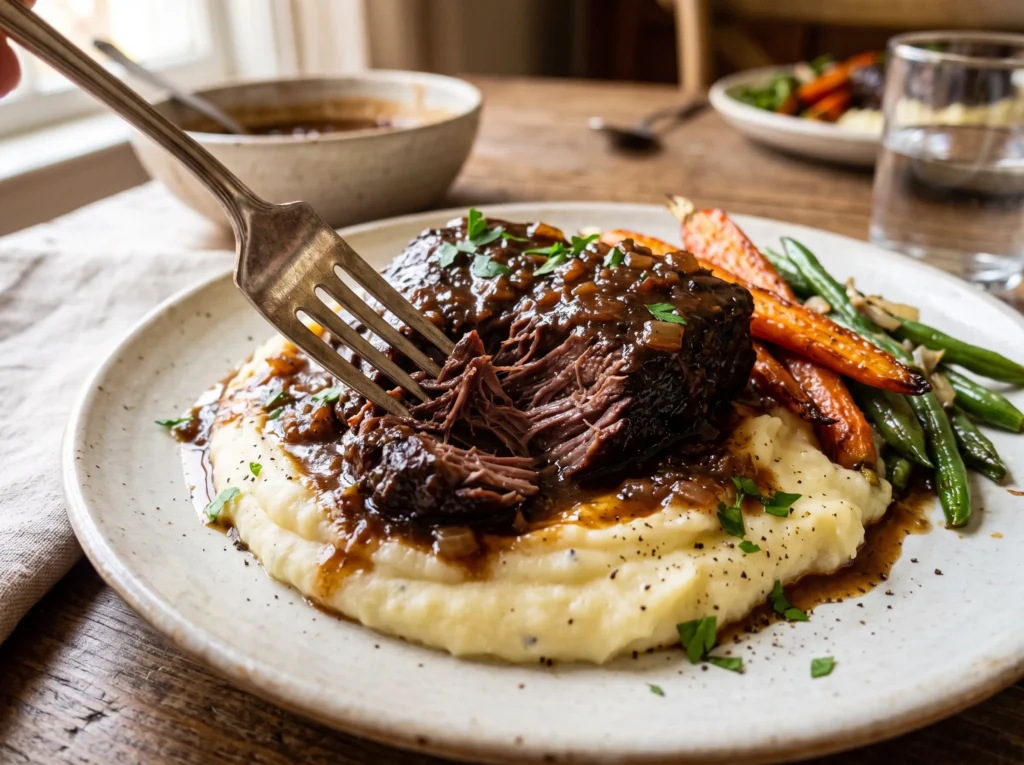
Check the beef after 3 1/2 hours. The cheeks are ready when a fork slides into the meat easily and the beef feels extremely soft.
If the meat still feels firm, continue cooking for another 30 minutes and check again.
9. Rest the beef
Remove the pot from the oven and carefully transfer the beef cheeks to a clean plate.
Cover loosely with foil and let the meat rest for 10–15 minutes.
Resting helps the meat retain its juices and makes it easier to serve without falling apart too quickly.
10. Finish the sauce
Remove the bay leaves.
For a rustic sauce, leave the vegetables in the pot. For a smoother, more elegant sauce, strain the liquid through a fine-mesh strainer and discard the solids.
Return the strained sauce to the pot.
If the sauce looks thin, simmer it uncovered on the stovetop for 5–10 minutes until slightly reduced.
11. Thicken the sauce if needed
Mix the cornstarch with the cold water in a small bowl until smooth.
Slowly whisk the mixture into the simmering sauce.
Cook for 1–2 minutes, stirring constantly, until the sauce becomes lightly thickened and glossy.
Do not add all the cornstarch mixture at once if the sauce is already thick enough.
12. Serve
Place one beef cheek over creamy mashed potatoes, fluffy rice, or your preferred side.
Spoon the warm sauce generously over the meat.
Finish with chopped parsley and a little freshly ground black pepper.
For a complete meal, serve with roasted carrots, green beans, broccoli, or another simple vegetable.
Tips & Variations
Choose well-trimmed beef cheeks
Beef cheeks can contain tough connective tissue and excess surface fat. Ask the butcher for trimmed beef cheeks or remove only the thick, tough membrane at home.
Some marbling and connective tissue are desirable because they soften during the long cooking process.
Dry the meat before searing
Wet beef tends to steam instead of brown.
Patting the cheeks dry before seasoning helps create a dark, savory crust. That crust adds another layer of flavor to the finished sauce.
Do not rush the braising time
The most common mistake is taking beef cheeks out of the oven too early.
The meat may look cooked after a couple of hours but still feel firm. Keep cooking until a fork slides through easily.
Tenderness matters more than the exact cooking time.
Avoid boiling the meat aggressively
The braising liquid should stay at a gentle simmer.
A hard boil can make the cooking environment unnecessarily harsh and may leave the meat less tender.
Low and slow is the key to soft beef cheeks.
Keep the alcohol-free substitute balanced
The combination of grape juice and pomegranate juice gives the sauce fruitiness, acidity, and color.
Avoid using sweetened juices because they can make the sauce overly sugary. Unsweetened varieties give better control over the final flavor.
Make the sauce richer
For an even more luxurious sauce, chill the cooked braising liquid before serving and remove any hardened fat from the surface.
Reheat the sauce gently and reduce it until it becomes glossy and concentrated.
Make it more family-friendly
For a milder flavor, reduce the smoked paprika to 1/4 teaspoon.
The finished beef is naturally rich and savory, so a simple seasoning profile works especially well for family dinners.
Add mushrooms
Sliced mushrooms can be added during the last 45–60 minutes of cooking.
They absorb the braising sauce and add a soft, earthy texture.
Use lamb instead
For a different version, lamb cheeks can replace beef cheeks. Cooking times may vary depending on the size of the pieces, so check tenderness rather than relying only on the clock.
Use the sauce for other dishes
Extra sauce can be spooned over mashed potatoes, rice, roasted vegetables, or shredded beef.
It also makes an excellent base for a simple gravy.
For another comforting side, pair the beef with creamy homemade mashed potatoes.
Common mistakes to avoid
Avoid overcrowding the pot while searing. Cook in batches when necessary.
Do not add cold meat straight into a crowded pan and expect a deep crust.
Do not use sweetened grape juice unless the recipe is adjusted for the extra sugar.
Do not slice the beef cheeks too early. The meat should be rested and handled gently because it becomes extremely tender.
Finally, check every packaged ingredient for halal suitability, especially stock and Worcestershire-style sauces.
Storage & Serving
How to store beef cheeks
Allow the cooked beef and sauce to cool slightly before transferring them to airtight containers.
Store the beef cheeks covered with some of the sauce. This helps prevent the meat from drying out in the refrigerator.
Keep leftovers in the refrigerator for up to 3–4 days.
Can beef cheeks be frozen?
Yes. Beef cheeks freeze very well because the braising method keeps them moist.
Place the cooled beef and sauce in a freezer-safe container, leaving a little room for expansion.
Freeze for up to 3 months for the best quality.
Thaw overnight in the refrigerator before reheating.
How to reheat
For the best texture, place the beef cheeks and sauce in a covered saucepan or oven-safe dish.
Reheat gently over low heat or in a 160°C (325°F) oven until completely hot.
Add a small splash of beef stock if the sauce has become too thick.
Avoid high heat because it can dry out the meat.
What to serve with braised beef cheeks
Creamy mashed potatoes are a classic choice because they soak up the rich sauce beautifully.
Fluffy basmati rice also works well, especially for a simple family dinner.
Roasted carrots, green beans, peas, broccoli, or Brussels sprouts add freshness and color.
A warm loaf of crusty bread is another easy option for scooping up the remaining sauce.
For a lighter side, serve the beef with simple roasted seasonal vegetables.
The dish can also be served as part of a larger comfort-food meal alongside easy homemade dinner rolls.
Frequently Asked Questions
What are beef cheeks?
Beef cheeks are the heavily worked cheek muscles of cattle. Because the muscles are used frequently, the meat contains a lot of connective tissue.
Long, slow cooking transforms that connective tissue into gelatin, creating an exceptionally soft texture.
Are beef cheeks tough?
Raw beef cheeks are naturally firm, but they should not remain tough after proper braising.
If the cooked meat is still chewy or resistant to a fork, it usually needs more cooking time rather than higher heat.
Can beef cheeks be cooked without wine?
Yes. This recipe is completely alcohol-free.
Unsweetened grape juice, pomegranate juice, and beef stock provide acidity, color, depth, and fruitiness without using wine or any alcoholic ingredient.
Does this recipe taste sweet?
The finished dish should taste rich and savory rather than sweet.
The pomegranate juice provides tartness, while the grape juice adds subtle fruitiness. Using unsweetened juices keeps the flavor balanced.
Can beef cheeks be made in a slow cooker?
Yes. After searing the beef and cooking the vegetables, transfer everything to a slow cooker.
Cook on low until the beef is very tender, generally around 7–9 hours depending on the appliance and size of the cheeks.
Why are my beef cheeks still tough?
The most likely reason is insufficient cooking time.
Beef cheeks need enough heat and time for their connective tissue to break down. Keep the cooking temperature gentle and continue braising until the meat is fork-tender.
Can the sauce be made ahead?
Yes. The sauce can be prepared with the beef and refrigerated for a day before serving.
In fact, chilling makes it easy to remove excess fat from the surface before reheating.
Can this recipe be made in advance?
Yes. Braised beef cheeks are an excellent make-ahead meal.
Cook the beef completely, cool it in the sauce, and refrigerate. Reheat gently before serving.
How do you know when beef cheeks are done?
A fork should slide into the thickest part of the beef with very little resistance.
The meat should feel soft and tender rather than rubbery or chewy.
Is this beef cheek recipe halal?
The recipe is designed to be halal-friendly and alcohol-free.
Use halal-certified beef, halal beef stock, and an alcohol-free halal-friendly Worcestershire-style sauce. Always check packaged ingredients for certification and ingredient details.
Conclusion
This Red Wine Braised Beef Cheek recipe turns an inexpensive, hardworking cut of beef into a deeply flavorful and incredibly tender meal.
The alcohol-free combination of grape juice, pomegranate juice, beef stock, vegetables, and herbs creates a rich braising sauce without sacrificing the satisfying depth expected from a classic slow-cooked beef dish.
The process is simple: season, sear, build the sauce, cover, and let the oven do the work. After several hours, the beef becomes soft enough to cut with a fork and the sauce turns rich and glossy.
Serve it over creamy mashed potatoes or fluffy rice, add a few roasted vegetables, and dinner is ready.
For a comforting meal that feels impressive but remains beginner-friendly, this Red Wine Braised Beef Cheek is a delicious choice. Save the recipe for a relaxed weekend dinner or a special family meal, and enjoy every tender, sauce-soaked bite.