
Potato Cheese Stuffed Pockets – Crispy & Cheesy Recipe
Crispy on the outside, soft and fluffy in the middle, and filled with warm, melty cheese, these Potato Cheese Stuffed Pockets are the kind of snack that disappears fast.
The recipe uses simple mashed potatoes shaped around a cheesy center, coated lightly, and fried until beautifully golden. Each pocket has a crisp shell that gives way to creamy potato and Potato Cheese Stuffed Pockets gooey cheese.
These cheese-stuffed potato patties are perfect for afternoon snacks, lunchboxes, party platters, or an easy side dish. They are also beginner-friendly and require everyday ingredients.
For more easy comfort-food ideas, pair these pockets with easy homemade dipping sauces, crispy potato recipes, or simple party appetizers.
Ingredients
For the Potato Mixture
- 4 medium potatoes, about 700 g, peeled and chopped
- 2 tablespoons cornstarch
- 2 tablespoons plain breadcrumbs
- 1/2 teaspoon salt
- 1/2 teaspoon garlic powder
- 1/4 teaspoon black pepper
- 1/2 teaspoon paprika
- 2 tablespoons chopped fresh parsley or coriander
For the Cheese Filling
- 150 g mozzarella cheese, cut into small cubes
- 50 g cheddar cheese, grated
- 1/4 teaspoon black pepper
- 1/4 teaspoon dried oregano
For Coating
- 1/2 cup plain flour
- 2 large eggs
- 1 cup plain breadcrumbs
For Frying
- 3 to 4 cups neutral cooking oil, such as sunflower or vegetable oil
Tools Needed
- Large pot
- Potato masher
- Mixing bowls
- Measuring spoons
- Slotted spoon
- Large frying pan or deep skillet
- Paper towels or a wire rack
Step-by-Step Instructions
1. Cook the Potatoes
Place the chopped potatoes in a large pot and cover with cold water.
Add a small pinch of salt and bring to a boil. Cook for about 12–15 minutes, or until the potatoes are completely fork-tender.
Drain very well and allow the potatoes to steam for 2–3 minutes. Excess water can make the potato mixture difficult to shape.
2. Mash Until Smooth
Transfer the warm potatoes to a large bowl.
Mash until soft and mostly smooth. Avoid leaving large chunks because they can make the pockets crack while shaping.
3. Season the Potato Mixture
Add the cornstarch, breadcrumbs, salt, garlic powder, black pepper, paprika, and chopped parsley or coriander.
Mix until everything is evenly combined and a soft, workable potato dough forms.
If the mixture feels too wet, add another tablespoon of breadcrumbs and mix again.
4. Prepare the Cheese Filling
Place the mozzarella cubes and grated cheddar in a small bowl.
Add black pepper and dried oregano, then toss gently to combine.
Keeping the cheese in small pieces makes it easier to seal inside the potato.
5. Shape the Potato Pockets
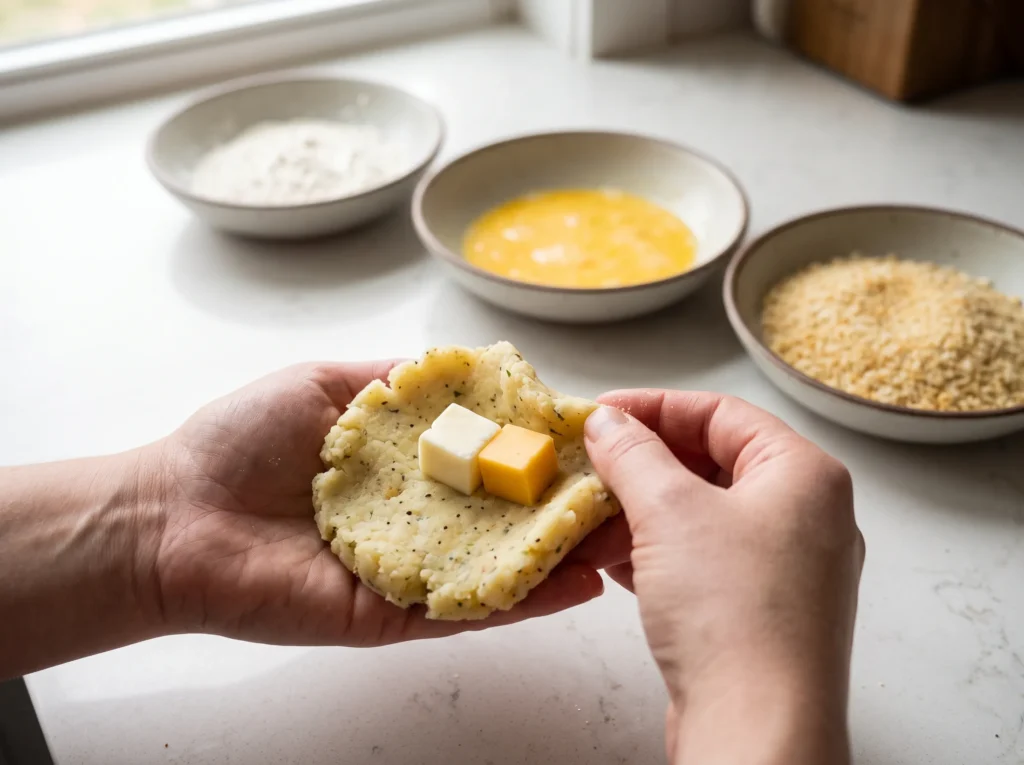
Take about 2 tablespoons of the potato mixture and flatten it gently in the palm of a hand.
Place a small portion of the cheese mixture in the center.
Carefully bring the potato around the cheese and pinch the edges together. Roll gently into a ball, then flatten slightly into a thick patty.
Make sure no cheese is exposed.
6. Prepare the Coating Station
Place the flour in one shallow bowl.
Beat the eggs in a second bowl.
Place the breadcrumbs in a third bowl.
Keeping the bowls close together makes coating the potato pockets quick and easy.
7. Coat Each Pocket
Roll each potato pocket lightly in flour.
Dip it into the beaten egg, allowing the excess to drip away.
Finally, coat it completely with breadcrumbs. Press gently so the crumbs stick to the surface.
8. Chill Before Frying
Place the coated pockets on a plate or tray.
Refrigerate for 15–20 minutes.
This short chilling time helps firm the potato mixture and reduces the chance of the pockets opening during frying.
9. Heat the Oil
Pour the oil into a deep skillet or frying pan.
Heat over medium heat until it reaches about 175°C.
A breadcrumb dropped into the oil should immediately sizzle without burning.
10. Fry Until Golden
Carefully place a few potato pockets into the hot oil.
Do not overcrowd the pan because too many pockets can lower the oil temperature.
Fry for about 2–3 minutes per side, turning gently, until crisp and golden brown.
11. Drain and Serve
Remove the fried pockets with a slotted spoon.
Place them on a wire rack or paper towels to remove excess oil.
Allow them to cool for a couple of minutes before serving. The cheese inside will be extremely hot immediately after frying.
Tips & Variations
Keep the Potatoes Dry
Well-drained potatoes are one of the biggest secrets to successful crispy potato pockets.
Watery mashed potatoes can become sticky and difficult to shape. Letting the cooked potatoes steam briefly after draining helps remove excess moisture.
Do Not Overfill With Cheese
Extra cheese sounds tempting, but too much filling can cause the pockets to split.
A small cube or spoonful of filling is enough to create a rich, gooey center.
Seal the Edges Properly
Before coating, gently inspect each pocket for cracks.
If a small crack appears, use a little extra potato mixture to cover it. Exposed cheese can escape into the hot oil.
Chill Before Frying
Skipping the chilling step is possible, but chilling makes shaping and frying much easier.
The cold potato mixture becomes firmer and holds its shape better.
Use Different Cheese
Mozzarella gives the best stretchy, melty center, while cheddar adds a deeper, sharper flavor.
For a milder version, use mozzarella alone. Monterey Jack or a mild cheese blend can also work well.
Add More Flavor
The potato mixture can be customized with a little onion powder, chili powder, dried parsley, or Italian seasoning.
For extra heat, add a pinch of crushed red pepper flakes.
Make Them Spicy
Add finely chopped green chili or a small pinch of cayenne pepper to the potato mixture.
A spicy cheese filling also works beautifully for adults who enjoy extra heat.
Make Them Without Eggs
For an egg-free coating, mix 3 tablespoons of flour with about 4 tablespoons of water to create a thin slurry.
Dip the potato pockets into the slurry before coating them with breadcrumbs.
Bake Instead of Frying
For a lighter option, arrange the coated pockets on a lightly greased baking sheet.
Spray or brush the tops lightly with oil and bake at 220°C for approximately 20–25 minutes, turning halfway through.
The baked version will be crisp, although deep frying gives the most golden and crunchy exterior.
Air Fryer Method
Preheat an air fryer to 190°C.
Lightly spray the coated pockets with oil and cook for about 10–14 minutes, turning halfway through.
Cooking times can vary slightly depending on the air fryer and pocket size.
Common Mistakes to Avoid
Using watery potatoes: This can make the mixture sticky and hard to shape.
Overfilling the pockets: Too much cheese can push through the potato shell.
Skipping the coating: Breadcrumbs create the crisp outer layer that makes these pockets special.
Using very hot oil: The outside can brown too quickly while the inside stays cold.
Overcrowding the pan: Too many pockets at once can reduce the oil temperature and lead to greasy results.
Turning too often: Gentle handling helps prevent cracks and keeps the coating intact.
Storage & Serving
How to Store Leftovers
Allow the cooked potato pockets to cool completely before storing.
Place them in an airtight container and refrigerate for up to 3 days.
For best texture, reheat them in an air fryer or oven rather than the microwave.
How to Freeze
Arrange uncooked, coated pockets on a parchment-lined tray.
Freeze until firm, then transfer them to a freezer-safe container or bag.
They can be frozen for up to 2 months.
Cook directly from frozen, adding a few extra minutes to the cooking time. Avoid thawing them completely before frying because the outer coating can become soft.
Serving Suggestions
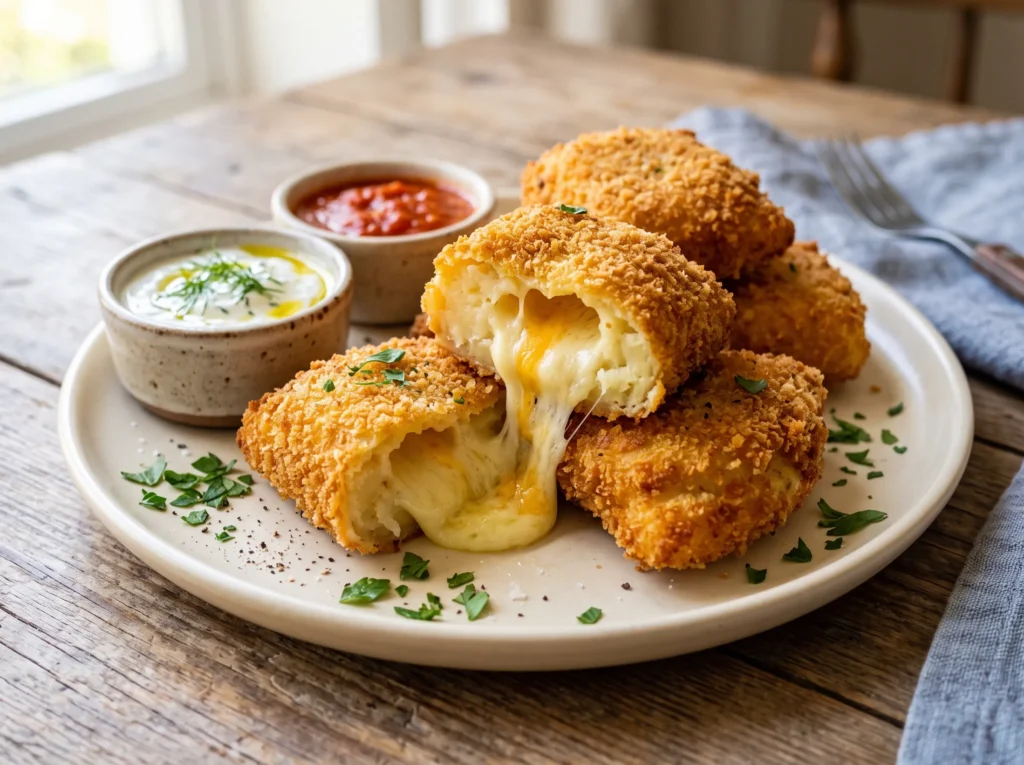
These crispy potato pockets taste fantastic with creamy or tangy dips.
Serve them with garlic yogurt sauce, ketchup, chili sauce, ranch-style dressing, or a simple mint yogurt dip.
They also make a delicious side for grilled chicken, sandwiches, wraps, or a fresh salad.
For a party, arrange the pockets on a large platter with several small bowls of dipping sauce.
Dipping Sauces
Garlic Yogurt Dip
Mix plain yogurt with minced garlic, a pinch of salt, black pepper, and a little chopped parsley.
The cool, creamy sauce provides a refreshing contrast to the hot, crispy potatoes.
Spicy Mayo-Style Dip
Combine mayonnaise with a little chili sauce and a squeeze of lemon juice.
The creamy, spicy flavor works especially well with the rich cheese filling.
Mint Yogurt Sauce
Stir chopped fresh mint into plain yogurt with a pinch of salt and a small squeeze of lemon juice.
This light dip is especially good when the pockets are served as an appetizer.
Crispy Potato Recipes
Potatoes are perfect for creating crunchy snacks because their soft, fluffy center pairs naturally with a crisp coating.
These pockets take that classic combination one step further by hiding a creamy, melted cheese center inside.
The result is similar to a cheese stuffed potato recipe, but the handheld pocket shape makes the dish especially fun for serving.
Party Appetizers
These pockets are an excellent choice for casual gatherings because they can be prepared ahead of time.
Shape and coat them earlier in the day, then refrigerate until ready to cook.
For larger parties, make smaller pockets so guests can easily pick them up and enjoy them with dipping sauces.
Frequently Asked Questions
1. Why are the potato pockets falling apart?
The potatoes may contain too much moisture, or the pockets may not be sealed properly.
Use well-drained potatoes and make sure the cheese is completely enclosed before coating.
2. Can regular potatoes be used?
Yes. Russet or all-purpose potatoes work very well because they become fluffy when cooked.
Waxy potatoes can also work, but the texture may be slightly firmer.
3. Can these potato pockets be made ahead?
Yes. The pockets can be shaped and coated several hours before cooking.
Keep them covered in the refrigerator until ready to fry.
4. What cheese melts best inside potato pockets?
Mozzarella is an excellent choice because it becomes soft, creamy, and stretchy.
Cheddar can be mixed with mozzarella for extra flavor.
5. Can the pockets be made without breadcrumbs?
Breadcrumbs help absorb moisture and create structure, so they are recommended.
For the potato mixture, crushed crackers can sometimes be used as a substitute. For the outer coating, panko breadcrumbs give an especially crunchy finish.
6. Why did the cheese leak into the oil?
The pocket may have been overfilled, or there may have been a crack in the potato layer.
Use a smaller amount of cheese and carefully check every pocket before coating.
7. Can these be cooked in an air fryer?
Yes. Air frying works well and uses much less oil.
Cook at about 190°C until the coating is crisp and golden, turning halfway through.
8. Can frozen potato pockets be fried?
Yes. Frozen pockets can be fried directly from frozen.
Use moderate heat so the outside does not brown too quickly before the center becomes hot.
9. What can replace cornstarch?
An equal amount of potato starch can be used.
A little extra plain flour can also help bind the mixture, although cornstarch gives a lighter texture.
10. Are these suitable for children?
Yes, provided the filling and seasonings are adjusted to suit their preferences.
Allow the pockets to cool slightly before serving because melted cheese can remain very hot inside.
Conclusion
These Potato Cheese Stuffed Pockets turn simple potatoes and cheese into a crispy, golden snack with a soft, fluffy center and irresistible melted cheese filling.
The ingredients are easy to find, the shaping process is simple, and the pockets can be fried, baked, or air-fried depending on the preferred texture.
Serve them hot with a favorite creamy or spicy dip for a comforting snack, party appetizer, or satisfying side dish. With their crunchy coating and rich cheesy center, these crispy potato pockets are sure to become a family favorite.