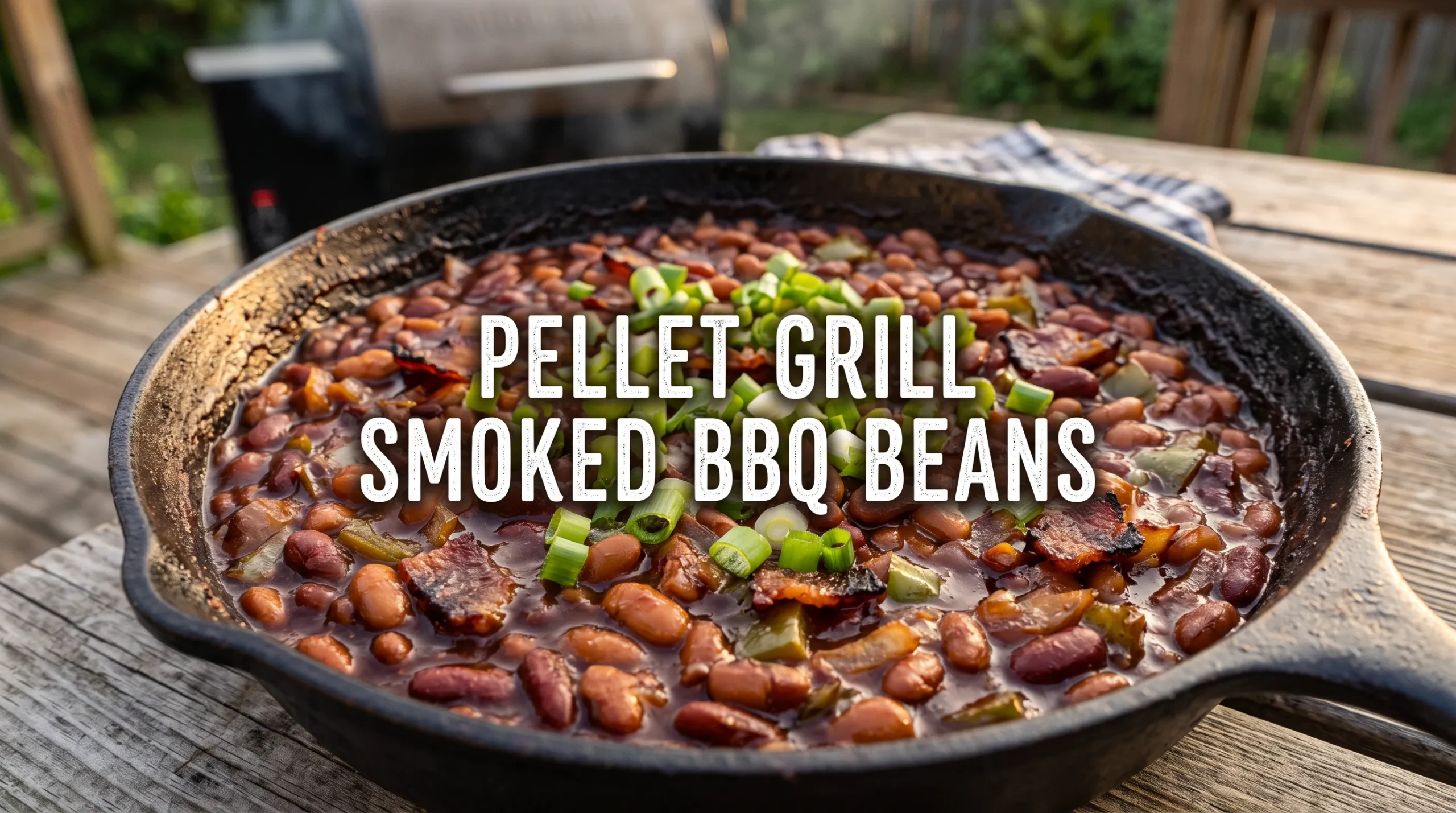
Pellet Grill Smoked BBQ Beans
Rich, smoky, sweet, and savory, these Pellet Grill Smoked BBQ Beans turn simple canned beans into a deeply flavorful side dish with very little effort.
The beans slowly absorb smoky wood-fired flavor while simmering with barbecue sauce, brown sugar, mustard, onions, peppers, and crispy halal beef bacon.
The result is a thick, saucy bean dish with tender beans, caramelized edges, and a delicious balance of sweet and tangy BBQ flavor.
This recipe is especially useful for backyard gatherings because the pellet grill handles the cooking while the beans develop their flavor. There is no complicated technique and no need to constantly stir the pot.
Serve these smoked BBQ beans alongside grilled chicken, beef burgers, smoked beef, or roasted vegetables. They also make a hearty addition to a casual family dinner.
For another cookout-friendly side, serve these beans with a simple creamy coleslaw recipe. The cool, crunchy cabbage makes a delicious contrast to the warm, smoky beans.
Ingredients
For the Smoked BBQ Beans
- 4 cans (15 ounces each) pinto beans, drained and rinsed
- 1 can (15 ounces) kidney beans, drained and rinsed
- 1 cup BBQ sauce, alcohol-free and halal-friendly
- ½ cup packed light brown sugar
- ½ cup beef broth or chicken broth
- ½ cup finely diced yellow onion
- ½ cup finely diced green bell pepper
- ½ cup cooked halal beef bacon, chopped
- 2 tablespoons yellow mustard
- 1 tablespoon Worcestershire-style sauce, alcohol-free and halal-friendly
- 2 teaspoons smoked paprika
- 1 teaspoon garlic powder
- ½ teaspoon onion powder
- ½ teaspoon black pepper
- ¼ teaspoon cayenne pepper, optional
- 1 tablespoon olive oil
For Finishing
- 2 tablespoons chopped fresh parsley or green onion
- 2 tablespoons extra BBQ sauce, optional
Check labels carefully when choosing BBQ sauce, Worcestershire-style sauce, beef broth, and halal beef bacon. Some commercial products can contain alcohol, pork-derived ingredients, or non-halal flavorings.
Tools Needed
- Pellet grill
- 10- to 12-inch cast-iron skillet or disposable aluminum pan
- Large mixing bowl
- Measuring cups and spoons
- Wooden spoon or spatula
- Knife and cutting board
- Heat-resistant gloves
Step-by-Step Instructions
1. Preheat the Pellet Grill
Set the pellet grill to 250°F (120°C).
Allow the grill to fully preheat before adding the beans. A steady cooking temperature helps the beans develop a deeper smoky flavor.
For a classic BBQ profile, use hickory or oak pellets. A milder wood such as apple can also be used.
2. Prepare the Beans
Drain and rinse the pinto beans and kidney beans.
Place them in a large mixing bowl and gently stir to combine.
Rinsing removes excess liquid and helps the BBQ sauce become the main flavor of the dish.
3. Cook the Onion and Pepper
Heat the olive oil in a cast-iron skillet or grill-safe pan.
Add the diced onion and green bell pepper.
Cook for about 3 to 5 minutes until the vegetables begin to soften.
This short step gives the onions and peppers a sweeter, more rounded flavor.
4. Add the Beef Bacon
Stir the chopped cooked halal beef bacon into the softened vegetables.
Cook for another 1 to 2 minutes so the savory flavor blends with the onions and peppers.
The beef bacon adds a smoky, salty element that works especially well with the sweet BBQ sauce.
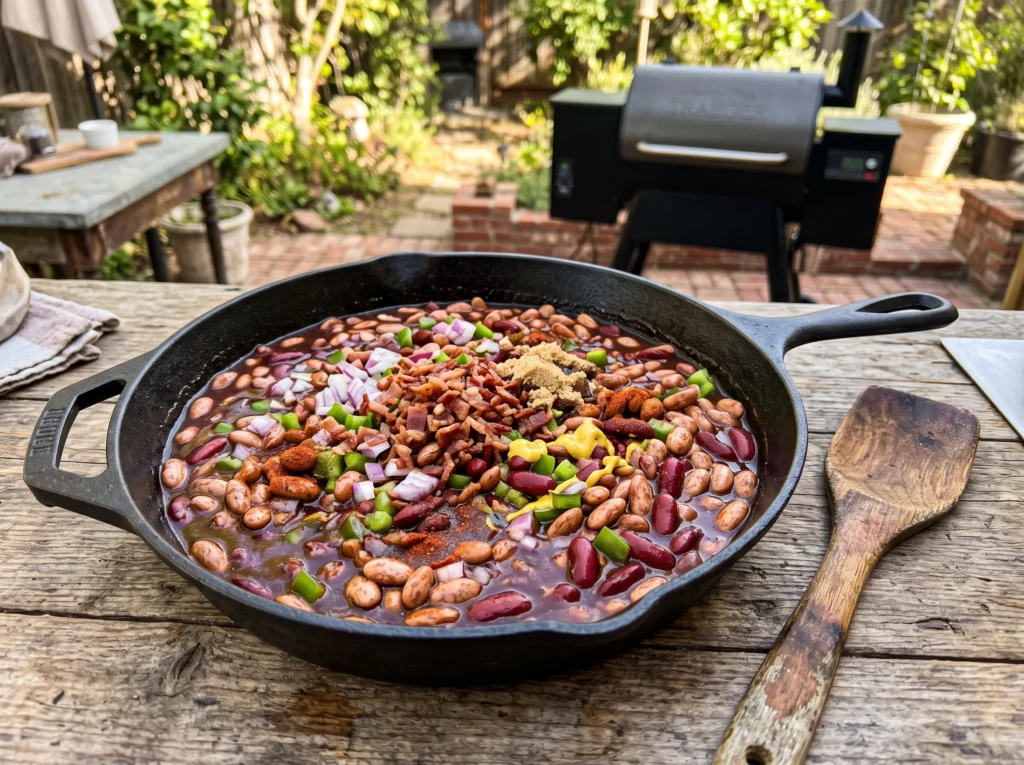
5. Build the Sauce
Add the BBQ sauce, brown sugar, beef broth, mustard, Worcestershire-style sauce, smoked paprika, garlic powder, onion powder, black pepper, and optional cayenne pepper.
Stir until the sauce is smooth and evenly combined.
The mixture should smell rich, smoky, and slightly sweet.
6. Add the Beans
Gently fold the drained beans into the sauce.
Stir carefully so the beans stay mostly intact.
The sauce should coat the beans evenly without becoming too watery.
7. Transfer to the Pellet Grill
Place the skillet or grill-safe pan directly on the pellet grill grates.
Close the lid and smoke the beans at 250°F (120°C).
Cook for about 2 hours, stirring gently every 30 to 40 minutes.
8. Check the Consistency
After about 90 minutes, check the beans.
The sauce should become thicker and darker, while the beans should remain tender but not mushy.
If the beans look too dry, stir in a few tablespoons of beef broth.
If the sauce is too thin, continue cooking uncovered until it reaches the desired consistency.
9. Develop the Smoky Finish
Continue smoking until the beans have a rich BBQ aroma and a slightly caramelized surface.
The exact cooking time can vary depending on the pellet grill and the depth of the pan.
Avoid letting the beans dry out completely. They should remain saucy and spoonable.
10. Finish and Serve
Remove the beans from the pellet grill using heat-resistant gloves.
Taste carefully and adjust with a little extra BBQ sauce or black pepper if needed.
Garnish with chopped fresh parsley or green onion.
Serve hot alongside your favorite grilled or smoked main dishes.
Tips & Variations
Use a Shallow Pan
A wide, shallow skillet gives the beans more surface area for smoke exposure.
It also encourages the top layer to caramelize slightly while the center stays rich and saucy.
Don’t Overcook the Beans
The beans are already cooked before they go onto the grill.
The pellet grill is mainly used to develop smoky flavor and thicken the sauce, so there is no need to cook them until they become mushy.
Stir Gently
Frequent or aggressive stirring can break the beans apart.
A gentle stir every 30 to 40 minutes is enough to redistribute the sauce and prevent excessive sticking.
Adjust the Sweetness
For sweeter BBQ beans, increase the brown sugar to ⅔ cup.
For a more savory version, reduce the brown sugar to ¼ cup and use a tangier BBQ sauce.
Add More Heat
Add ½ teaspoon cayenne pepper instead of ¼ teaspoon for a stronger kick.
Finely chopped jalapeño can also be added with the onion and bell pepper.
Use fresh jalapeño for a sharper heat or a mild green chili for a gentler flavor.
Try Different Beans
The combination of pinto and kidney beans gives the dish a hearty texture.
Black beans, navy beans, or cannellini beans can also be added or substituted.
Keep the total amount of beans approximately the same so the sauce-to-bean ratio stays balanced.
Use Homemade BBQ Sauce
A homemade BBQ sauce can replace the prepared sauce.
Choose a sauce with a balance of tomato, sweetness, acidity, and spices.
Make sure the sauce is alcohol-free and halal-friendly.
Choose the Right Pellets
Hickory gives the strongest classic BBQ-style smoke.
Oak provides a balanced smoky flavor, while apple creates a milder and slightly sweeter aroma.
Avoid using a very strong smoke for the entire cooking time if a delicate flavor is preferred.
Add Beef Sausage
For an even heartier version, replace half of the beef bacon with cooked halal beef sausage.
Slice the sausage into small pieces and brown it before mixing it into the beans.
Make It Vegetarian
Omit the beef bacon and use vegetable broth.
Add extra smoked paprika, diced mushrooms, or finely chopped bell pepper for more savory depth.
Make sure the BBQ sauce and Worcestershire-style sauce are also vegetarian and alcohol-free.
Add a Smoky Tomato Flavor
For extra richness, add 2 tablespoons tomato paste to the sauce.
This gives the beans a deeper tomato flavor and helps the sauce become thick and glossy.
Don’t Add Too Much Liquid
The beans release some moisture as they heat.
Start with the measured ½ cup broth and add more only if the beans become too thick during smoking.
Too much liquid can prevent the sauce from becoming rich and concentrated.
Taste Before Adding Salt
The beef bacon, BBQ sauce, mustard, and broth can already contain plenty of salt.
Taste the beans near the end of cooking before adding any additional salt.
Serve With Other BBQ Favorites
These smoky beans pair beautifully with tender smoked beef recipes, grilled chicken, burgers, kebabs, and roasted corn.
For a complete cookout plate, add a fresh salad or crunchy vegetable side.
Storage & Serving
Allow leftover beans to cool slightly before transferring them to an airtight container.
Refrigerate within 2 hours of cooking.
The beans will keep in the refrigerator for approximately 3 to 4 days when stored properly.
How to Reheat
Reheat the beans gently in a saucepan over medium-low heat.
Add a splash of beef broth or water if the sauce has thickened too much in the refrigerator.
They can also be reheated in the microwave in short intervals, stirring between each interval.
Can the Beans Be Frozen?
Yes, these smoked BBQ beans can be frozen.
Allow them to cool completely, then transfer them to a freezer-safe container.
Freeze for up to 2 to 3 months for the best quality.
Thaw overnight in the refrigerator and reheat gently. Add a small splash of broth if the sauce seems too thick.
Best Serving Ideas
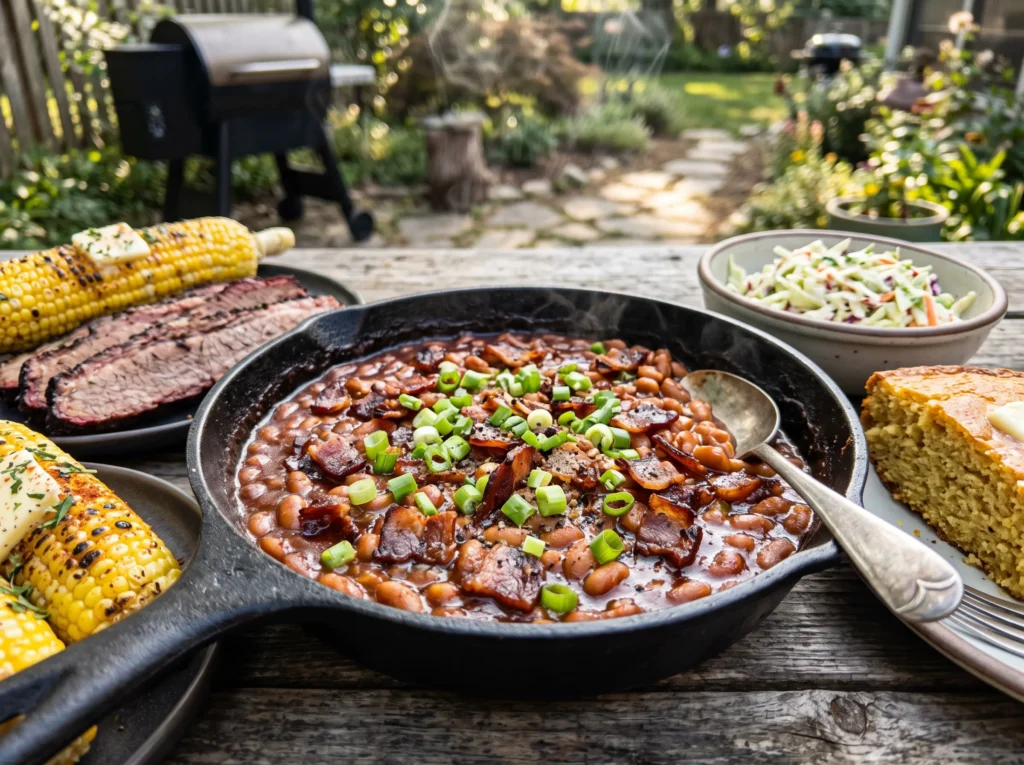
Serve the beans hot in a cast-iron skillet or large serving bowl.
They are especially good with:
- Grilled chicken
- Smoked beef
- Beef burgers
- Grilled beef kebabs
- Roasted corn
- Crispy potato wedges
- Creamy coleslaw
- Fresh garden salad
- Warm cornbread made without alcohol-containing ingredients
For a full BBQ spread, add easy homemade cornbread and a fresh vegetable salad.
Frequently Asked Questions
Can canned beans be used for smoked BBQ beans?
Yes. Canned beans make this recipe quick and convenient.
Draining and rinsing them first helps control the liquid and allows the BBQ sauce to provide most of the flavor.
How long should beans smoke on a pellet grill?
At 250°F, about 2 hours is a good starting point.
The beans can cook a little longer if a thicker sauce and stronger smoky flavor are preferred.
What temperature is best for smoked BBQ beans?
A pellet grill temperature of 250°F (120°C) works well.
It provides enough heat to warm and thicken the beans while allowing them to absorb smoky flavor gradually.
Can these beans be made without beef bacon?
Yes. Simply omit the beef bacon and use vegetable broth for a vegetarian-friendly version.
Additional smoked paprika can help replace some of the smoky character.
Why are the smoked beans too watery?
The beans may need more time on the grill.
Leave the pan uncovered and continue cooking until the sauce thickens. Avoid adding extra broth unless the beans are becoming dry.
Why did the beans become mushy?
Overcooking and excessive stirring can cause the beans to break down.
Stir gently and check the beans regularly during the final hour.
Can smoked BBQ beans be made ahead?
Yes. Prepare the beans earlier in the day and refrigerate them once cooled.
Reheat gently before serving. The flavors often become even more developed after resting.
Which wood pellets are best for BBQ beans?
Hickory and oak are excellent choices for a classic BBQ flavor.
Apple pellets work well when a lighter smoke profile is preferred.
Can fresh beans be used instead of canned?
Yes, but they must be fully cooked and tender before being added to the recipe.
Using canned beans keeps the recipe much faster and more convenient.
How can the beans be made less sweet?
Reduce the brown sugar and choose a tangier BBQ sauce.
Adding a little extra mustard can also balance the sweetness with a sharper flavor.
Can these beans be cooked on a regular grill?
Yes. A grill capable of maintaining a steady low temperature can work.
For a smoky result, use a suitable smoker box or other grill-safe smoking method, following the grill manufacturer’s instructions.
Are pellet grill beans gluten-free?
They can be, but the ingredients must be checked carefully.
Choose gluten-free BBQ sauce, broth, Worcestershire-style sauce, beef bacon, and other packaged ingredients if gluten-free preparation is required.
Conclusion
These Pellet Grill Smoked BBQ Beans are an easy way to bring deep, smoky BBQ flavor to the table without complicated preparation.
Tender pinto and kidney beans soak up a rich sauce made with BBQ sauce, brown sugar, mustard, smoked paprika, vegetables, and savory halal beef bacon.
After a slow session on the pellet grill, the sauce becomes thick and glossy while the top develops a deliciously caramelized finish.
Serve them hot beside grilled meats, burgers, kebabs, or fresh vegetables for a comforting cookout side dish.
With simple ingredients, easy preparation, and plenty of smoky flavor, these beans are a dependable addition to any backyard BBQ or family meal.