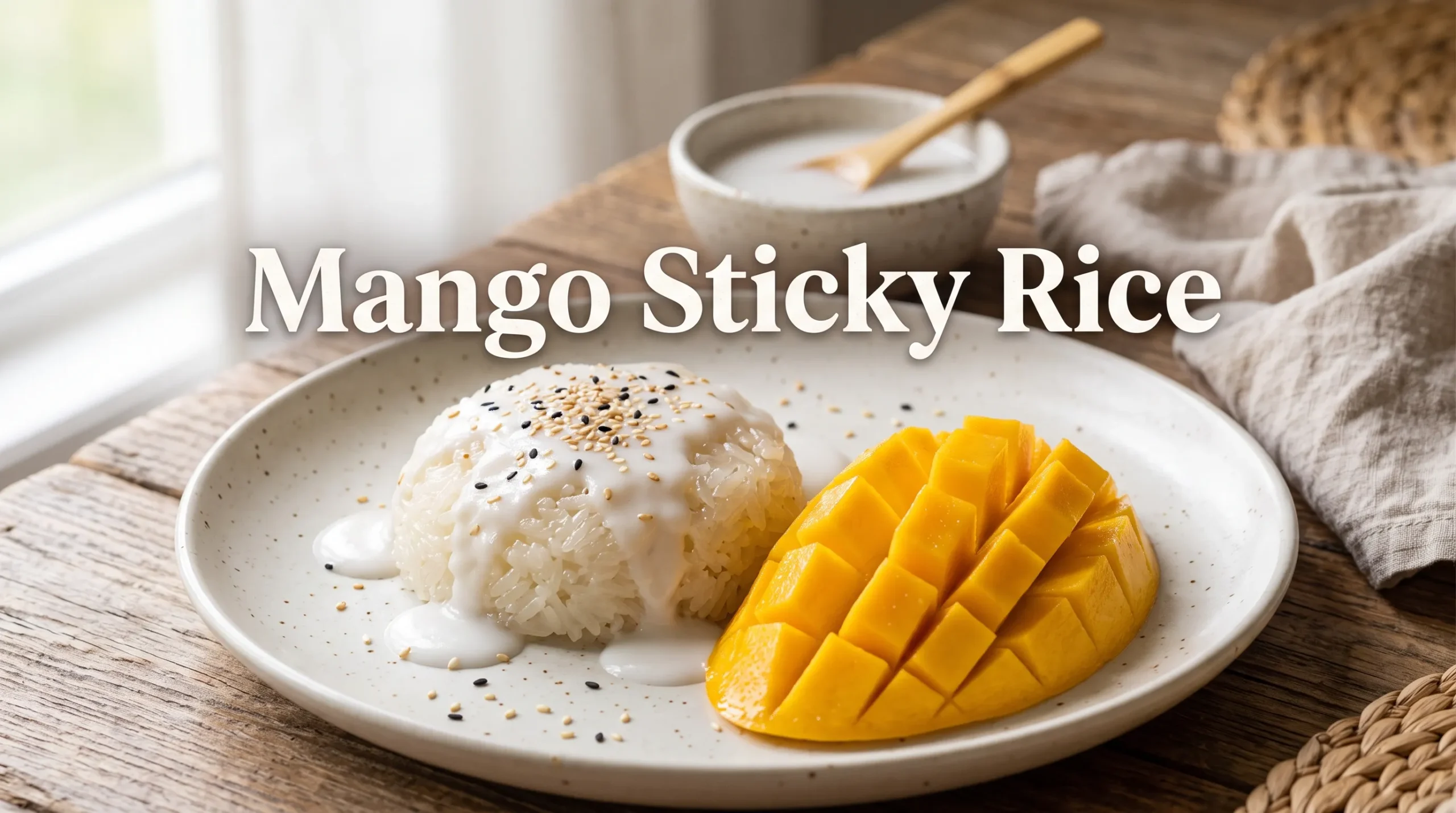
Mango Sticky Rice
Soft, chewy sticky rice, rich coconut cream, and sweet, juicy mango come together in this irresistible Mango Sticky Rice recipe.
This Thai-inspired dessert has a beautiful balance of creamy, fruity, and lightly sweet flavors. The warm coconut-infused rice becomes wonderfully tender and chewy, while fresh mango adds a bright, juicy contrast.
Despite its impressive presentation, this dessert is surprisingly simple to prepare at home. A few basic ingredients and the right cooking method are all that is needed to create a silky coconut sauce and perfectly tender sticky rice.
Mango Sticky Rice is especially delicious during mango season, but it can be enjoyed whenever ripe mangoes are available. It makes a refreshing dessert after dinner, a sweet afternoon treat, or an elegant addition to a homemade Asian-inspired meal.
For more fruity desserts, try these easy fresh mango dessert recipes for simple ways to use ripe mangoes.
Ingredients
For the Sticky Rice
- 1 1/2 cups Thai glutinous rice, also called sticky rice
- 1 1/2 cups water, for steaming
- 1/4 teaspoon salt
For the Coconut Sauce
- 1 cup full-fat coconut milk
- 1/3 cup granulated sugar
- 1/2 teaspoon salt
- 1 teaspoon cornstarch
- 1 tablespoon cold water
For Serving
- 2 large ripe mangoes
- 1 tablespoon toasted sesame seeds, optional
- 2 tablespoons coconut cream, optional
- Fresh mint leaves, optional
Tools Needed
- Large mixing bowl
- Fine-mesh sieve
- Steamer basket or steaming pot
- Heatproof bowl
- Small saucepan
- Whisk
- Sharp knife
- Serving plates or bowls
Step-by-Step Instructions
1. Rinse the Sticky Rice
Place the glutinous rice in a large bowl.
Cover it with cool water and gently swirl the grains with clean hands.
Drain the cloudy water and repeat the process several times until the water becomes noticeably clearer.
Proper rinsing removes excess surface starch and helps the cooked rice develop a pleasant chewy texture rather than becoming overly gummy.
2. Soak the Rice
Cover the rinsed sticky rice with fresh water.
Let it soak for at least 4 hours, or preferably overnight.
The grains should become plump after soaking.
Do not skip this step when using traditional Thai sticky rice. Soaking allows the grains to steam evenly and become soft throughout.
3. Prepare the Steamer
Fill a steamer pot with enough water to create steady steam without touching the rice.
Bring the water to a gentle boil.
Drain the soaked rice thoroughly and transfer it to a heatproof steaming basket or lined steamer.
Spread the rice into an even layer.
4. Steam the Rice
Cover the steamer and steam the rice for about 25–30 minutes.
After about 15 minutes, gently turn the rice with a spoon or spatula to encourage even cooking.
Continue steaming until the grains are tender, translucent, and chewy.
The rice should hold together when pressed but should not be wet or soupy.
5. Make the Coconut Sauce
While the rice is steaming, pour the coconut milk into a small saucepan.
Add the sugar and salt.
Warm the mixture over low to medium heat, stirring until the sugar dissolves.
Do not let the coconut milk reach a vigorous boil.
Gentle heating keeps the sauce smooth and creamy.
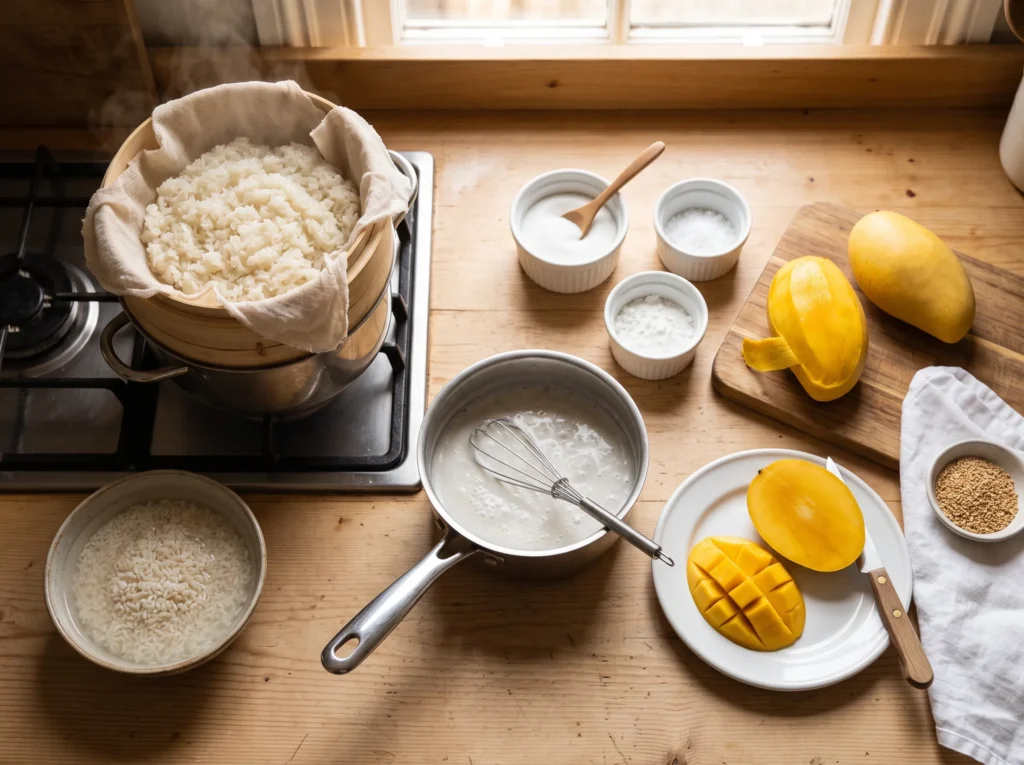
6. Thicken the Sauce
Mix the cornstarch with 1 tablespoon cold water in a small bowl.
Whisk until completely smooth.
Slowly add the cornstarch mixture to the warm coconut milk while whisking continuously.
Cook for about 1–2 minutes until the sauce becomes lightly thickened.
The sauce should remain pourable rather than becoming pudding-like.
7. Combine the Rice and Coconut Sauce
Transfer the freshly steamed sticky rice to a large bowl.
Reserve about 1/4 cup of the coconut sauce for serving.
Pour the remaining warm sauce gradually over the rice.
Gently fold the rice and sauce together with a spatula or wooden spoon.
Do not mash or vigorously stir the rice.
8. Let the Rice Absorb the Sauce
Cover the bowl loosely and allow the rice to rest for about 15–20 minutes.
During this time, the warm sticky rice absorbs the sweet coconut sauce.
The grains become creamy, tender, and beautifully fragrant.
Give the rice one gentle stir halfway through resting if needed.
9. Prepare the Mangoes
Peel the mangoes and remove the flesh from the pits.
Cut the fruit into thin slices or bite-sized pieces.
Choose mangoes that are ripe, fragrant, and naturally sweet.
The mango should be soft enough to slice easily but firm enough to hold its shape on the plate.
10. Assemble and Serve
Spoon a portion of coconut sticky rice onto each serving plate.
Arrange fresh mango slices beside or partially over the rice.
Drizzle with some of the reserved coconut sauce.
Finish with toasted sesame seeds and fresh mint leaves if desired.
Serve immediately for the best combination of creamy rice and cool, juicy mango.
Tips & Variations
Use the Right Rice
Traditional Thai glutinous rice gives this dessert its signature chewy, sticky texture.
Regular long-grain white rice or basmati rice will not produce the same result.
Look for packages labeled Thai sticky rice, glutinous rice, or sweet rice.
Do Not Skip the Soaking
Soaking is one of the most important steps.
Without enough soaking time, the rice may cook unevenly, leaving some grains hard while others become soft.
For convenience, soak the rice overnight and steam it the next day.
Steam Instead of Boiling
Traditional sticky rice is steamed rather than cooked like ordinary rice.
Steaming keeps the grains distinct while creating the characteristic soft and chewy texture.
Boiling can make the rice waterlogged and overly sticky.
Keep the Coconut Milk Gentle
Coconut milk can separate if it is boiled aggressively.
Heat it gently until the sugar dissolves and the sauce becomes smooth.
There is no need for a rolling boil.
Adjust the Sweetness
Very ripe mangoes are naturally sweet, so the amount of sugar can be reduced slightly if preferred.
For a sweeter dessert, add an extra tablespoon of sugar to the coconut sauce.
Use Full-Fat Coconut Milk
Full-fat coconut milk creates a richer, silkier sauce.
Light coconut milk can be used, but the final dessert will be less creamy.
Try Coconut Cream
For an extra-rich finish, replace part of the coconut milk with coconut cream.
This creates a thicker and more luxurious sauce.
Add Toasted Sesame Seeds
A small sprinkle of toasted sesame seeds adds a pleasant nutty flavor and subtle crunch.
Black sesame seeds can also be used for a striking contrast against the pale coconut rice.
Try Other Fruits
Mango is the classic pairing, but the coconut sticky rice can also be served with ripe peaches, pineapple, strawberries, or banana.
Choose fruit that is naturally sweet and juicy.
Add a Little Pandan
For a fragrant variation, add a small pandan leaf while gently warming the coconut milk.
Remove the leaf before serving.
Pandan gives the coconut sauce a delicate floral aroma.
Avoid Too Much Sauce
The rice should be creamy and moist, but it should not swim in coconut milk.
Add the sauce gradually and allow the rice time to absorb it.
Choose the Right Mango
Ataulfo, Kent, and other naturally sweet mango varieties work beautifully.
The most important factor is ripeness. The fruit should smell fragrant near the stem and give slightly when gently pressed.
Make Individual Portions
For parties or dinner gatherings, divide the sticky rice into small serving bowls.
Top each portion with neatly arranged mango slices and a drizzle of coconut sauce.
This creates an elegant dessert without complicated plating.
For another simple tropical dessert, try these easy coconut dessert recipes.
Storage & Serving
Mango Sticky Rice is best served shortly after preparation.
The freshly prepared rice is soft, chewy, creamy, and fragrant, while the mango is cool and juicy.
If leftovers remain, store the sticky rice and mango separately.
Place the sticky rice in an airtight container and refrigerate for up to 2 days.
Store the sliced mango in a separate airtight container and refrigerate for up to 2 days as well.
The coconut sauce can also be refrigerated separately.
When ready to serve, gently reheat the sticky rice in the microwave in short intervals.
Add a splash of coconut milk if the rice has become firm.
Avoid overheating because excessive heat can make the rice dry and tough.
The coconut sauce may thicken in the refrigerator. Warm it gently and whisk in a small splash of coconut milk or water to loosen it.
Fresh mango is best added just before serving.
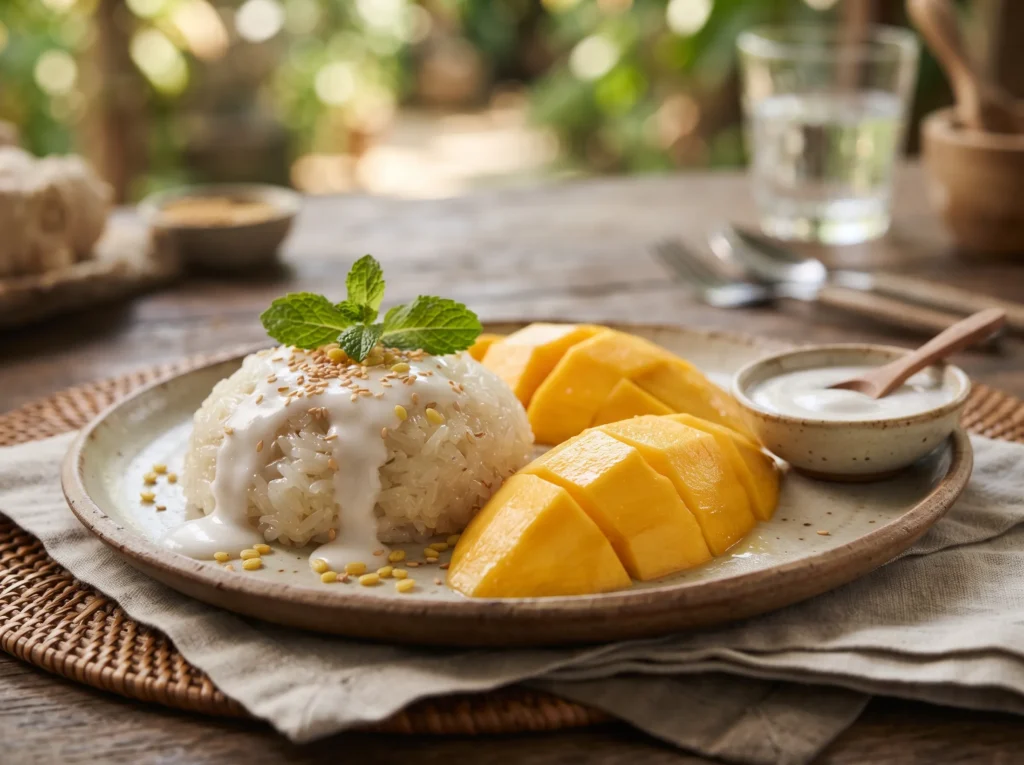
For the prettiest presentation, arrange the mango slices in a fan shape beside a mound of sticky rice.
Drizzle the coconut sauce over the top and finish with sesame seeds.
This dessert pairs particularly well with light meals because its cool fruit and creamy coconut flavor provide a refreshing finish.
For more tropical inspiration, explore these easy mango recipes for dessert.
Frequently Asked Questions
Is Mango Sticky Rice served hot or cold?
The sticky rice is usually served warm or at room temperature, while the mango can be cool and fresh from the refrigerator.
This contrast makes the dessert especially enjoyable.
Can regular rice be used for Mango Sticky Rice?
Regular rice is not recommended for the traditional texture.
Thai glutinous rice contains the starch needed to create the characteristic chewy and sticky consistency.
How long should sticky rice soak?
At least 4 hours is recommended.
For the most convenient preparation, soak the rice overnight for approximately 8 hours.
Can the rice be soaked overnight?
Yes. Overnight soaking is an easy way to prepare the rice ahead of time.
Keep the soaking rice covered and refrigerated if the kitchen is warm.
Why is the sticky rice hard after steaming?
The rice may not have soaked long enough, or it may not have received enough steam.
Make sure the grains are thoroughly soaked and that the steamer maintains a steady flow of steam.
Can canned mango be used?
Fresh mango is preferred because it provides a juicy texture and bright flavor.
Canned mango can be used when fresh mango is unavailable, but drain it thoroughly before serving.
Can Mango Sticky Rice be made less sweet?
Yes. Reduce the sugar in the coconut sauce according to the sweetness of the mango.
Naturally ripe mangoes can provide plenty of sweetness on their own.
Can coconut cream be used instead of coconut milk?
Yes. Coconut cream can be used for a richer, thicker sauce.
Because it is more concentrated, it may need to be loosened with a little water or additional coconut milk.
Why does the coconut sauce become thick after cooling?
Coconut fat firms up when chilled.
Gently warm the sauce and whisk it until smooth before serving.
Can Mango Sticky Rice be frozen?
The texture of sticky rice can change after freezing and thawing, so freezing is not recommended for the best quality.
Fresh preparation or short-term refrigeration gives a much better texture.
Conclusion
Creamy coconut sauce, tender chewy rice, and ripe juicy mango make Mango Sticky Rice a wonderfully simple dessert with an elegant finish.
The recipe uses a handful of everyday ingredients, and the preparation becomes easy once the sticky rice has been properly soaked and steamed.
Serve it warm or at room temperature with plenty of fresh mango and a final spoonful of coconut sauce.
For a soft, fragrant, tropical dessert that feels special without being complicated, Mango Sticky Rice is an excellent recipe to try and share.