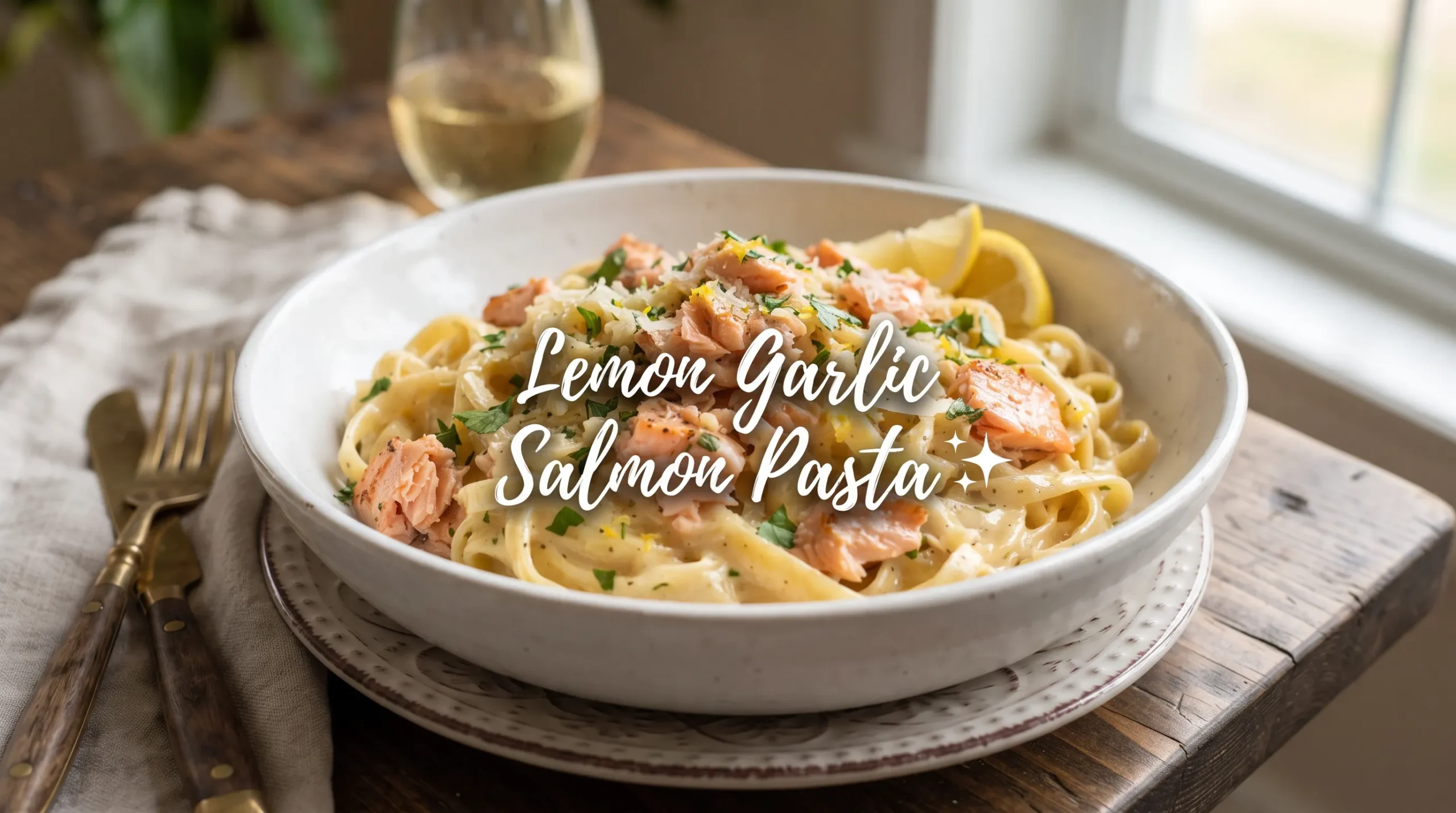
Lemon Garlic Salmon Pasta ✨
Tender salmon, silky pasta, bright lemon, and fragrant garlic come together in this creamy Lemon Garlic Salmon Pasta ✨. It is rich enough to feel special but simple enough for a busy weeknight dinner.
The salmon is gently cooked until flaky and juicy, then combined with a smooth garlic cream sauce and perfectly cooked pasta. Fresh lemon juice adds a bright finish that balances the creamy sauce beautifully.
This easy salmon pasta is made with simple ingredients and does not require complicated cooking techniques. The entire dish comes together in about 30 minutes, making it ideal for family dinners or relaxed weekend meals.
Every forkful brings a delicious mix of creamy, buttery, garlicky, and citrusy flavors. The tender flakes of salmon add satisfying protein, while the pasta makes the dish filling and comforting.
For a lighter texture, add a handful of fresh spinach or peas. For extra richness, finish the pasta with a little grated Parmesan and fresh parsley.
Ingredients
For the Salmon
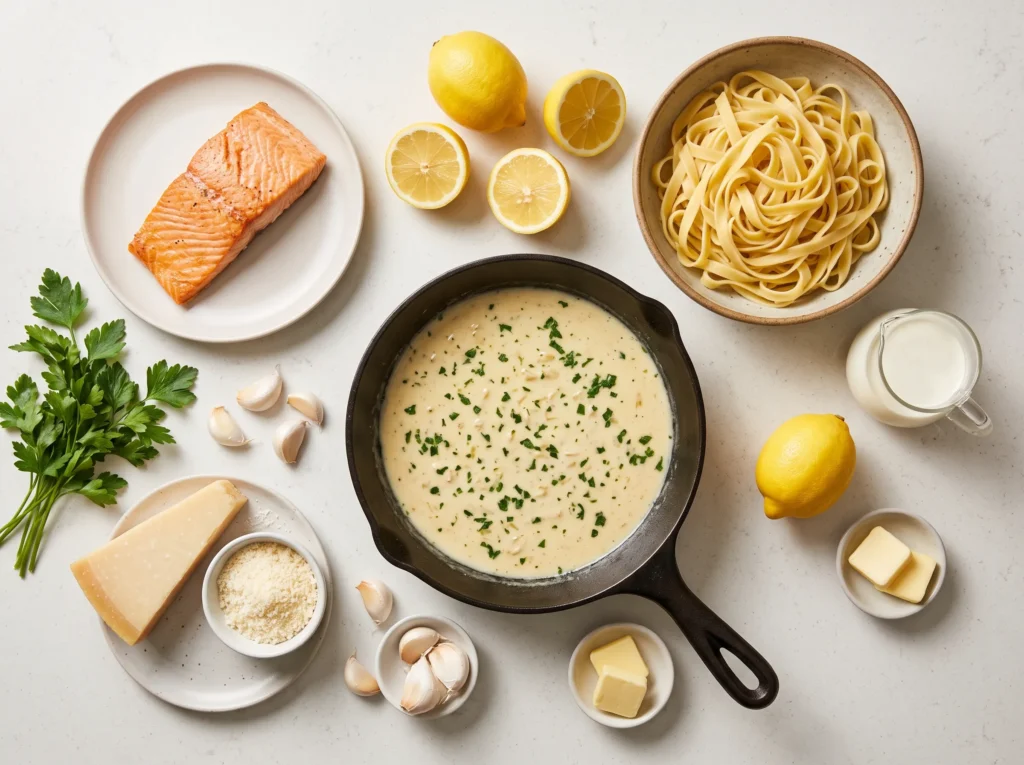
- 450 g boneless, skinless salmon fillets
- 1 tablespoon olive oil
- 1/2 teaspoon paprika
- 1/2 teaspoon garlic powder
- 1/4 teaspoon salt
- 1/4 teaspoon black pepper
- 1 tablespoon fresh lemon juice
For the Pasta
- 300 g pasta, such as fettuccine, linguine, penne, or spaghetti
- 1 tablespoon salt, for the pasta water
For the Lemon Garlic Sauce
- 2 tablespoons unsalted butter
- 5 garlic cloves, finely minced
- 1 cup heavy cream
- 1/2 cup finely grated Parmesan cheese
- 1/2 cup reserved pasta water
- 2 tablespoons fresh lemon juice
- 1 teaspoon lemon zest
- 1/2 teaspoon black pepper
- 1/4 teaspoon salt, or to taste
- 1/4 teaspoon dried oregano
- 2 tablespoons chopped fresh parsley
Optional Additions
- 1 cup baby spinach
- 1/2 cup frozen peas, thawed
- 1/4 teaspoon red pepper flakes for gentle heat
- Extra Parmesan for serving
- Lemon wedges for serving
Tools Needed
- Large pot
- Large skillet
- Colander
- Wooden spoon or spatula
- Tongs
- Sharp knife
- Cutting board
- Fine grater or zester
- Measuring cups and spoons
How to Make Lemon Garlic Salmon Pasta
1. Prepare the salmon
Pat the salmon fillets dry with paper towels.
Season both sides with paprika, garlic powder, salt, and black pepper. Drizzle with lemon juice and gently rub the seasoning over the fish.
Drying the salmon first helps it brown more nicely in the pan.
2. Cook the salmon
Heat the olive oil in a large skillet over medium heat.
Place the salmon in the hot skillet and cook for about 4 to 5 minutes on the first side.
Carefully turn the salmon and cook for another 3 to 5 minutes, depending on thickness.
The salmon should be opaque and flake easily with a fork. The center should reach 145°F or 63°C for safe consumption.
Transfer the cooked salmon to a clean plate and let it rest.
3. Cook the pasta
While the salmon cooks, bring a large pot of water to a boil.
Add the salt and pasta. Cook according to the package directions until al dente.
The pasta should be tender but still have a slight bite in the center.
Before draining, reserve 1/2 cup of the pasta water.
Drain the pasta well and set it aside.
4. Make the garlic butter base
Place the same skillet over medium-low heat.
Add the butter and allow it to melt gently.
Add the minced garlic and cook for about 30 to 45 seconds, stirring constantly.
The garlic should become fragrant without turning dark brown. Burnt garlic can make the sauce taste bitter.
5. Add the cream
Pour the heavy cream into the skillet.
Add the dried oregano and black pepper.
Stir gently and allow the sauce to simmer over low heat for 2 to 3 minutes.
Avoid boiling the cream aggressively. A gentle simmer creates a smoother sauce.
6. Add Parmesan
Reduce the heat to low.
Add the grated Parmesan gradually while stirring.
Continue stirring until the cheese melts into the cream and creates a smooth, velvety sauce.
If the sauce looks too thick, add a splash of the reserved pasta water.
7. Add lemon
Stir in the fresh lemon juice and lemon zest.
The lemon adds a bright, fresh flavor that cuts through the richness of the cream and butter.
Taste the sauce before adding more salt because Parmesan already contains salt.
8. Add the pasta
Add the drained pasta directly to the skillet.
Use tongs to gently toss the pasta through the sauce.
Add the reserved pasta water a little at a time until the sauce becomes silky and coats the pasta evenly.
Do not add all the water at once. The amount needed depends on the pasta and how thick the sauce has become.
9. Add optional vegetables
For extra color and nutrition, add baby spinach to the warm pasta.
Toss for 1 to 2 minutes until the spinach wilts.
Thawed peas can also be added and warmed through for about 2 minutes.
These additions are optional and can be left out for a simple salmon pasta.
10. Flake the salmon
Use a fork to break the cooked salmon into large, tender flakes.
Avoid making the pieces too small. Larger flakes provide a more satisfying texture throughout the pasta.
11. Combine everything
Gently fold the salmon into the creamy pasta.
Keep the heat on low for about 30 seconds, just enough to warm the salmon through.
Avoid vigorous stirring because it can break the fish into tiny pieces.
12. Finish and serve
Remove the skillet from the heat.
Sprinkle the pasta with fresh parsley and extra Parmesan if desired.
Serve immediately with lemon wedges on the side.
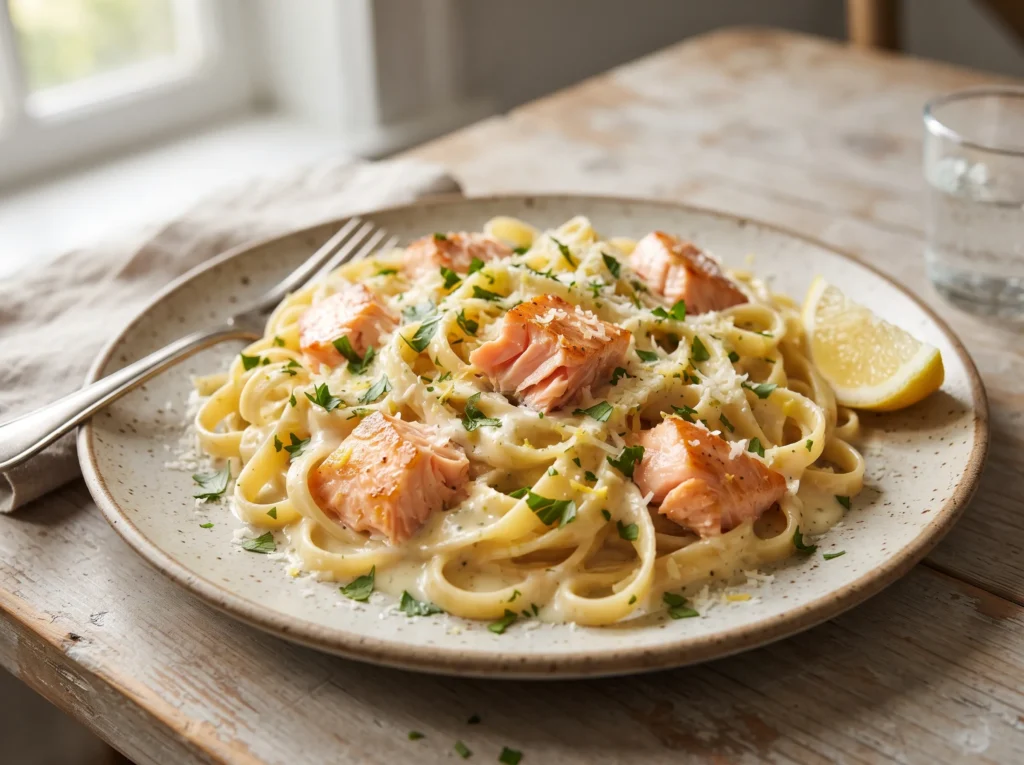
The finished pasta should be creamy and glossy, with tender salmon flakes, fragrant garlic, and a fresh citrus finish.
Lemon Garlic Salmon Pasta ✨ Tips & Variations
Use fresh salmon when possible
Fresh salmon gives the dish a tender, buttery texture and rich flavor.
Frozen salmon also works well. Thaw it completely in the refrigerator and pat it very dry before seasoning.
Choose the right pasta
Long pasta such as linguine or fettuccine holds the creamy sauce beautifully.
Penne, rigatoni, or other short pasta shapes are also excellent choices because the sauce collects inside the pasta.
For another comforting pasta dinner, try this easy creamy chicken pasta.
Do not overcook the salmon
Salmon can become dry when cooked for too long.
Cook it just until the center is opaque and the fish flakes easily. Thicker fillets may need a few extra minutes.
Keep the sauce at a gentle heat
High heat can cause a cream-based sauce to become too thick or separate.
A low to medium-low temperature is ideal after the cream is added.
Grate Parmesan finely
Finely grated Parmesan melts more smoothly into the sauce.
Large pieces can take longer to melt and may leave small clumps in the finished pasta.
Use fresh lemon
Fresh lemon juice gives the sauce a cleaner, brighter flavor than bottled lemon juice.
Fresh zest is also worth adding because the lemon peel contains fragrant oils that make the dish smell wonderfully fresh.
Reserve pasta water
Pasta water contains starch that helps loosen and bind the sauce.
Even when the sauce looks perfect, keeping some reserved water nearby gives better control over the final consistency.
Make it spicy
Add 1/4 teaspoon of red pepper flakes to the garlic butter.
For a stronger kick, increase the amount gradually.
The gentle heat works particularly well with the creamy sauce and fresh lemon.
Add spinach
Baby spinach is one of the easiest vegetables to add.
Stir it into the finished sauce and let it wilt before adding the salmon.
Add peas
Sweet peas provide a pleasant contrast to the savory salmon and creamy sauce.
Thawed frozen peas are convenient and only need a few minutes to warm through.
Make it dairy-free
For a dairy-free version, use a suitable plant-based cooking cream and dairy-free butter.
Replace Parmesan with a dairy-free alternative that melts well.
The flavor will be slightly different, but the lemon, garlic, salmon, and herbs will still create a delicious combination.
Make it lighter
Use half-and-half instead of heavy cream for a lighter sauce.
The sauce will be less rich, but the lemon and garlic will still provide plenty of flavor.
Add more vegetables
Broccoli florets, asparagus pieces, zucchini, or cherry tomatoes can be added.
Cook the vegetables separately or add them during the pasta cooking process so they remain tender but not mushy.
For a fresh side dish, serve the pasta with this simple cucumber tomato salad.
Avoid a watery sauce
Make sure the pasta is drained well before adding it to the skillet.
Add pasta water gradually rather than pouring in the entire reserved amount.
The goal is a smooth, creamy sauce that clings to the pasta instead of pooling at the bottom of the plate.
Do not burn the garlic
Garlic only needs a short time in the melted butter.
Once it becomes fragrant, move to the next step. Dark brown garlic can quickly develop a bitter taste.
Use halal-friendly ingredients
The basic recipe contains no alcohol or pork ingredients.
When buying Parmesan, butter, cream, pasta, or packaged seasonings, check labels and choose halal-certified products when required.
Avoid sauces or flavorings containing wine, cooking alcohol, or non-halal animal-derived ingredients.
Storage & Serving
Lemon Garlic Salmon Pasta is best served immediately because the sauce is at its creamiest when freshly made.
If leftovers remain, allow them to cool before transferring them to an airtight container.
Store in the refrigerator for up to 3 days.
To reheat, place the pasta in a skillet over low heat. Add 1 to 2 tablespoons of milk, cream, or water and gently stir until heated through.
Avoid high heat because it can make the salmon dry and cause the creamy sauce to separate.
Microwave reheating also works. Cover the container loosely and heat in short intervals, stirring gently between each interval.
Freezing is not recommended for the finished dish because the cream sauce may separate and the pasta can become soft after thawing.
Serving Ideas
Serve each portion with a fresh lemon wedge.
A little chopped parsley adds color and a clean herbal flavor.
A simple green salad makes a refreshing side because its crisp texture contrasts with the creamy pasta.
Steamed broccoli, roasted asparagus, or sautéed green beans are also excellent choices.
For a complete dinner, pair the pasta with a light vegetable side and a few lemon wedges.
A bowl of homemade garlic bread can also be served alongside the pasta for soaking up the creamy lemon sauce.
Frequently Asked Questions
Can frozen salmon be used for this pasta?
Yes. Frozen salmon works well as long as it is fully thawed before cooking.
Pat it dry thoroughly after thawing to remove excess moisture.
What type of salmon is best for pasta?
Atlantic salmon, sockeye salmon, and other good-quality salmon varieties can all work.
Choose boneless fillets when possible because they are easier to cook and flake into the pasta.
Can canned salmon be used?
Yes, canned salmon can be used for a quick version.
Drain it well and gently fold it into the finished pasta rather than cooking it in the skillet for a long time.
How do you prevent creamy pasta from becoming dry?
Use reserved pasta water to loosen the sauce.
If reheating leftovers, add a small splash of water, milk, or cream before warming gently.
Can this recipe be made without Parmesan?
Yes. Parmesan adds salty, nutty richness, but it can be omitted.
A suitable hard cheese alternative can be used if preferred.
Can milk replace heavy cream?
Milk can be used, but the sauce will be thinner and less rich.
For a closer texture, use half-and-half or combine milk with a small amount of cream cheese.
Why did the cream sauce separate?
Very high heat can cause a cream-based sauce to separate.
Keep the heat low after adding the cream and cheese, and avoid aggressive boiling.
Can salmon pasta be made ahead?
The components can be prepared ahead, but the best texture comes from combining the pasta, sauce, and salmon shortly before serving.
If preparing ahead, keep the ingredients refrigerated and reheat gently.
Can other fish be used?
Yes. Cod, haddock, or another firm, boneless fish can replace salmon.
The cooking time may vary depending on the thickness of the fish.
Is Lemon Garlic Salmon Pasta halal-friendly?
Yes. The basic recipe is alcohol-free and contains no pork.
Check packaged ingredients such as Parmesan, butter, sauces, and seasonings for halal suitability when needed.
Can the lemon flavor be reduced?
Yes. Start with 1 tablespoon of lemon juice instead of 2 tablespoons.
The lemon zest can also be reduced or omitted for a milder citrus flavor.
What vegetables go well with salmon pasta?
Spinach, peas, asparagus, broccoli, zucchini, and cherry tomatoes all pair nicely with salmon and lemon.
Choose one or two vegetables so the creamy pasta remains balanced.
Conclusion
Creamy sauce, flaky salmon, fragrant garlic, and fresh lemon make this pasta an easy dinner with plenty of comforting flavor.
The recipe comes together with simple ingredients and straightforward steps, making it suitable for busy weeknights as well as relaxed family meals.
The silky sauce coats every strand of pasta, while tender salmon adds a rich, satisfying bite. Fresh lemon keeps the dish bright rather than overly heavy.
Add spinach, peas, or your favorite vegetables for extra color and texture, or keep the recipe simple with salmon, pasta, garlic, and lemon.
For a quick, creamy, restaurant-style meal made at home, Lemon Garlic Salmon Pasta ✨ is an easy recipe to keep on hand. Serve it hot with fresh lemon and parsley, then enjoy every creamy, flavorful bite.