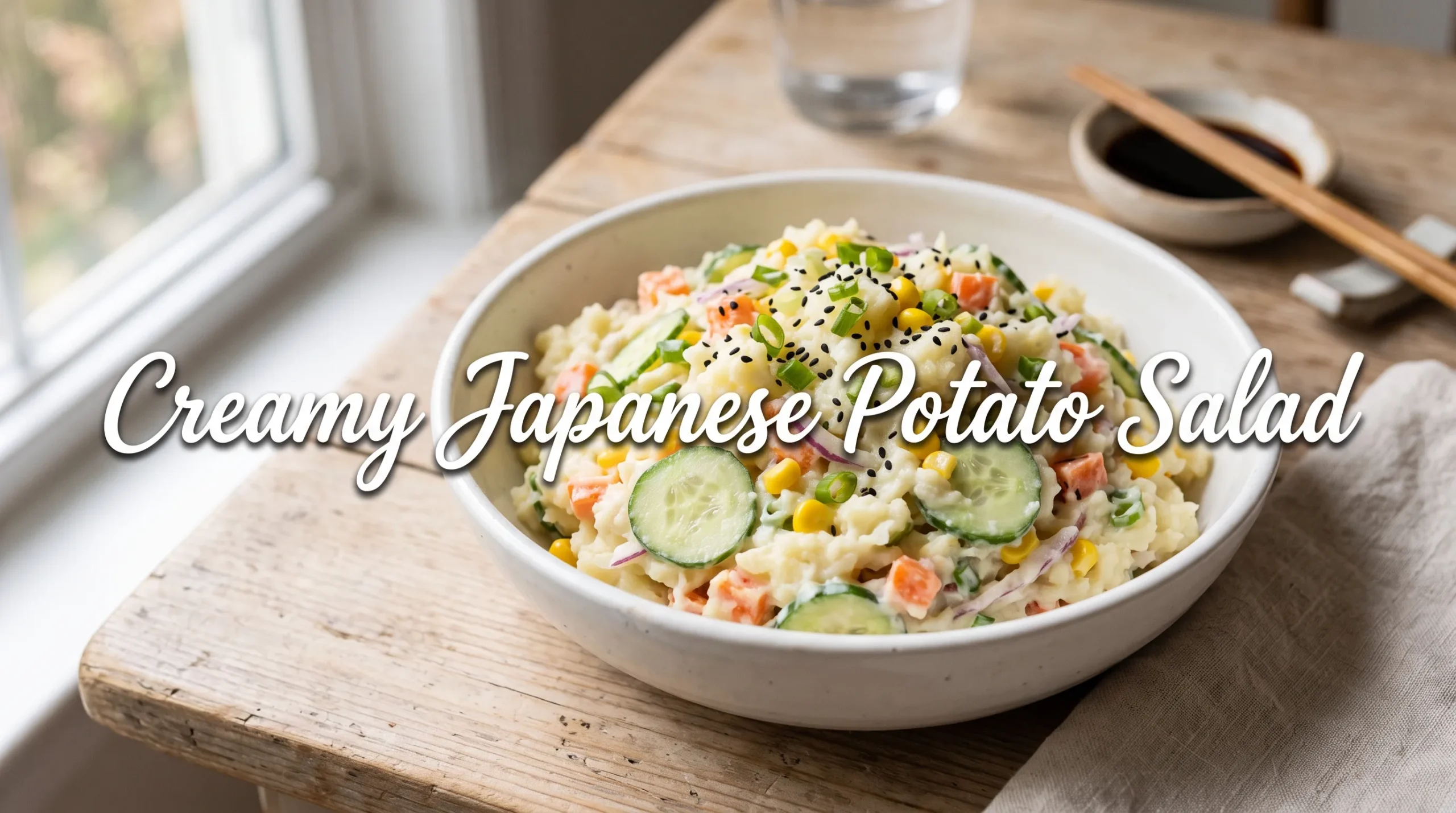
Creamy Japanese Potato Salad
Soft, fluffy potatoes, crisp cucumber, sweet corn, and a rich, creamy dressing come together in this comforting Japanese Potato Salad. Every bite has a lovely mix of creamy, crunchy, slightly sweet, and savory flavors.
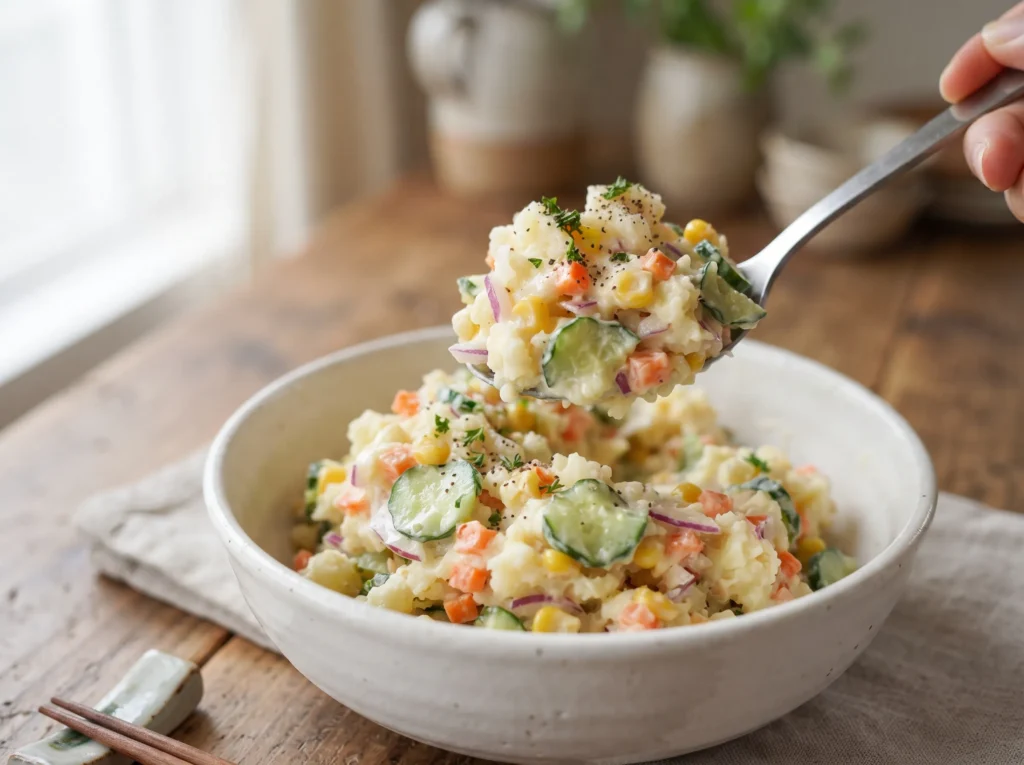
Unlike a typical Western potato salad, Japanese-style potato salad uses lightly mashed potatoes rather than leaving the potatoes in large cubes. This creates a soft, almost fluffy texture while still keeping some small pieces for bite.
The recipe is simple enough for beginners and works beautifully as a quick side dish for lunch, dinner, picnics, or family gatherings. It is also completely alcohol-free and can easily be made halal-friendly with the right mayonnaise.
The best part is the contrast in texture. Creamy potatoes are balanced by refreshing cucumber, sweet corn, and tender carrot. A little rice vinegar adds brightness so the salad tastes rich without feeling too heavy.
For another easy side dish idea, pair this recipe with a simple Japanese-inspired cucumber salad for a fresh and colorful meal.
Ingredients
For the Potato Salad
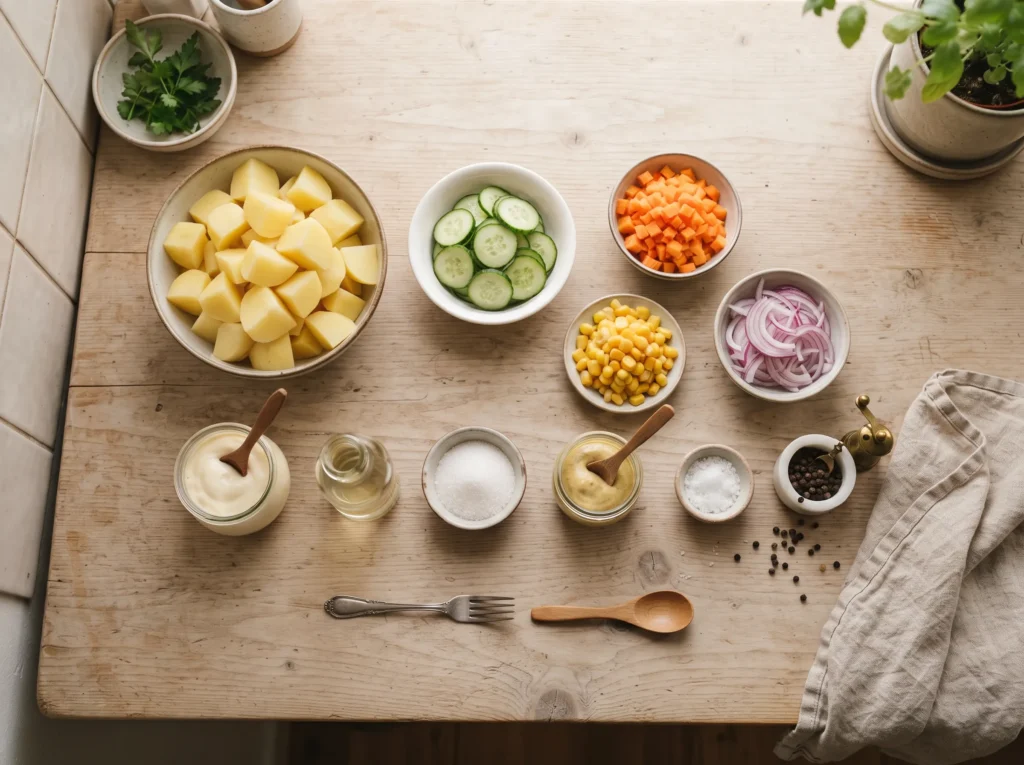
- 1½ pounds (680 g) potatoes, peeled
- ½ medium carrot, peeled
- ½ English cucumber
- ½ cup (80 g) sweet corn, drained
- ¼ small red onion, very thinly sliced
- ½ teaspoon salt, divided
- ⅓ cup (80 g) halal-certified mayonnaise or alcohol-free Japanese-style mayonnaise
- 1 tablespoon rice vinegar
- 1 teaspoon sugar
- ½ teaspoon Dijon mustard
- ¼ teaspoon white pepper or black pepper
- 2 tablespoons water, for cooking the carrot
Optional Add-In
- ½ cup (75 g) cooked halal chicken, finely diced
Cooked chicken makes the salad more filling and gives it a savory boost. It can also be left out for a lighter vegetarian version.
Tools Needed
- Large saucepan or pot
- Small saucepan or microwave-safe bowl
- Colander
- Large mixing bowl
- Small mixing bowl
- Sharp knife
- Cutting board
- Potato masher or fork
- Measuring spoons and cups
Step-by-Step Instructions
1. Prepare the vegetables
Cut the peeled potatoes into evenly sized chunks. Keeping the pieces similar in size helps them cook at the same rate.
Slice the cucumber very thinly. Thin slices blend into the creamy potatoes without making the salad watery or difficult to eat.
Thinly slice the red onion and cut the carrot into very small, thin pieces.
2. Salt the cucumber and onion
Place the sliced cucumber and red onion in a bowl.
Sprinkle with ¼ teaspoon salt and gently toss. Let them sit for about 10 minutes.
The salt draws out excess moisture, which helps keep the finished Japanese Potato Salad creamy instead of watery.
3. Cook the potatoes
Place the potatoes in a large saucepan and cover them with cold water.
Bring the water to a boil, then reduce the heat and simmer for about 12–15 minutes, or until the potatoes are very tender when pierced with a fork.
Avoid undercooking the potatoes. They should be soft enough to mash easily.
4. Cook the carrot
Place the chopped carrot in a small saucepan with 2 tablespoons of water and a small pinch of the remaining salt.
Cover and cook over medium heat for about 3–4 minutes, until the carrot is tender but not mushy.
Drain any remaining water and set the carrot aside.
5. Drain and dry the potatoes
Drain the cooked potatoes thoroughly.
Return them to the warm saucepan and place the pan over low heat for about 30–60 seconds. Gently shake the pan while the excess moisture evaporates.
This small step makes a big difference. Drier potatoes absorb the dressing better and produce a thick, creamy texture.
6. Mash the potatoes
Transfer the warm potatoes to a large mixing bowl.
Use a potato masher or fork to mash them until mostly smooth, leaving a few small chunks for texture.
Japanese Potato Salad should not be completely silky like mashed potatoes. A slightly chunky, fluffy texture is ideal.
7. Make the dressing
In a small bowl, mix the mayonnaise, rice vinegar, sugar, Dijon mustard, and white or black pepper.
Stir until smooth and creamy.
Taste the dressing before adding it to the potatoes. For a brighter flavor, add a tiny extra splash of rice vinegar. For a richer salad, add another spoonful of mayonnaise.
8. Remove moisture from the cucumber
After 10 minutes, gently squeeze the cucumber and onion with clean hands or press them between paper towels.
Remove as much excess liquid as possible without crushing the vegetables.
This prevents extra water from thinning the dressing.
9. Combine the ingredients
Add the cucumber, onion, carrot, and sweet corn to the mashed potatoes.
Add the cooked halal chicken at this stage if using.
Pour the dressing over everything and gently fold until evenly combined.
Do not stir aggressively. Gentle folding keeps the potatoes fluffy and prevents the salad from becoming pasty.
10. Chill before serving
Cover the bowl and refrigerate for at least 30 minutes.
Chilling allows the flavors to settle and gives the salad its classic cool, creamy texture.
Before serving, give the salad a gentle stir. If it seems slightly dry after chilling, mix in 1–2 teaspoons of mayonnaise.
For more easy Japanese-inspired dishes, try serving it alongside crispy chicken katsu or steamed rice.
Tips & Variations
Use the right potatoes
Fluffy, starchy potatoes work particularly well because they break down easily and absorb the creamy dressing.
Russet potatoes are an excellent choice. Yukon Gold potatoes also work and give the salad a naturally buttery texture.
Do not over-mash
The potatoes should be mostly mashed but still have a few small pieces.
Over-mashing can make the salad sticky and heavy. A fluffy, slightly chunky texture gives the best result.
Dry the vegetables well
Cucumber contains a lot of water, so salting and squeezing it is important.
Skipping this step can leave the dressing thin and cause liquid to collect at the bottom of the bowl.
Cool the potatoes slightly
The potatoes should be warm when mashed, but they should not be piping hot when the mayonnaise is added.
Allow them to cool for a few minutes first. This helps preserve the creamy texture of the dressing.
Choose alcohol-free mayonnaise
Some Japanese-style mayonnaise products may contain ingredients that are not suitable for an alcohol-free diet.
For a strictly alcohol-free recipe, check the ingredient label and choose a halal-certified mayonnaise or a mayonnaise specifically confirmed to contain no alcohol.
Add halal chicken for extra protein
Finely diced cooked halal chicken is an easy way to turn the salad into a more filling side.
Use plain roasted or boiled chicken rather than strongly seasoned chicken so the delicate potato flavor remains noticeable.
Add a little egg
Chopped hard-boiled egg can add extra richness and protein.
For a classic creamy texture, use one finely chopped egg and reduce the mayonnaise slightly if desired.
Make it vegetarian
Simply leave out the chicken.
The combination of potato, cucumber, carrot, corn, onion, and creamy dressing is flavorful enough without meat.
Try edamame
Shelled cooked edamame can replace some of the sweet corn.
It adds a pleasant green color and a slightly nutty flavor while keeping the salad filling.
Adjust the sweetness
A small amount of sugar is traditional in Japanese-style potato salad because it balances the tangy vinegar and creamy mayonnaise.
For a less sweet version, reduce the sugar to ½ teaspoon.
Avoid adding too much vinegar
Rice vinegar provides a light, fresh tang, but too much can overpower the potatoes.
Start with the listed amount and adjust only after tasting.
Season gradually
Salt affects the overall balance because the cucumber and onion are salted before mixing.
Taste the finished salad before adding extra salt. More may not be necessary.
Make it extra creamy
For an especially rich texture, mash a little more of the potato and add an extra tablespoon of mayonnaise.
A teaspoon of milk can also loosen the salad, but only add it if needed.
Keep some texture
The best Japanese Potato Salad has contrast.
Aim for soft potatoes, crisp cucumber, tender carrot, and juicy corn rather than making every ingredient the same consistency.
Avoid watery salad
The most common problem is excess moisture.
Three things help: salt the cucumber, squeeze out the liquid, and dry the cooked potatoes before mashing.
For a lighter version
Use a lighter halal mayonnaise and increase the cucumber and carrot slightly.
The result will still be creamy while tasting fresher and less rich.
For a richer version
Use a full-fat halal-certified mayonnaise and add finely chopped boiled egg.
A small amount of extra mayonnaise can also make the texture silkier.
For another creamy side, homemade coleslaw makes an easy companion at family meals and gatherings.
Storage & Serving
Transfer leftover Japanese Potato Salad to a clean, airtight container and refrigerate promptly.
It is best enjoyed within 2–3 days for the freshest flavor and texture. Keep the refrigerator at 40°F (4°C) or below.
The cucumber may release a little liquid as the salad sits. Give it a gentle stir before serving.
If the salad looks slightly dry after refrigeration, mix in a small spoonful of mayonnaise.
Freezing is not recommended. Potatoes can become grainy after freezing and thawing, while cucumber can lose its crisp texture and release excess water.
Serve the salad chilled or slightly cool. It works particularly well alongside grilled chicken, crispy chicken, steamed rice, vegetable dishes, or simple sandwiches.
For a complete Japanese-inspired meal, serve it with teriyaki-style chicken and steamed rice.
The creamy salad also makes a lovely addition to lunch boxes and picnic spreads. Keep it chilled until serving, especially on warm days.
Frequently Asked Questions
What makes Japanese Potato Salad different?
Japanese Potato Salad usually features lightly mashed potatoes combined with ingredients such as cucumber, carrot, corn, and mayonnaise.
The potatoes are softer and fluffier than the large potato cubes commonly found in many Western potato salads.
Can Japanese Potato Salad be made without Japanese mayonnaise?
Yes. Regular halal-certified mayonnaise works very well.
For a closer Japanese-style flavor, mix the mayonnaise with a little rice vinegar and sugar as directed in the recipe.
Is Japanese Potato Salad served hot or cold?
It is generally served chilled or cool.
Allowing the salad to rest in the refrigerator also gives the ingredients time to blend and improves the overall flavor.
Can cucumber be left out?
Yes, although cucumber provides an important crisp and refreshing contrast to the soft potatoes.
If cucumber is unavailable, finely diced celery or a small amount of radish can provide a similar crunchy element.
Why did the potato salad become watery?
Excess moisture usually comes from cucumber or potatoes that were not drained properly.
Salting and squeezing the cucumber and briefly drying the cooked potatoes help prevent a watery result.
Can boiled eggs be added?
Absolutely. Finely chopped hard-boiled egg pairs especially well with the creamy dressing.
One egg is enough to add richness without overwhelming the other ingredients.
Can this recipe be made dairy-free?
Yes. The basic recipe does not require dairy.
Check the mayonnaise label and choose a dairy-free halal-certified product if needed.
Can Japanese Potato Salad be made ahead?
Yes. It can be prepared several hours before serving and kept refrigerated.
Making it ahead can actually improve the flavor because the dressing has time to blend with the potatoes and vegetables.
What potatoes are best for this recipe?
Russet potatoes are an excellent choice because they become fluffy when cooked.
Yukon Gold potatoes are another good option if a slightly buttery and creamy texture is preferred.
Can Japanese Potato Salad be frozen?
Freezing is not recommended.
The potatoes can become grainy and the cucumber may release a lot of water after thawing, which can negatively affect the texture.
Conclusion
Creamy, fluffy, crisp, and lightly tangy, Japanese Potato Salad is an easy side dish that brings plenty of texture and flavor to the table.
The recipe uses simple ingredients and straightforward steps, making it especially friendly for busy home cooks and beginners.
With soft potatoes, refreshing cucumber, sweet corn, tender carrot, and a rich creamy dressing, every spoonful offers a satisfying mix of flavors.
Keep the recipe alcohol-free by choosing a suitable halal-certified mayonnaise, then customize it with halal chicken, boiled egg, or edamame if desired.
For an easy side that feels a little different from everyday potato salad, this Japanese Potato Salad is well worth trying. Serve it chilled, share it with family and friends, and enjoy every creamy bite.