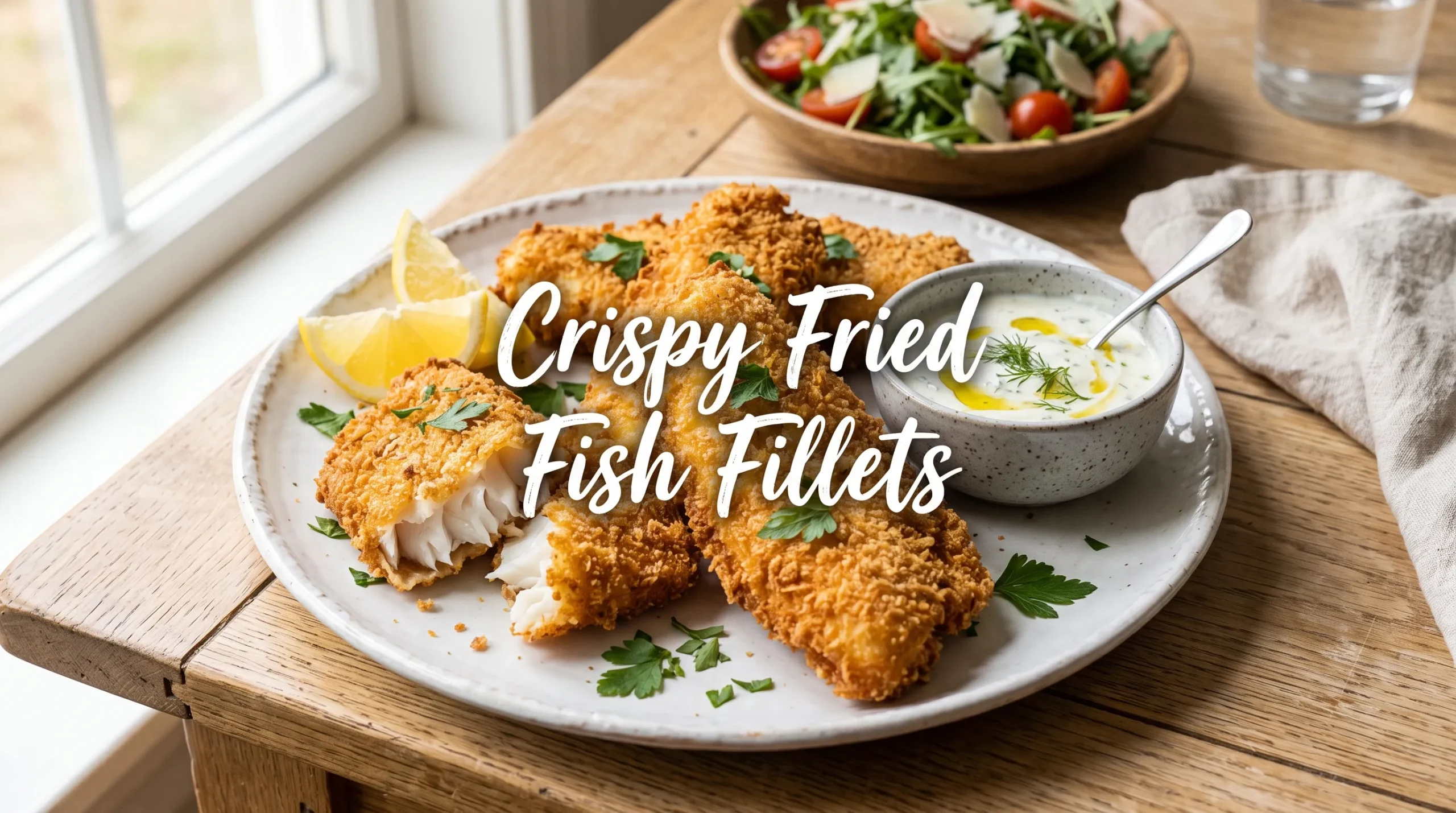
Crispy Fried Fish Fillets
Golden, crunchy on the outside and tender, flaky, and juicy inside, these Crispy Fried Fish Fillets are an easy family meal that comes together without complicated ingredients.
The fish is coated in a lightly seasoned flour mixture, dipped in a simple egg coating, and covered with crisp breadcrumbs. A quick fry creates a beautifully golden crust while keeping the fish soft and moist inside.
This recipe is designed for home cooks who want reliable results without making a complicated batter. The seasoning is simple, the preparation is straightforward, and the fillets cook in just a few minutes.
Serve these crispy fish fillets with lemon wedges, a creamy dipping sauce, crunchy salad, or fluffy homemade fries. They also make an excellent filling for sandwiches and wraps.
The secret to great fried fish is not complicated. Dry the fish well, season every layer, keep the oil at the right temperature, and avoid overcrowding the pan.
Ingredients
Serves 4
For the Fish
- 4 white fish fillets, about 150 g each, boneless and skinless
- 1 teaspoon salt, divided
- ½ teaspoon black pepper
- 1 teaspoon paprika
- ½ teaspoon garlic powder
- ½ teaspoon onion powder
- ½ teaspoon dried oregano
- ½ teaspoon lemon zest
- 1 tablespoon lemon juice
For the Crispy Coating
- ¾ cup all-purpose flour
- ½ cup cornstarch
- 2 large eggs
- 2 tablespoons milk
- 1 cup plain breadcrumbs
- ½ teaspoon salt
- ½ teaspoon paprika
- ¼ teaspoon black pepper
- ¼ teaspoon garlic powder
For Frying
- 2 to 3 cups neutral cooking oil, such as sunflower, canola, or vegetable oil
- Lemon wedges, for serving
- Fresh parsley, for garnish
Choose firm white fish with a mild flavor. Cod, haddock, pollock, tilapia, basa, or another suitable boneless white fish can work well.
If using frozen fish, thaw it completely in the refrigerator before cooking. Pat the fillets very dry with paper towels before seasoning.
Tools and Equipment
- Large heavy-bottomed frying pan or skillet
- Three shallow bowls
- Paper towels
- Tongs
- Wire cooling rack
- Baking sheet
- Instant-read kitchen thermometer, optional
- Large plate for serving
How to Make Crispy Fried Fish Fillets
1. Dry the fish
Pat each fish fillet thoroughly with paper towels.
Removing excess moisture is important because wet fish can make the coating slide off and can cause the hot oil to splatter.
If the fillets are very thick, cut them into evenly sized portions so they cook at roughly the same rate.
2. Season the fish
Place the fillets on a clean plate.
Sprinkle both sides with the salt, black pepper, paprika, garlic powder, onion powder, oregano, and lemon zest.
Drizzle the lemon juice over the fish and gently rub the seasoning across the surface.
Let the seasoned fish rest for about 10 minutes while the coating is prepared.
3. Prepare the flour mixture
Add the flour and cornstarch to a shallow bowl.
Mix in ½ teaspoon salt, paprika, black pepper, and garlic powder.
Cornstarch helps create a lighter, crispier crust, while flour gives the coating enough structure to cling to the fish.
4. Prepare the egg mixture
Crack the eggs into a second shallow bowl.
Add the milk and whisk until smooth and evenly combined.
The milk makes the egg mixture slightly thinner, allowing it to coat the fish without creating a thick, heavy layer.
5. Prepare the breadcrumbs
Place the breadcrumbs in a third shallow bowl.
For extra flavor, add a small pinch of paprika and black pepper if desired.
Plain breadcrumbs provide a classic crisp coating. Panko breadcrumbs can also be used when a lighter, extra-crunchy crust is preferred.
6. Coat the fish
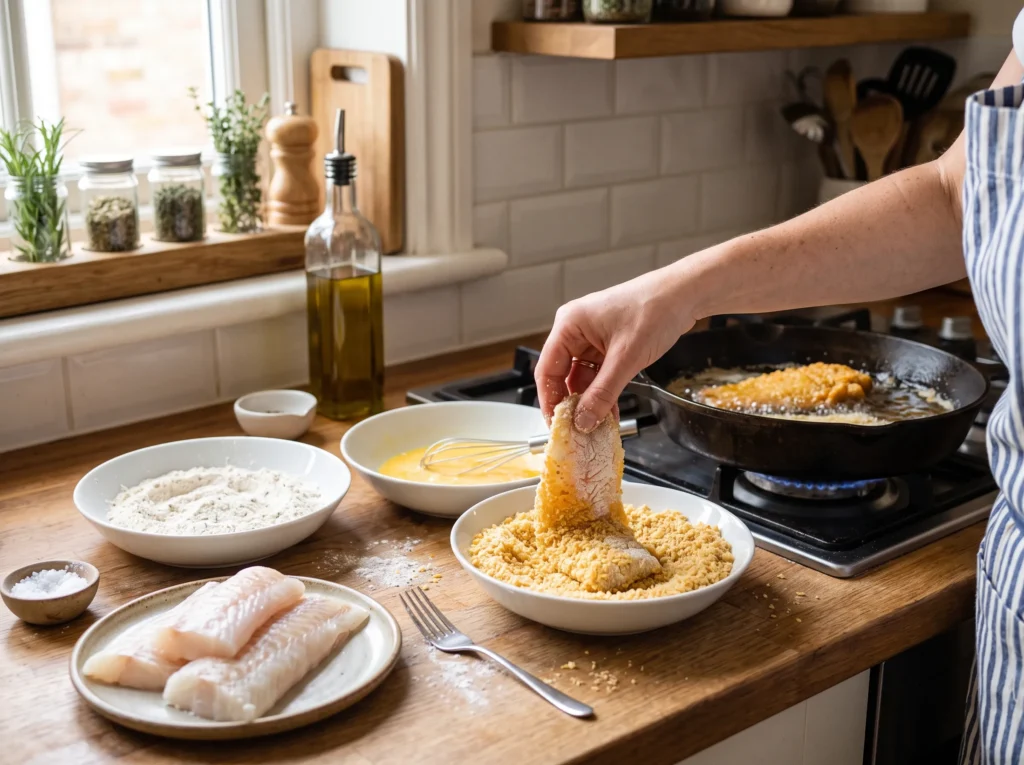
Take one seasoned fillet and coat it in the flour mixture.
Shake gently to remove excess flour.
Dip the floured fillet into the egg mixture, making sure the surface is covered.
Finally, place it into the breadcrumbs and press gently so the crumbs stick.
Repeat with the remaining fillets.
Do not press the coating too aggressively. A light, even layer creates a crisp crust without becoming dense.
7. Heat the oil
Pour enough oil into a heavy frying pan to create a depth of about 1 to 1½ inches.
Heat the oil over medium-high heat until it reaches approximately 175°C (350°F).
A kitchen thermometer gives the most reliable result. If there is no thermometer, drop a few breadcrumbs into the oil. They should sizzle immediately without burning.
8. Fry the fish
Carefully lower the coated fillets into the hot oil.
Do not overcrowd the pan. Cook in batches if necessary.
Fry for about 3 to 5 minutes per side, depending on the thickness of the fillets.
The coating should become deep golden and crisp, while the fish should turn opaque and flake easily.
9. Drain the fillets
Use tongs to transfer the cooked fish to a wire rack placed over a baking sheet.
Allow excess oil to drain for a minute or two.
A wire rack is better than placing the fish directly on paper towels because air can circulate underneath the crust, helping it stay crisp.
10. Serve immediately
Finish the fish with fresh parsley and lemon wedges.
Serve while hot and crunchy for the best contrast between the crisp coating and tender fish.
For another easy seafood dinner idea, pair this recipe with simple homemade side dishes for fish.
Tips & Variations for Crispy Fried Fish Fillets
Dry the fish thoroughly
This is one of the most important steps.
Excess water prevents the flour from sticking properly and can cause the coating to separate during frying.
Pat every surface dry before seasoning and coating.
Keep the coating light
A thick coating may look appealing before frying, but it can become heavy and oily.
Shake off excess flour and egg before adding the breadcrumbs. This creates a thinner crust that fries evenly.
Use cornstarch for extra crunch
Cornstarch is a simple way to make the coating lighter and crispier.
The combination of flour and cornstarch gives the fish a delicate crunch without requiring a complicated batter.
Do not overcrowd the pan
Adding too many fillets at once can lower the oil temperature.
When that happens, the coating may absorb more oil instead of becoming crisp.
Leave enough space around each piece for the hot oil to circulate.
Keep the oil temperature steady
Oil that is too cool can produce greasy fish.
Oil that is too hot can brown the coating before the center has cooked.
Aim for approximately 175°C (350°F), adjusting the burner as needed during cooking.
Use panko for a crunchier coating
Panko breadcrumbs create larger, lighter flakes than regular breadcrumbs.
Replace the regular breadcrumbs with the same amount of panko for a particularly crunchy crust.
Add herbs to the coating
Dried parsley, dried dill, or a small amount of dried thyme can add extra flavor.
Keep the herbs finely chopped so they distribute evenly through the breadcrumbs.
Make the seasoning spicier
For a spicy version, add ¼ to ½ teaspoon cayenne pepper to the flour mixture.
A pinch of chili powder can also add warmth without making the fish overwhelmingly hot.
Try a lemon-pepper version
Increase the lemon zest slightly and add extra black pepper to the flour mixture.
This creates a bright, zesty coating that works especially well with mild white fish.
Choose the right fish
Firm white fish is usually easiest for beginners because it holds together during coating and frying.
Cod, haddock, pollock, tilapia, and basa are convenient choices, but cooking time should always be adjusted according to the thickness of the fillets.
Avoid turning the fish too often
Let the first side develop a firm golden crust before turning.
Moving the fish repeatedly can disturb the coating and cause it to break apart.
Drain on a rack
A cooling rack allows air to reach the bottom of the fillets.
This prevents trapped steam from softening the crispy crust.
For more ideas for keeping fried foods crisp, see how to make crispy fried foods at home.
Storage & Serving
Fried fish is best served immediately because the crust is at its crispiest when freshly cooked.
If leftovers remain, let the fillets cool completely before storing them.
Place the fish in an airtight container and refrigerate for up to 3 days.
For the best texture, reheat the fillets in an oven or air fryer rather than a microwave.
To reheat in the oven, place the fish on a wire rack over a baking sheet and warm at 200°C (400°F) for approximately 8 to 12 minutes.
In an air fryer, reheat at about 190°C (375°F) for 4 to 7 minutes, depending on the thickness.
Check that the center is thoroughly hot before serving.
Freezing cooked fried fish is possible, although the coating may not be quite as crisp after thawing and reheating.
For freezing, cool the fillets completely, wrap them individually, and place them in a freezer-safe container for up to 2 months.
Reheat from frozen in an oven or air fryer rather than thawing at room temperature.
Serving Ideas
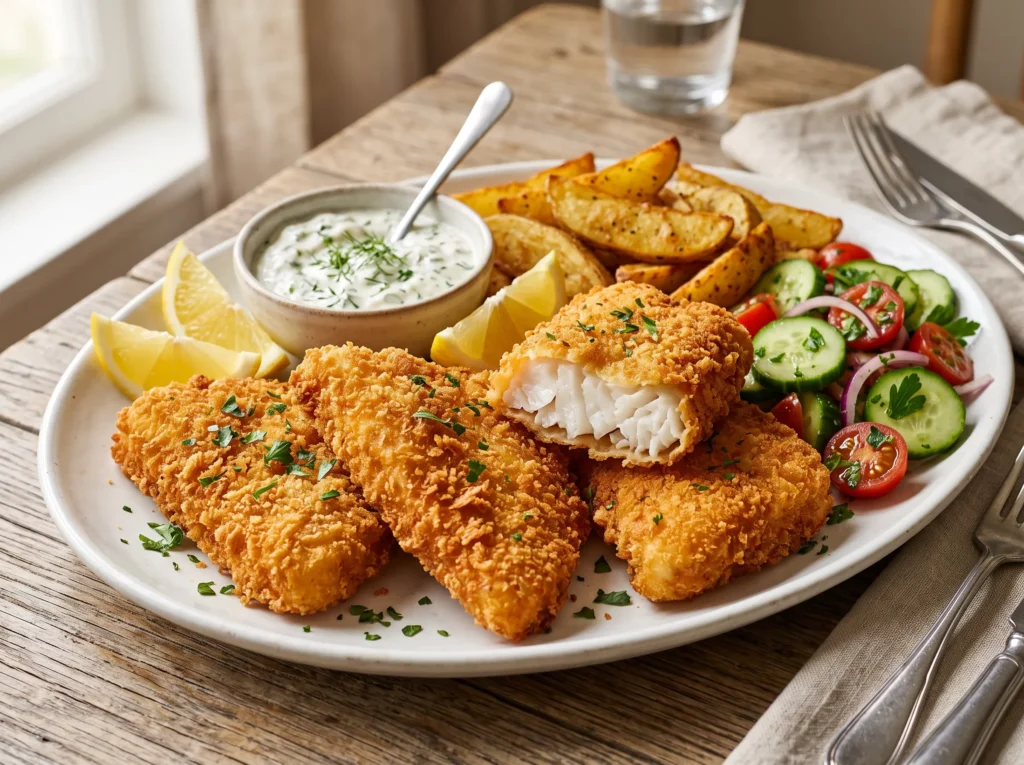
Fresh lemon is an easy finishing touch. The bright acidity balances the rich, crunchy coating.
A creamy garlic-yogurt sauce, tartar-style sauce made without alcohol, or simple lemon yogurt dip also works beautifully.
For a complete meal, serve the fish with fluffy rice, roasted potatoes, coleslaw, cucumber salad, or steamed vegetables.
Crispy fish also makes a delicious sandwich. Place a hot fillet inside a soft bun with lettuce, cucumber, tomato, and a creamy sauce.
For a lighter plate, serve the fish over a fresh green salad with lemon dressing.
Another family-friendly option is to cut the cooked fillets into smaller pieces and serve them as homemade fish bites with several dipping sauces.
For a complete meal plan, explore these easy family-friendly dinner recipes.
Frequently Asked Questions
What fish is best for crispy fried fillets?
Firm white fish is a great choice because it has a mild flavor and holds together well during coating and frying.
Cod, haddock, pollock, tilapia, and basa are all suitable options when properly prepared.
Why is the fish coating not sticking?
The most common reason is excess moisture on the fish.
Pat the fillets dry before coating, and make sure each layer is applied evenly. The flour should be followed by egg and then breadcrumbs.
Can frozen fish fillets be fried?
Frozen fillets should be thawed completely before coating and frying.
Thaw them safely in the refrigerator, then pat them very dry before starting the recipe.
Can panko breadcrumbs be used?
Yes. Panko breadcrumbs are an excellent substitute for regular breadcrumbs.
They create a lighter, more textured crust with plenty of crunch.
Can the fish be fried without eggs?
Yes. A thin coating of milk or plain yogurt can help the flour and breadcrumbs adhere.
The texture may be slightly different, but the fish can still become crisp when fried correctly.
How do you know when fried fish is cooked?
The fish should be opaque in the center and separate easily into flakes when gently tested with a fork.
For a precise check, the thickest part should reach 63°C (145°F).
Why did the fried fish become greasy?
Greasy fish is often caused by oil that is not hot enough.
When the temperature drops too low, the coating can absorb excess oil. Avoid overcrowding the pan and maintain the oil around 175°C (350°F).
Can olive oil be used for frying fish?
A light olive oil can be used for shallow frying, although a neutral cooking oil such as sunflower, canola, or vegetable oil provides a milder flavor.
Choose an oil suitable for the cooking temperature.
How can fried fish stay crispy after cooking?
Place the cooked fillets on a wire rack rather than stacking them or covering them immediately.
Keeping the fish uncovered for a few minutes allows steam to escape and helps preserve the crisp coating.
Can this recipe be made gluten-free?
Yes. Use a certified gluten-free flour blend and gluten-free breadcrumbs.
Check the labels of all packaged ingredients to ensure they meet the required dietary needs.
Can the fish be cooked in an air fryer?
Yes. Lightly spray the coated fish with oil and cook in a preheated air fryer at approximately 200°C (400°F), turning halfway through.
Cooking time depends on the thickness of the fillets, so check for doneness before serving.
Conclusion
Crispy Fried Fish Fillets are an easy way to turn simple fish into a golden, crunchy meal with a tender and flaky center.
The coating needs only everyday ingredients, and the preparation is simple enough for beginners. Drying the fish well, keeping the oil hot, and avoiding an overcrowded pan are the main keys to success.
Serve the hot fillets with lemon, a creamy yogurt dip, fresh salad, fluffy rice, or crispy potatoes for a satisfying homemade dinner.
For an especially crunchy finish, try panko breadcrumbs and serve the fish straight from the pan while the crust is still golden and crisp.
These Crispy Fried Fish Fillets are simple, flavorful, and perfect for a busy family meal. Serve them fresh, add a favorite halal-friendly dipping sauce, and enjoy every crunchy bite.