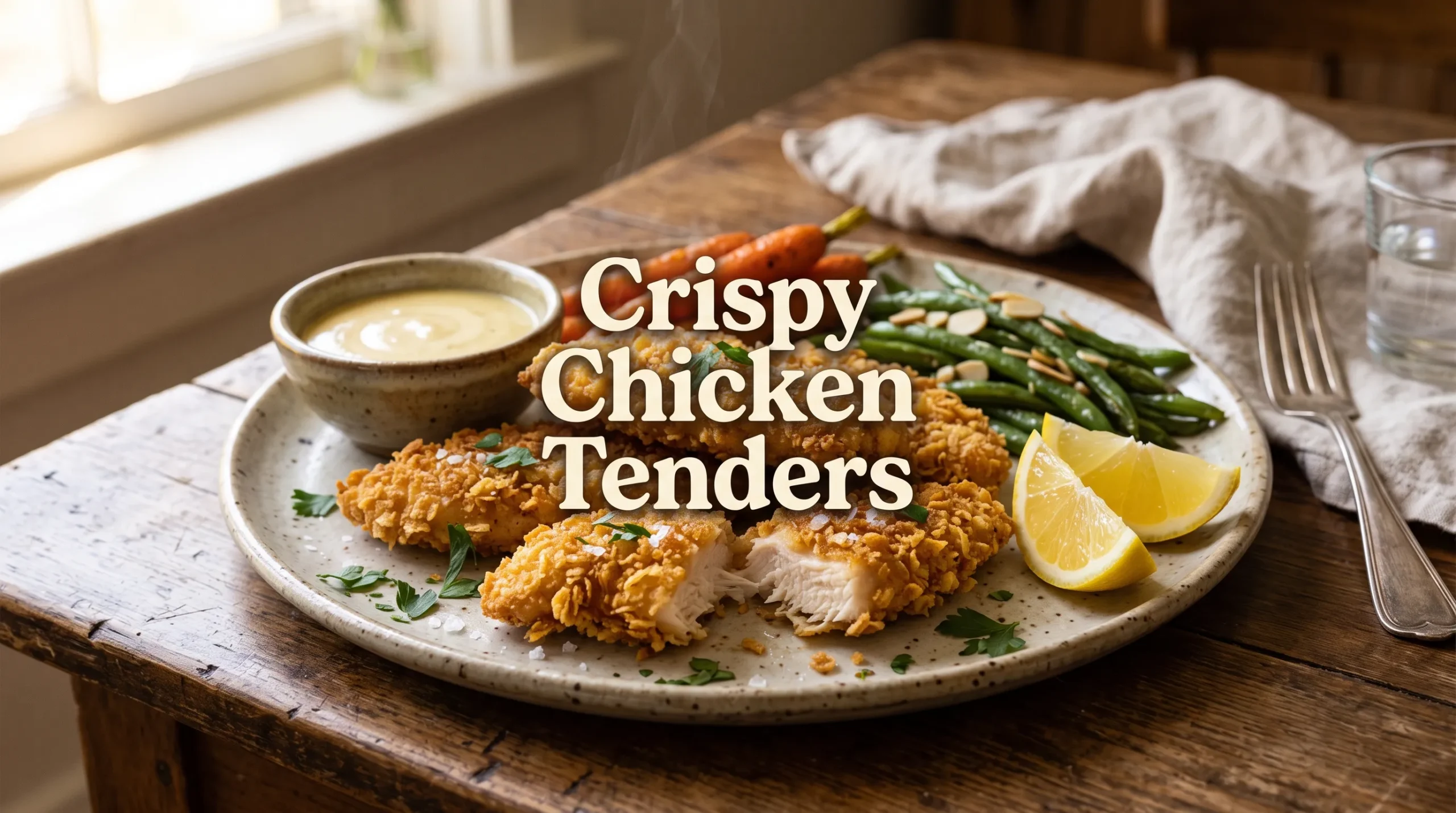
Crispy Chicken Tenders
Golden, crunchy on the outside and tender and juicy inside, these Crispy Chicken Tenders are an easy homemade favorite for kids and adults alike. The chicken is coated in seasoned flour and crispy breadcrumbs, then cooked until beautifully golden.
The recipe keeps everything simple, with everyday ingredients and no complicated techniques. A quick buttermilk-style marinade helps the chicken stay soft and flavorful, while the crunchy coating creates that satisfying crispy bite.
These homemade chicken tenders are perfect for a quick family dinner, lunchbox meal, game-day snack, or casual weekend dinner. Serve them with creamy ranch-style dip, ketchup, honey mustard made without alcohol-based ingredients, or a fresh salad.
For another family-friendly chicken idea, try these easy oven-baked chicken recipes or serve the tenders alongside crispy potato wedges.
Ingredients
For the chicken
- 1 1/2 pounds boneless, skinless chicken breasts
- 1 cup buttermilk
- 1 large egg
- 1 teaspoon salt
- 1/2 teaspoon black pepper
- 1 teaspoon garlic powder
- 1/2 teaspoon paprika
- 1/2 teaspoon onion powder
For the crispy coating
- 1 1/2 cups plain breadcrumbs
- 1 cup all-purpose flour
- 1 teaspoon paprika
- 1 teaspoon garlic powder
- 1/2 teaspoon onion powder
- 1/2 teaspoon dried oregano
- 1/2 teaspoon salt
- 1/4 teaspoon black pepper
For cooking
- 1/2 cup neutral cooking oil, such as sunflower or canola oil
For serving
- Ketchup
- Halal-friendly mayonnaise
- Lemon wedges
- Ranch-style dipping sauce made with halal-friendly ingredients
- Fresh parsley, optional
Tools and equipment
- Large mixing bowl
- Two shallow bowls
- Cutting board
- Sharp knife
- Tongs
- Large skillet or frying pan
- Wire rack
- Baking sheet
- Paper towels
- Meat thermometer, optional
Step-by-Step Instructions
1. Prepare the chicken
Trim any excess fat from the chicken breasts.
Slice the chicken lengthwise into strips about 1 inch thick. Try to keep the pieces similar in size so they cook evenly.
For especially large chicken breasts, cut each strip in half to create smaller tenders.
2. Make the marinade
Add the buttermilk, egg, salt, black pepper, garlic powder, paprika, and onion powder to a large bowl.
Whisk until smooth and evenly combined.
3. Marinate the chicken
Add the chicken strips to the buttermilk mixture.
Turn the pieces several times so every tender is coated. Cover the bowl and refrigerate for at least 30 minutes.
For deeper flavor and extra tender chicken, the strips can marinate for up to 8 hours.
4. Prepare the coating
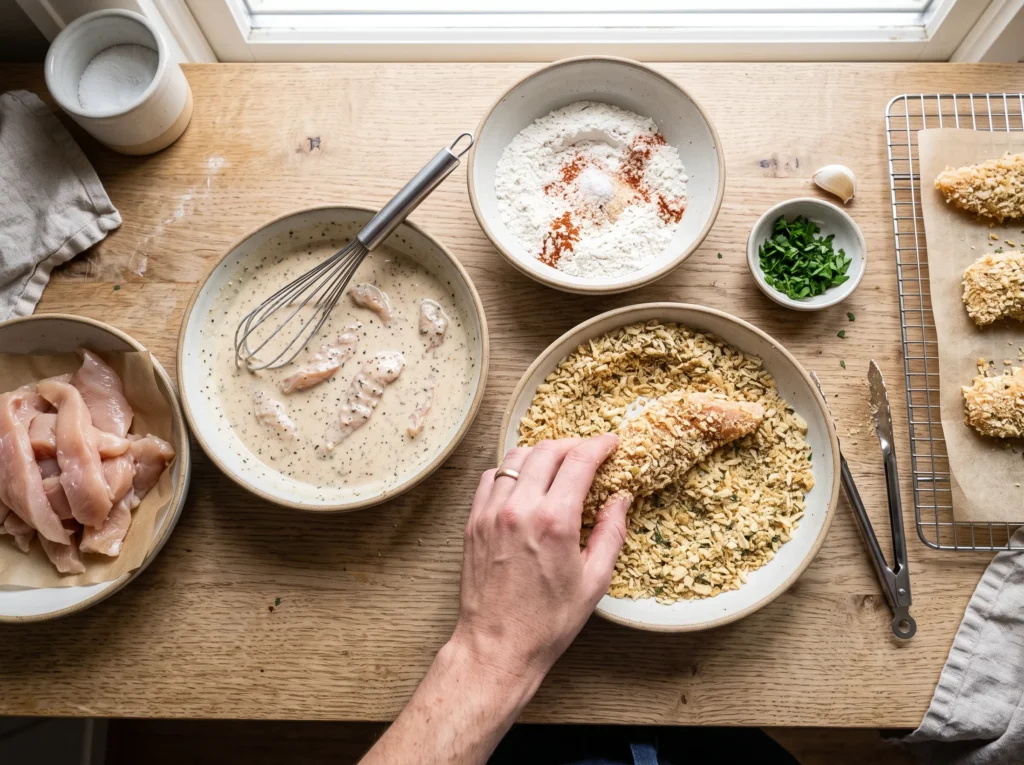
Place the flour in one shallow bowl.
In a second shallow bowl, combine the breadcrumbs, paprika, garlic powder, onion powder, dried oregano, salt, and black pepper.
Stir the breadcrumb mixture well so the seasonings are evenly distributed.
5. Coat the chicken
Remove a chicken strip from the marinade and let the excess drip off.
First coat it thoroughly in the flour.
Dip it back into the buttermilk mixture, then press it firmly into the seasoned breadcrumbs. Make sure the entire surface is covered.
Repeat with the remaining chicken strips.
For a thicker crust, gently press the breadcrumbs onto each piece with clean hands.
6. Heat the oil
Pour the cooking oil into a large skillet.
Heat over medium heat until the oil reaches about 350°F (175°C).
If a thermometer is not available, drop a few breadcrumbs into the oil. They should immediately sizzle without burning.
7. Fry the chicken tenders
Carefully place several coated chicken strips into the hot oil.
Do not overcrowd the pan. Leave enough room around each piece for the hot oil to circulate.
Cook for about 3 to 4 minutes per side, depending on thickness.
8. Check for doneness
The coating should be crisp and deep golden brown.
The chicken should reach an internal temperature of 165°F (74°C) at the thickest point.
If the coating browns too quickly before the chicken is cooked through, reduce the heat slightly.
9. Drain the tenders
Transfer the cooked chicken tenders to a wire rack placed over a baking sheet.
Let them rest for a few minutes.
A wire rack allows excess oil to drain away while keeping the bottom crisp. Paper towels can also be used, but the underside may become slightly softer.
10. Serve warm
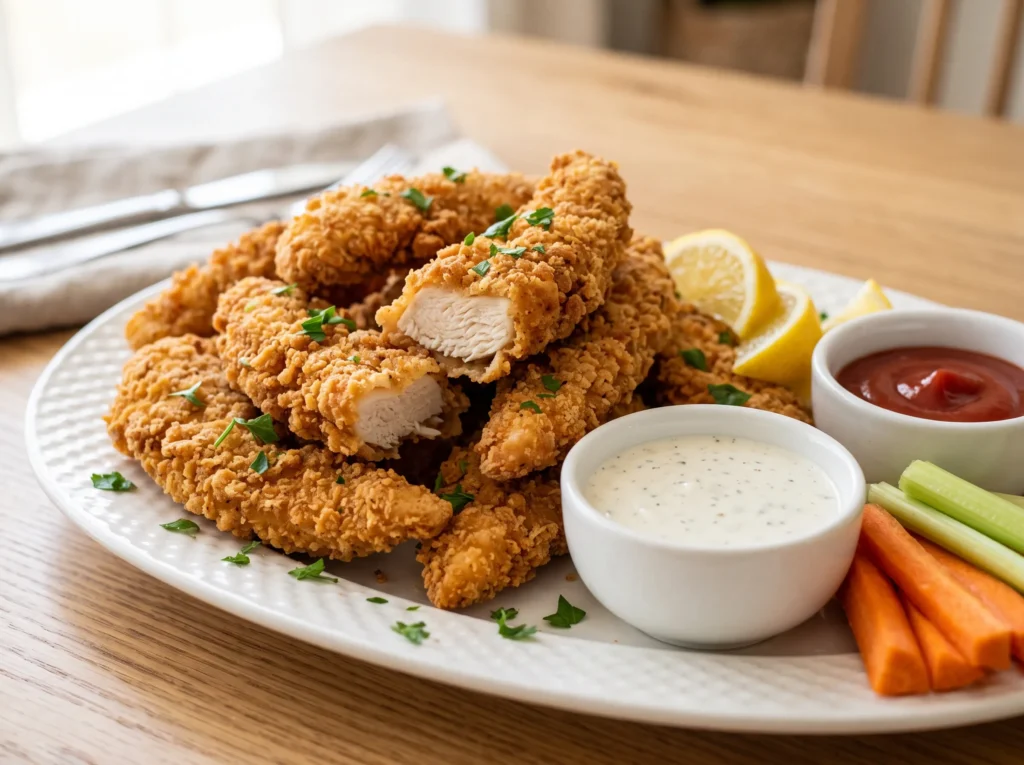
Arrange the crispy tenders on a serving plate.
Add lemon wedges and bowls of favorite dipping sauces.
Serve while hot for the best contrast between the crunchy coating and juicy chicken.
Tips & Variations for Crispy Chicken Tenders
Keep the chicken pieces similar in size
Uniform chicken strips cook at roughly the same rate.
Very thin pieces can become dry before thick pieces are cooked. Cutting the chicken evenly makes the whole batch easier to manage.
Do not skip the marinade
The buttermilk mixture helps soften the chicken while adding flavor.
Even a short 30-minute marinade makes the chicken noticeably more tender.
Press the breadcrumbs firmly
A loose coating can fall away during cooking.
After dipping the chicken into the breadcrumbs, gently press the crumbs onto all sides. This creates a thicker, crunchier crust.
Let the coating rest
For an even more secure crust, place the coated chicken strips on a tray and let them rest for about 5 to 10 minutes before frying.
This gives the coating time to adhere to the chicken.
Avoid overcrowding the skillet
Adding too many tenders at once can lower the oil temperature.
The coating may then absorb oil instead of becoming crisp. Fry in small batches for a lighter, crunchier finish.
Keep the oil temperature steady
Oil that is too hot can burn the breadcrumbs before the chicken cooks.
Oil that is too cool can produce greasy, pale tenders. Medium heat and a thermometer make the process much easier.
Use panko for extra crunch
For particularly crunchy chicken tenders, replace the plain breadcrumbs with panko breadcrumbs.
Panko creates larger, lighter crumbs that become wonderfully crisp during frying.
Make baked chicken tenders
For a lighter option, arrange the coated chicken on a lightly greased wire rack over a baking sheet.
Spray or brush the coating lightly with oil and bake at 425°F (220°C) until golden and the chicken reaches 165°F (74°C), usually about 18 to 22 minutes depending on thickness.
Flip the tenders halfway through cooking.
For more ideas, check out these easy baked chicken dinner recipes.
Try an air fryer
Air frying is another convenient option.
Lightly spray the breaded chicken with cooking oil and cook at 400°F (200°C), turning halfway through, until crisp and the chicken reaches 165°F (74°C).
Cooking time varies by air fryer and tender size, so check the chicken near the end of cooking.
Add a little heat
For spicy chicken tenders, add 1/2 teaspoon of cayenne pepper to the breadcrumb mixture.
For a milder flavor, add only a pinch.
Add Parmesan
A small amount of finely grated Parmesan can be mixed into the breadcrumbs for a savory, cheesy crust.
Use a halal-friendly cheese if required.
Make them extra garlicky
Add another 1/2 teaspoon of garlic powder to the coating.
Fresh garlic is not recommended in the breadcrumb mixture because it can burn more easily during frying.
Use chicken thighs
Boneless, skinless chicken thighs can replace chicken breasts.
Thigh meat is naturally richer and stays juicy, although the pieces may need slightly longer cooking depending on their thickness.
Avoid wet breadcrumbs
The chicken should be allowed to drain briefly after coming out of the marinade.
Too much liquid can make the breadcrumb mixture wet and difficult to work with.
Do not flip too early
Let the first side develop a firm golden crust before turning the chicken.
Moving the tenders too soon can cause the coating to separate from the chicken.
Make a double coating
For an extra-thick crust, dip each tender through the flour, marinade, breadcrumbs, marinade again, and breadcrumbs again.
Press the second breadcrumb layer firmly onto the chicken before frying.
This creates an especially crunchy exterior.
Storage & Serving
Leftover chicken tenders should be cooled and refrigerated within 2 hours of cooking.
Place them in an airtight container and refrigerate for up to 3 days.
For the best texture, reheat the tenders in an oven or air fryer rather than the microwave.
Heat them at 375°F (190°C) until hot and crisp again. An air fryer usually takes about 4 to 7 minutes, depending on the thickness.
The microwave is convenient but tends to soften the crispy coating.
To freeze the tenders, allow them to cool completely and arrange them in a single layer on a baking sheet. Freeze until firm, then transfer them to a freezer-safe container or bag.
Frozen cooked tenders are best used within 2 months for the best quality.
Reheat directly from frozen in an oven or air fryer until piping hot throughout.
For serving, pair the tenders with creamy dipping sauces, fresh vegetables, coleslaw, potato wedges, or a simple green salad.
A squeeze of fresh lemon adds a bright, slightly tangy contrast to the rich, crunchy coating.
They also make a fun filling for wraps and sandwiches. Add lettuce, sliced tomatoes, cucumber, and a creamy sauce for a quick chicken tender wrap.
For a kid-friendly spread, serve the tenders with homemade dipping sauces, crunchy carrot sticks, cucumber slices, and oven-baked fries.
Frequently Asked Questions
What makes chicken tenders crispy?
A dry, well-seasoned coating and properly heated oil are the biggest factors.
Pressing the breadcrumbs firmly onto the chicken also helps create a thicker, crunchier crust.
Can regular breadcrumbs be used instead of panko?
Yes. Regular breadcrumbs work well and create a more compact, even coating.
Panko produces a lighter coating with larger, extra-crispy crumbs.
Can chicken tenders be made without buttermilk?
Yes. Plain yogurt thinned with a little water or milk can work as a substitute.
The mixture should be creamy and pourable rather than extremely thick.
How long should chicken tenders marinate?
At least 30 minutes works well.
For a more tender result, the chicken can be marinated for several hours in the refrigerator.
Why does the breading fall off?
The chicken may have too much marinade on its surface, or the coating may not have been pressed firmly enough.
Allow excess marinade to drip off before flouring and press the breadcrumbs onto every side.
Can chicken tenders be cooked without deep frying?
Yes. They can be baked or air-fried.
A light coating of cooking oil helps the breadcrumb crust become golden and crisp using either method.
What temperature should chicken tenders reach?
Chicken should reach an internal temperature of 165°F (74°C).
Check the thickest part of the largest tender for the most accurate reading.
Can chicken tenders be prepared ahead?
Yes. The chicken can be sliced and marinated several hours ahead.
The tenders can also be breaded shortly before cooking. For the crispiest result, avoid leaving fully breaded chicken uncovered in the refrigerator for an extended period.
How can reheated chicken tenders stay crispy?
Use an oven, toaster oven, or air fryer.
These methods help remove surface moisture and restore some of the crunchy texture.
What sauces go well with crispy chicken?
Ketchup, garlic mayonnaise, ranch-style sauce, honey mustard, barbecue sauce, and sweet chili sauce all pair well.
Choose halal-friendly versions and check packaged sauces for ingredients that do not fit dietary requirements.
Conclusion
These Crispy Chicken Tenders are proof that a simple homemade chicken dinner can be crunchy, juicy, flavorful, and easy to prepare.
The seasoned coating gives every bite a golden crunch, while the buttermilk marinade keeps the chicken tender and moist inside. With frying, baking, and air-fryer options, the recipe can easily fit different cooking preferences.
Serve the tenders with favorite sauces, fresh vegetables, fries, or a simple salad for a satisfying family meal. They are also easy to prepare ahead, making them especially useful for busy days.
For a crispy, comforting dinner that both kids and adults can enjoy, these homemade Crispy Chicken Tenders are an easy recipe to keep on repeat.