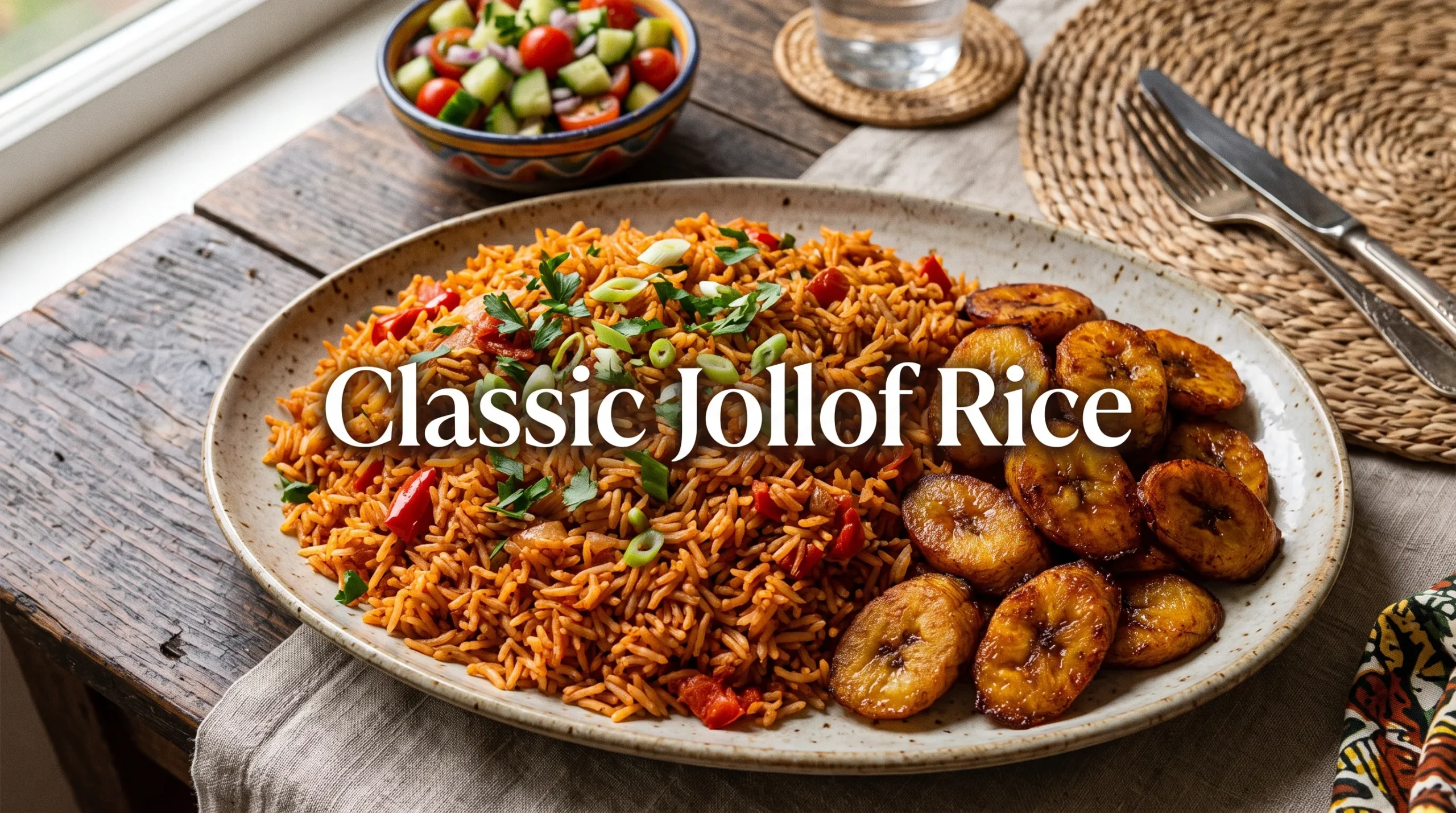
Classic Jollof Rice with Fried Plantains
A pot of perfectly cooked Jollof Rice is rich, savory, fragrant, and full of deep tomato and pepper flavor. Add golden fried plantains on the side, and the result is a comforting meal with a delicious mix of fluffy, spicy, sweet, and crispy textures.
This classic-style Classic Jollof Rice recipe keeps the process simple enough for beginners while building plenty of flavor. Long-grain rice cooks slowly in a rich tomato and red pepper base seasoned with garlic, ginger, thyme, curry powder, and bay leaf.
The rice absorbs the flavorful sauce as it cooks, creating beautifully colored grains with a savory, slightly smoky taste. The fried plantains bring a naturally sweet contrast that balances the peppery tomato sauce.
Jollof Rice is a popular West African rice dish with many regional and family variations. Some versions are made with chicken or beef, while others focus entirely on the rice and sauce. This version keeps the main dish meat-free, making it flexible enough to serve alongside grilled halal chicken, beef, or fish.
The recipe is ideal for family dinners, weekend meals, gatherings, celebrations, and meal prep. Most of the work happens in one pot, and the plantains can be fried while the rice finishes cooking.
For another comforting rice dish, try easy one-pot chicken and rice or serve this meal alongside simple homemade grilled chicken.
The key to excellent Jollof Rice is patience. Allowing the tomato and pepper mixture to cook properly before adding the rice creates a richer base and helps remove the raw taste from the tomatoes.
Ingredients
The ingredients are simple, but each one plays an important role in building the final flavor.
For the Jollof Rice
- 3 cups long-grain parboiled rice, about 600 g
- 1/4 cup vegetable oil, 60 ml
- 1 large yellow onion, finely chopped
- 3 cloves garlic, minced
- 1 tablespoon fresh ginger, finely grated
- 1 red bell pepper, roughly chopped
- 1 large tomato, roughly chopped
- 1 to 2 Scotch bonnet peppers, depending on desired heat
- 1 can crushed tomatoes, 14 ounces or 400 g
- 2 tablespoons tomato paste
- 2 1/2 cups chicken or vegetable stock, 600 ml
- 1 teaspoon curry powder
- 1 teaspoon dried thyme
- 1 teaspoon smoked paprika
- 1 teaspoon salt, plus more to taste
- 1/2 teaspoon black pepper
- 2 bay leaves
- 1 teaspoon sugar, optional
- 1/2 teaspoon white pepper, optional
For a fully vegetarian version, use vegetable stock.
For a meat-based version, halal chicken stock can be used. Make sure packaged stock and seasonings are halal-friendly and alcohol-free.
For the Fried Plantains
- 2 ripe yellow plantains
- 1/2 teaspoon salt
- 1/3 cup vegetable oil, for frying
Choose plantains that are yellow with several dark spots. They should be ripe but still firm enough to slice.
Optional Garnishes
- 2 tablespoons finely chopped fresh parsley
- 2 tablespoons sliced green onions
- Fresh lime wedges
These garnishes are optional and can be adjusted to taste.
Ingredient Notes
Long-grain parboiled rice is particularly useful for this recipe because the grains tend to stay separate and firm while absorbing the flavorful sauce.
Avoid using very sticky rice unless a softer texture is specifically preferred.
The tomato mixture forms the heart of the dish. Fresh red bell pepper provides sweetness, while Scotch bonnet adds heat and aroma.
Tomato paste gives the sauce a deeper color and concentrated tomato flavor.
Garlic and ginger add warmth and savory depth without making the dish complicated.
Curry powder and thyme provide a fragrant layer of seasoning. Smoked paprika adds gentle smokiness and a richer color.
The stock gives the rice additional flavor as it cooks. Water can be used, but stock generally creates a more savory result.
A small amount of sugar is optional. It can balance acidic tomatoes, particularly when the canned tomatoes are sharp.
Plantains become naturally sweet as they ripen. Their caramelized edges and soft centers make an excellent contrast to the savory rice.
For a halal-friendly recipe, check packaged tomato products, stock, spices, and cooking oils for suitable ingredients. Avoid products containing alcohol-based flavorings or other non-halal ingredients.
Tools Needed
- Large heavy-bottomed pot with a tight-fitting lid
- Blender or food processor
- Large spoon
- Sharp knife
- Cutting board
- Measuring cups and spoons
- Large frying pan
- Slotted spoon
- Paper towels
- Large bowl
Step-by-Step Instructions
1. Rinse the rice
Place the rice in a large bowl.
Rinse it several times under cool water until the water becomes noticeably clearer.
Drain the rice thoroughly and set it aside.
Rinsing removes excess surface starch and helps prevent the finished rice from becoming overly sticky.
2. Prepare the pepper mixture
Add the chopped red bell pepper, chopped fresh tomato, and Scotch bonnet peppers to a blender.
Blend until mostly smooth.
A slightly textured mixture is fine.
For a milder dish, remove the Scotch bonnet seeds or use only one pepper.
3. Cook the onion
Heat 1/4 cup of vegetable oil in a large heavy-bottomed pot over medium heat.
Add the finely chopped onion.
Cook for about 3 to 4 minutes, stirring occasionally, until the onion becomes soft and lightly golden.
4. Add garlic and ginger
Add the minced garlic and grated ginger.
Cook for about 30 to 60 seconds.
Stir constantly to prevent the garlic from burning.
The mixture should become fragrant without turning dark.
5. Add tomato paste
Add the tomato paste to the pot.
Stir it into the onions, garlic, and ginger.
Cook for about 2 minutes.
This brief cooking step helps deepen the tomato flavor and gives the sauce a richer color.
6. Add the blended peppers
Carefully pour the blended pepper and tomato mixture into the pot.
Stir well to combine.
The mixture may splutter slightly when it hits the hot oil, so pour carefully.
7. Add crushed tomatoes
Pour in the canned crushed tomatoes.
Stir until the fresh pepper mixture and canned tomatoes are evenly combined.
The sauce should have a rich red-orange color.
8. Season the sauce
Add the curry powder, dried thyme, smoked paprika, salt, black pepper, bay leaves, and optional white pepper.
Add the optional teaspoon of sugar if the tomatoes taste particularly acidic.
Stir everything together.
9. Cook the tomato sauce
Reduce the heat to medium-low.
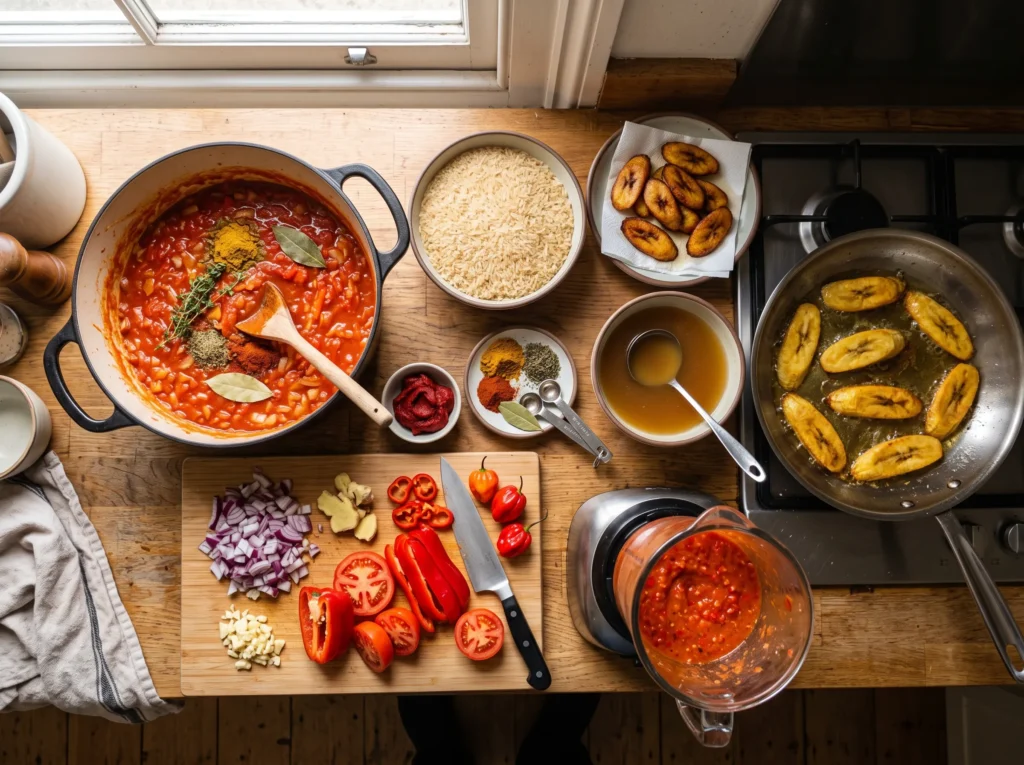
Cook the sauce uncovered for about 15 to 20 minutes.
Stir every few minutes to prevent sticking.
This is an important step. The sauce should become thicker, darker, and more fragrant.
10. Taste the sauce
Taste the cooked tomato base before adding the rice.
Adjust the salt or pepper if needed.
The sauce should taste slightly stronger than desired because the rice will absorb some of the seasoning.
11. Add the stock
Pour the chicken or vegetable stock into the pot.
Stir thoroughly.
Bring the mixture to a gentle simmer.
12. Add the rice
Add the rinsed and drained rice.
Stir gently so the rice is evenly distributed throughout the sauce.
Make sure no large pockets of dry rice remain above the liquid.
13. Reduce the heat
Bring the pot back to a gentle simmer.
Once simmering, reduce the heat to low.
Cover the pot tightly with its lid.
Low heat is important because the rice needs to steam and absorb the sauce without burning underneath.
14. Cook the rice
Cook for approximately 25 to 30 minutes.
Avoid stirring frequently.
Check after about 20 minutes to see how the rice is progressing.
If the rice looks dry but the grains are still firm, add a small amount of hot stock or water.
Add only a few tablespoons at a time.
15. Steam the finished rice
Once the rice is tender, turn off the heat.
Keep the lid on for another 5 to 10 minutes.
This resting period allows the steam to finish cooking the grains and helps the texture become fluffy.
16. Fluff the rice
Remove the bay leaves.
Use a fork or large spoon to gently fluff the rice.
Avoid vigorous stirring because it can break the grains and make the rice mushy.
17. Prepare the plantains
While the rice is cooking, peel the plantains.
Cut each plantain diagonally into slices about 1/2 inch thick.
Diagonal slices provide a larger surface for browning.
18. Season the plantains
Place the sliced plantains in a bowl.
Sprinkle lightly with 1/2 teaspoon salt.
Toss gently to coat.
The salt balances the natural sweetness of the ripe plantains.
19. Heat the frying oil
Heat 1/3 cup vegetable oil in a large frying pan over medium heat.
The oil should be hot but not smoking.
Test one plantain slice first.
It should begin to sizzle gently as soon as it touches the oil.
20. Fry the plantains
Carefully place the plantain slices into the hot oil.
Do not overcrowd the pan.
Fry for about 2 to 3 minutes per side, or until golden brown with caramelized edges.
21. Drain the plantains
Transfer the fried plantains to a plate lined with paper towels.
Allow excess oil to drain.
The finished plantains should have golden edges and soft, tender centers.
22. Serve the Jollof Rice
Spoon the fluffy Jollof Rice onto serving plates.
Arrange the fried plantains alongside or over the rice.
Add chopped parsley, green onions, or lime wedges if desired.
Serve while warm.
Jollof Rice Tips & Variations
A few simple techniques help produce flavorful rice with separate, tender grains.
Cook the tomato base properly
Do not rush the sauce.
The tomato and pepper mixture needs time to cook down and lose its raw flavor.
A properly cooked base will look darker, thicker, and glossy.
Use a heavy-bottomed pot
A heavy pot distributes heat more evenly.
This reduces the chance of the rice burning on the bottom while the top remains undercooked.
Keep the heat low after adding rice
High heat can cause the bottom of the rice to burn before the grains finish cooking.
Low heat allows the rice to steam gently.
Avoid excessive stirring
Frequent stirring releases starch from the rice.
That can create a sticky texture instead of separate, fluffy grains.
Stir only when necessary.
Use hot stock if more liquid is needed
If the rice needs additional liquid during cooking, add hot stock or hot water.
Adding cold liquid can interrupt the cooking process.
Do not add too much liquid
Too much liquid is one of the easiest ways to create mushy Jollof Rice.
Start with the recommended amount and add small amounts only if necessary.
Let the rice rest
The resting period is more important than it may seem.
Keeping the lid closed after cooking allows trapped steam to finish softening the grains.
Choose the right plantains
For fried plantains, yellow plantains with dark spots are ideal.
Green plantains are firmer and more starchy, while very dark plantains can become extremely soft.
Fry plantains in batches
Overcrowding the frying pan lowers the oil temperature.
This can make the plantains greasy instead of golden and caramelized.
Watch the plantains closely
Ripe plantains can brown quickly because of their natural sugars.
Turn them once the edges become golden.
Make it less spicy
Use one Scotch bonnet pepper or replace it with a milder chili pepper.
For a very mild version, omit the Scotch bonnet completely.
Make it spicy
Use two Scotch bonnet peppers or add a small amount of cayenne pepper.
Add heat gradually because it is much easier to increase the spice than reduce it.
Add vegetables
Diced carrots, peas, green beans, or sweet corn can be added toward the end of cooking.
Avoid adding too many vegetables because they can change the liquid balance.
Add chicken
For a more substantial meal, serve the rice with roasted or grilled halal chicken.
The rice can remain meat-free while the chicken is served separately.
Try pairing it with easy oven-baked chicken thighs for a hearty family dinner.
Add shrimp
Halal-friendly shrimp can be cooked separately and served over the finished rice.
Season the shrimp simply with garlic, paprika, salt, and black pepper.
Use beef
Tender pieces of halal beef can be served alongside the rice.
Slow-cooked beef works especially well because its rich flavor complements the tomato base.
Add coconut flavor
For a different variation, replace a small portion of the stock with unsweetened coconut milk.
This will create a creamier, milder rice with subtle coconut flavor.
Add smoky flavor
Smoked paprika adds a gentle smoky note.
A small amount goes a long way, so avoid adding too much.
Use a natural smoky cooking method
For a subtle smoky aroma, the finished rice can be allowed to develop a small amount of toasted flavor at the bottom of the pot.
Do not intentionally burn the rice.
Make party-sized Jollof Rice
Double the ingredients for a larger gathering.
Use a wide, heavy pot and make sure there is enough room for the rice to cook evenly.
Make it ahead
The tomato base can be prepared a day ahead and refrigerated.
When ready to cook, reheat the sauce, add the stock and rice, and continue with the recipe.
Common mistakes to avoid
Do not skip rinsing the rice.
Do not rush the tomato sauce.
Do not use excessive water.
Do not cook the rice over high heat.
Do not keep opening the lid while the rice cooks.
Do not overcrowd the pan when frying plantains.
These simple details have a major impact on the final texture.
Storage & Serving
How to store Jollof Rice
Allow the rice to cool reasonably quickly after cooking.
Transfer leftovers to shallow airtight containers and refrigerate.
Use refrigerated rice within 3 to 4 days.
How to store fried plantains
Store leftover fried plantains separately from the rice.
Place them in an airtight container and refrigerate.
They are best within 2 to 3 days.
How to reheat Jollof Rice
Place the rice in a microwave-safe container.
Add 1 to 2 tablespoons of water or stock and cover loosely.
Heat until steaming hot throughout, stirring once halfway through if needed.
Reheat on the stovetop
Add the rice to a saucepan with a small splash of water or stock.
Cover and heat over low heat.
Stir gently until hot.
Reheat fried plantains
An air fryer or oven gives the best texture.
Heat at about 350°F (175°C) until warmed through and lightly crisp around the edges.
A skillet can also be used over medium-low heat.
Can Jollof Rice be frozen?
Yes.
Allow the rice to cool before transferring it to freezer-safe containers.
Freeze in individual portions for convenient meals.
For the best quality, use within 1 to 2 months.
How to thaw frozen rice
Thaw the rice in the refrigerator overnight.
Reheat thoroughly before serving.
Avoid repeatedly freezing and thawing the same portion.
Can fried plantains be frozen?
Yes, although their texture may become slightly softer after thawing.
For the best result, make fresh fried plantains when serving leftover frozen Jollof Rice.
What to serve with Jollof Rice
Jollof Rice can be served as a complete meal with fried plantains.
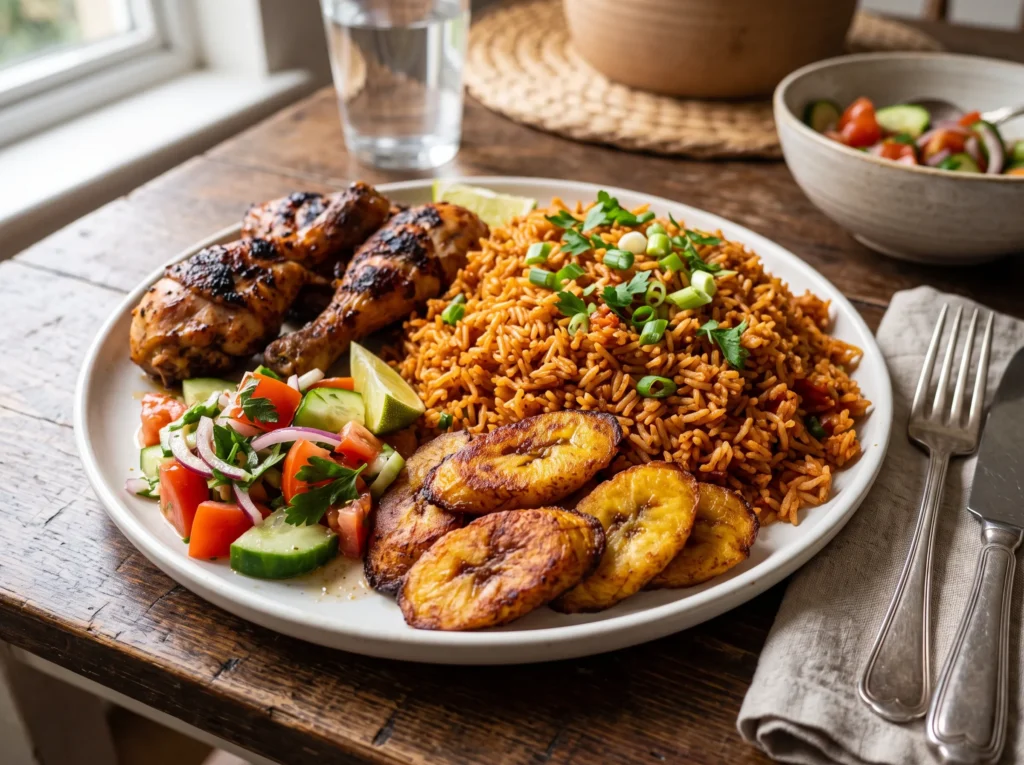
For a larger spread, add grilled halal chicken, beef kebabs, roasted vegetables, or a simple fresh salad.
A crisp cucumber and tomato salad provides a refreshing contrast to the rich tomato rice.
For more meal ideas, try easy homemade chicken kebabs or fresh cucumber tomato salad.
Serve for family dinners
Spoon the rice into a large serving dish and arrange the fried plantains around the edges.
Add grilled chicken or another halal protein in the center.
This creates a colorful family-style meal that is easy to share.
Serve for gatherings
Jollof Rice is ideal for larger gatherings because it can be prepared in a large batch.
Serve it alongside several proteins, salads, and vegetables.
The bright red-orange rice and golden plantains create an attractive serving platter without requiring complicated decoration.
Serve for lunch
Leftover Jollof Rice reheats well, making it useful for packed lunches.
Keep the rice and plantains in separate compartments when possible to preserve the plantains’ texture.
Frequently Asked Questions
What is Jollof Rice?
Jollof Rice is a flavorful West African rice dish cooked in a tomato and pepper-based sauce with aromatic seasonings.
There are many regional and family variations, so ingredients and cooking methods can differ.
What rice is best for Jollof Rice?
Long-grain parboiled rice is a reliable choice.
It tends to produce separate, fluffy grains while absorbing the tomato and pepper sauce.
Why is Jollof Rice mushy?
Too much liquid, overcooking, or excessive stirring can cause mushy rice.
Use the recommended liquid amount and keep the heat low while the rice cooks.
Why is Jollof Rice not flavorful enough?
The tomato base may not have cooked long enough, or the seasoning may be too light.
Taste the sauce before adding the rice and adjust the seasoning at that stage.
Can Jollof Rice be made without Scotch bonnet?
Yes.
Scotch bonnet provides heat but is not essential for the basic dish.
Use a milder chili or omit it for a family-friendly version.
Can Jollof Rice be made with basmati rice?
Yes, but the cooking method may need adjustment.
Basmati cooks differently from parboiled long-grain rice and may require less liquid and a shorter cooking time.
Why does the bottom of Jollof Rice burn?
Burning can happen when the heat is too high or the pot is too thin.
Use a heavy-bottomed pot and maintain low heat after adding the rice.
Is Jollof Rice gluten-free?
The basic ingredients are naturally gluten-free, but packaged stock and seasoning blends should be checked carefully.
Choose certified gluten-free products if cross-contamination is a concern.
Can Jollof Rice be made vegetarian?
Yes.
Use vegetable stock instead of chicken stock.
The tomato, pepper, garlic, ginger, and spices provide plenty of flavor without meat.
What makes fried plantains sweet?
Plantains naturally become sweeter as they ripen.
Yellow plantains with dark spots contain more natural sugars and develop golden, caramelized edges when fried.
Can green plantains be used?
Yes, but the result will be different.
Green plantains are more starchy and less sweet, producing a firmer side dish.
Can the plantains be baked instead of fried?
Yes.
Toss sliced ripe plantains with a small amount of oil and bake at about 425°F (220°C) until golden, turning once halfway through.
Can Jollof Rice be made ahead?
Yes.
The tomato sauce can be prepared ahead, and the finished rice can be refrigerated for several days.
Reheat thoroughly before serving.
Can leftover Jollof Rice be frozen?
Yes.
Freeze cooled rice in airtight freezer-safe containers.
Individual portions make reheating easier and reduce food waste.
What protein goes best with Jollof Rice?
Grilled or roasted halal chicken is a popular pairing.
Halal beef, lamb, fish, or shrimp can also be served alongside the rice.
How spicy should Jollof Rice be?
The spice level is completely adjustable.
One Scotch bonnet gives noticeable heat, while two create a much hotter result.
For a mild family meal, omit the Scotch bonnet or use a mild chili.
Conclusion
Classic Jollof Rice with Fried Plantains brings together rich tomato flavor, fragrant spices, fluffy rice, and naturally sweet plantains in one comforting meal.
The rice absorbs the deeply seasoned pepper and tomato sauce as it cooks, creating tender grains with a beautiful red-orange color and savory flavor. Golden fried plantains add a soft center and caramelized edges that balance the dish perfectly.
The recipe is simple enough for a weeknight dinner but special enough for family gatherings and celebrations. It can also be customized with grilled halal chicken, beef, seafood, or vegetables.
For the best results, take time to cook the tomato base, use the right amount of liquid, keep the rice covered over low heat, and allow it to rest before fluffing.
Serve a generous spoonful of Jollof Rice with golden fried plantains, add a favorite halal protein if desired, and enjoy a warm, satisfying meal full of color and flavor.