
Caviar Scotch Eggs
Crispy on the outside, juicy in the middle, and finished with delicate pearls of caviar, Caviar Scotch Eggs turn a classic comfort-food favorite into an elegant appetizer.
Each egg is wrapped in seasoned halal chicken or turkey sausage, coated in crisp breadcrumbs, and fried until beautifully golden. The soft egg center adds a creamy contrast, while a small spoonful of caviar brings a rich, savory finish.
Despite the impressive presentation, this recipe is surprisingly simple. The key is cooking the eggs just until the yolks reach the desired texture, chilling them before wrapping, and keeping the coating light.
These Scotch eggs are perfect for brunches, dinner parties, festive gatherings, or an elevated afternoon snack. Serve them warm or at room temperature with fresh herbs and a simple dipping sauce.
For another impressive appetizer, try crispy chicken appetizers or add easy brunch recipes to the menu for a relaxed weekend spread.
Ingredients for Caviar Scotch Eggs
For the Eggs
- 6 large eggs
- 6 cups water
- 1 tablespoon white vinegar
- 1 cup ice cubes
For the Sausage Coating
- 1 pound (450 g) halal ground chicken or turkey sausage
- 1 tablespoon fresh parsley, finely chopped
- 1 teaspoon Dijon mustard
- ½ teaspoon garlic powder
- ½ teaspoon onion powder
- ½ teaspoon smoked paprika
- ¼ teaspoon black pepper
- ½ teaspoon salt, or to taste
Use plain halal chicken or turkey sausage if buying prepared sausage. Avoid varieties containing pork, alcohol-based flavorings, or non-halal meat ingredients.
For the Coating
- ½ cup (65 g) all-purpose flour
- 2 large eggs, beaten
- 1 ½ cups (150 g) plain panko breadcrumbs
- ½ teaspoon salt
- ¼ teaspoon black pepper
For Cooking
- 4 cups neutral-flavored vegetable oil, such as sunflower or canola oil, for frying
For Serving
- 3 tablespoons high-quality halal-friendly caviar
- 2 tablespoons fresh chives, finely chopped
- ½ lemon, cut into wedges
- ¼ cup crème fraîche or thick plain Greek yogurt
- 1 teaspoon fresh lemon juice
- Freshly ground black pepper, to taste
Caviar should be sourced from a fish product that meets the intended halal requirements. Sturgeon and other fish roe are generally suitable within Islamic dietary rules, but packaged products should still be checked for unsuitable additives or processing ingredients.
Tools Needed
- Medium saucepan
- Large bowl
- Slotted spoon
- Ice bowl
- Three shallow bowls
- Large mixing bowl
- Deep, heavy saucepan or Dutch oven
- Kitchen thermometer
- Slotted frying spoon
- Wire cooling rack
- Paper towels
- Sharp knife
How to Make Caviar Scotch Eggs
1. Prepare the Ice Bath
Fill a large bowl with cold water and ice cubes.
Keep the bowl ready before cooking the eggs. A prepared ice bath makes it easier to stop the cooking process immediately.
2. Cook the Eggs
Bring 6 cups of water and the vinegar to a gentle boil.
Carefully lower the six eggs into the water using a slotted spoon.
Cook for about 6½ minutes for soft, slightly jammy centers. For firmer yolks, cook for approximately 8 minutes.
3. Chill the Eggs
Immediately transfer the cooked eggs to the ice bath.
Leave them in the cold water for at least 5 minutes.
The rapid cooling stops the cooking process and helps prevent the yolks from becoming dry.
4. Peel Carefully
Gently tap each egg against a hard surface and peel away the shell.
Peel the eggs under cool running water if needed. This can help loosen stubborn pieces of shell.
Pat the peeled eggs completely dry with paper towels.
5. Season the Sausage Mixture
Add the halal ground chicken or turkey sausage to a large bowl.
Add the parsley, Dijon mustard, garlic powder, onion powder, smoked paprika, black pepper, and salt.
Mix gently until the seasonings are evenly distributed.
Avoid excessive mixing, which can make the sausage coating dense.
6. Divide the Sausage
Divide the sausage mixture into six equal portions.
A kitchen scale can help make the portions even, but dividing by eye also works.
Each portion should be large enough to completely surround one egg in a thin, even layer.
7. Wrap the Eggs
Place one portion of sausage mixture between two sheets of parchment paper or plastic wrap.
Flatten it into a thin oval.
Place one peeled egg in the center and gently wrap the sausage around it.
Press the seams together carefully until the egg is completely enclosed.
Repeat with the remaining eggs.

8. Prepare the Coating Station
Place the flour in one shallow bowl.
Place the beaten eggs in a second bowl.
In a third bowl, combine the panko breadcrumbs with ½ teaspoon salt and ¼ teaspoon black pepper.
Arrange the bowls in this order: flour, beaten egg, breadcrumbs.
9. Coat Each Scotch Egg
Roll each sausage-wrapped egg lightly in flour.
Dip it into the beaten egg, making sure the surface is covered.
Finally, roll it through the seasoned panko breadcrumbs.
Press the breadcrumbs gently onto the surface so the coating stays in place.
10. Chill Before Frying
Place the coated eggs on a plate or tray.
Refrigerate for 15–20 minutes.
This short chilling period helps the sausage hold its shape and reduces the chance of the coating separating during frying.
11. Heat the Oil
Pour the vegetable oil into a deep, heavy saucepan or Dutch oven.
Heat the oil to approximately 350°F (175°C).
Use a kitchen thermometer for the most reliable temperature.
The oil should be hot enough to create a crisp coating without making the outside brown before the sausage is cooked.
12. Fry the Scotch Eggs
Carefully lower two or three coated eggs into the hot oil.
Do not overcrowd the pan.
Fry for approximately 5–7 minutes, turning occasionally, until the coating is deep golden brown and the sausage is fully cooked.
The exact cooking time depends on the size and thickness of the sausage layer.
13. Drain
Transfer the cooked Scotch eggs to a wire rack lined underneath with paper towels.
Let them rest for several minutes.
A wire rack keeps the crispy coating from sitting directly in oil and becoming soggy.
14. Make the Lemon Cream
Mix the crème fraîche or Greek yogurt with the fresh lemon juice.
Add a small pinch of black pepper.
Stir until smooth and creamy.
15. Add the Caviar
Slice each Scotch egg in half using a sharp knife.
Place the halves on a serving plate.
Add a small spoonful of caviar to each egg and sprinkle with fresh chives.
Serve with the lemon cream and lemon wedges.
Tips & Variations for Caviar Scotch Eggs
Keep the Sausage Layer Thin
A thin layer of sausage creates a better balance between the crispy coating, savory meat, and creamy egg.
Too much sausage can make the finished Scotch egg heavy and may require longer frying.
Chill the Eggs Before Wrapping
Cold, completely dry eggs are easier to surround with sausage.
If the eggs are warm or slippery, the sausage may not adhere evenly.
Dry the Eggs Well
Moisture can make the sausage slide around the egg.
After peeling, gently pat each egg dry before wrapping.
Use Panko for Extra Crispiness
Panko breadcrumbs create a lighter, crunchier coating than regular breadcrumbs.
For an especially crisp finish, use fresh panko and avoid pressing too much of it onto the surface.
Keep the Oil Temperature Steady
Oil that is too cool can make the coating greasy.
Oil that is too hot can brown the breadcrumbs quickly while leaving the sausage undercooked.
A temperature around 350°F (175°C) provides a good balance.
Fry in Small Batches
Cooking only two or three Scotch eggs at a time helps maintain the oil temperature.
Overcrowding can result in a soft, oily coating.
Make a Firmer Egg Center
For a more traditional hard-boiled center, cook the eggs for approximately 8–9 minutes before chilling.
The caviar will still provide a creamy contrast against the firmer yolk.
Try Quail Eggs
For bite-sized party appetizers, use quail eggs instead of chicken eggs.
The sausage layer will need to be much thinner, and cooking times should be adjusted according to the smaller size.
Change the Herbs
Parsley can be replaced with finely chopped chives, dill, or cilantro.
Dill works particularly well with the salty, delicate flavor of caviar.
Choose a Mild Sausage
A strongly spiced sausage can overpower the egg and caviar.
A mild halal chicken or turkey sausage lets the rich topping remain the star.
Avoid Over-Seasoning
Caviar naturally contains a salty, savory flavor.
Keep the sausage mixture and breadcrumb coating moderately seasoned so the final dish does not become too salty.
Common Mistakes to Avoid
Using hot eggs: Warm eggs are difficult to wrap evenly and can soften the sausage mixture.
Leaving gaps: Any exposed egg can cause the sausage coating to split during frying.
Skipping the chill: Chilling helps the wrapped eggs stay together.
Overheating the oil: Extremely hot oil can burn the breadcrumbs before the sausage is fully cooked.
Adding caviar too early: High heat can affect the delicate texture and flavor of caviar. Add it after frying.
Storage & Serving
How to Store Caviar Scotch Eggs
For the best quality, serve Scotch eggs soon after cooking.
If leftovers remain, allow them to cool completely before placing them in an airtight container.
Refrigerate within 2 hours and use within 3 days.
Keep the caviar refrigerated separately and follow the storage instructions on its packaging.
Can Scotch Eggs Be Frozen?
The cooked Scotch eggs can technically be frozen, but freezing is not ideal for this recipe.
The breadcrumb coating can lose its crisp texture, while the egg whites may become slightly rubbery after thawing.
For the best result, prepare and serve them fresh.
How to Reheat Scotch Eggs
Reheat refrigerated Scotch eggs in an oven or air fryer rather than a microwave.
Heat at approximately 350°F (175°C) until warmed through and crisp on the outside.
Allow them to cool slightly before cutting.
Do not reheat the caviar. Add fresh chilled caviar after the Scotch eggs have been warmed.
How to Serve Caviar Scotch Eggs
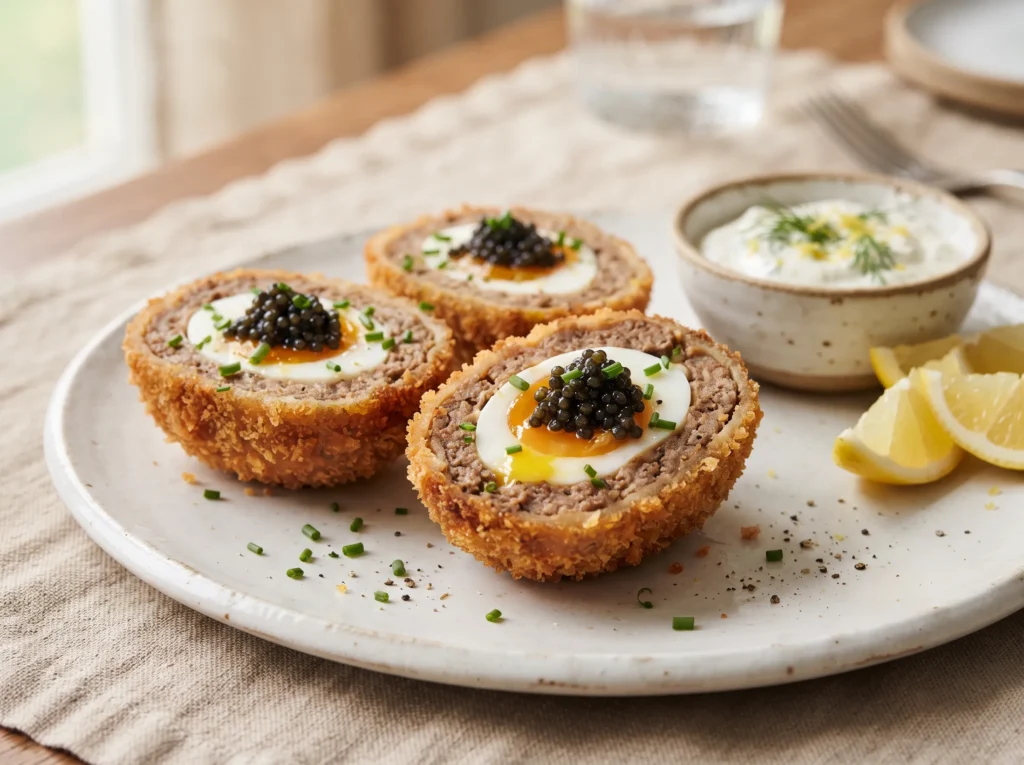
For an elegant appetizer, cut each Scotch egg in half and arrange the halves on a platter.
Add a small spoonful of caviar to each yolk and finish with chopped chives.
Serve with lemon cream, lemon wedges, cucumber slices, or a fresh green salad.
For a complete brunch menu, pair them with fluffy homemade pancakes, fresh breakfast potatoes, or easy brunch salads.
Best Serving Temperature
Caviar Scotch Eggs are delicious warm, but they do not need to be piping hot.
Slightly warm Scotch eggs allow the crispy coating and savory sausage to shine while keeping the caviar cool and delicate.
Frequently Asked Questions
1. What are Caviar Scotch Eggs?
Caviar Scotch Eggs are cooked eggs wrapped in seasoned sausage, coated in breadcrumbs, fried until crisp, and finished with caviar.
They combine a crunchy exterior with a soft egg center and a rich, salty topping.
2. What type of sausage is best?
A mild halal chicken or turkey sausage is an excellent choice.
It has enough savory flavor to complement the egg without overpowering the delicate caviar.
3. Can Caviar Scotch Eggs be baked instead of fried?
Yes. Place the coated eggs on a parchment-lined baking sheet and lightly spray them with cooking oil.
Bake at 400°F (200°C) until the coating is golden and the sausage is fully cooked, usually around 25–30 minutes depending on size.
4. How do you keep the egg yolk soft?
Start with carefully timed boiling and immediately transfer the eggs to an ice bath.
For a slightly jammy yolk, approximately 6½ minutes is a useful starting point for large eggs.
5. Can regular breadcrumbs replace panko?
Yes. Regular breadcrumbs can be used, although panko generally gives the Scotch eggs a lighter and crunchier coating.
6. Is caviar served hot or cold?
Caviar is best served chilled or cool rather than heated.
Add it after the Scotch eggs have been fried and rested.
7. What can replace caviar?
For a more budget-friendly version, halal-friendly fish roe can be used.
Finely chopped smoked salmon can also provide a savory seafood element, although the flavor and texture will be different.
8. Can Greek yogurt replace crème fraîche?
Yes. Thick plain Greek yogurt makes an excellent substitute.
Add a little lemon juice and adjust the seasoning to taste.
9. Why does the coating fall off?
The egg or sausage may have been too wet, or the coating may not have been pressed firmly enough.
Dry the eggs, follow the flour-egg-breadcrumb order, and chill the coated Scotch eggs before frying.
10. Can Scotch eggs be made ahead?
Yes. The eggs can be boiled, peeled, wrapped, and coated several hours before cooking.
Keep them covered and refrigerated until ready to fry.
11. What makes a Scotch egg crispy?
A dry surface, panko breadcrumbs, properly heated oil, and avoiding overcrowding all help create a crisp golden coating.
12. How can the recipe be made less rich?
Use lean ground chicken or turkey and serve the Scotch eggs with a fresh salad or cucumber slices.
A lighter yogurt-based sauce also works well.
Conclusion
Crispy sausage, a creamy egg center, and delicate caviar make Caviar Scotch Eggs an impressive dish without requiring complicated cooking techniques.
The recipe is easy enough for home cooks while looking elegant enough for brunches, dinner parties, and special occasions. A mild halal sausage keeps the flavors balanced, while fresh chives and lemon add brightness to every bite.
For the best texture, keep the sausage layer thin, chill the coated eggs before frying, and add the caviar only after cooking.
Serve these golden, crunchy Scotch eggs with lemon cream and fresh herbs for a memorable appetizer that feels special from the very first bite.