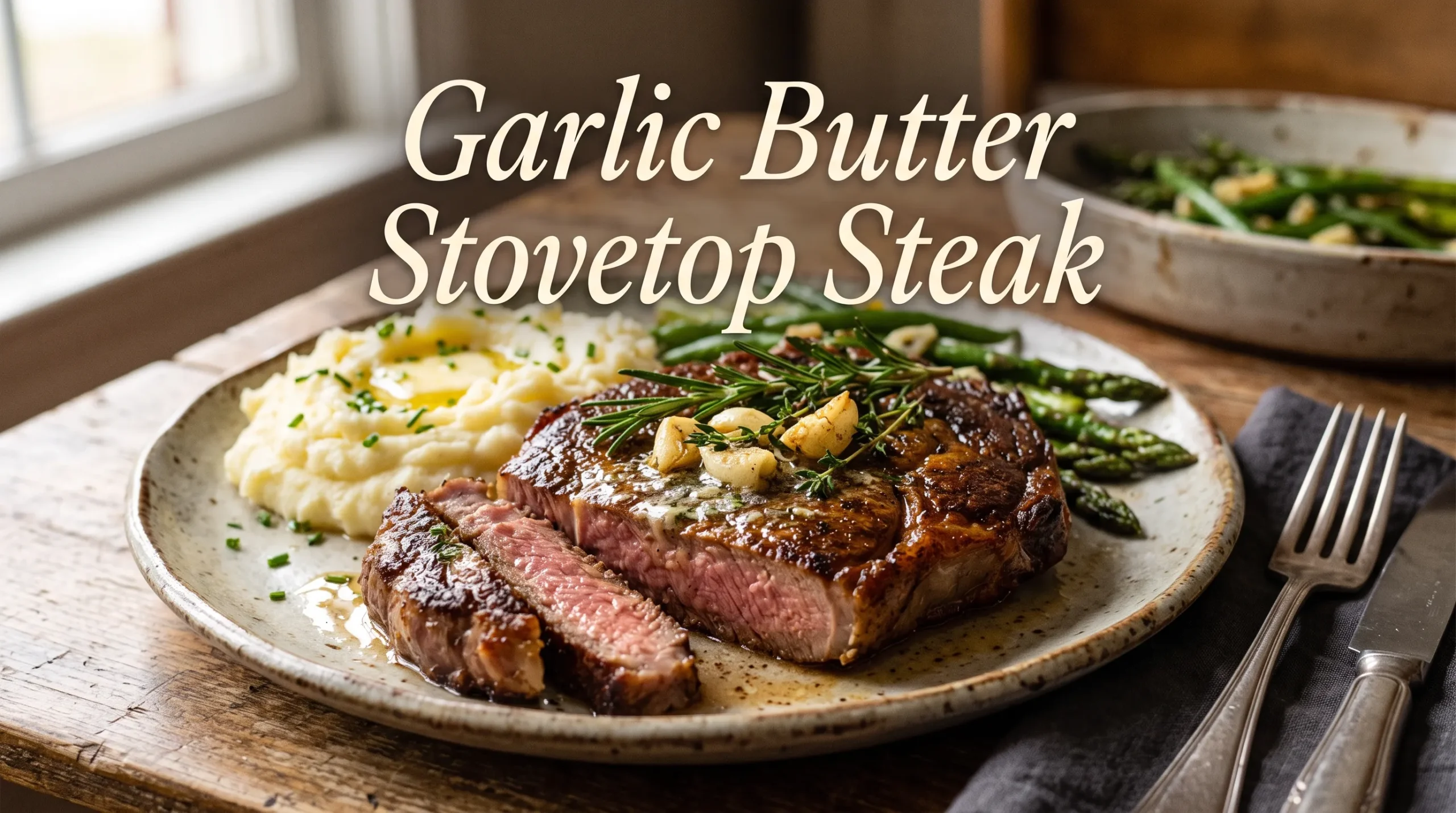
Garlic Butter Stovetop Steak
A perfectly seared steak with a golden-brown crust, tender center, and rich garlic butter flavor can be made without a grill. This Garlic Butter Stovetop Steak uses one skillet and a handful of simple ingredients for a restaurant-style dinner at home.
The secret is a hot pan, a well-seasoned steak, and a few minutes of basting with melted butter, garlic, and herbs. As the butter foams around the steak, the garlic becomes fragrant and the outside develops a beautifully rich flavor.
This recipe is especially useful for busy home cooks. There is no complicated marinade, no oven required, and no special sauce to prepare separately.
Serve the steak with fluffy mashed potatoes, crispy roasted potatoes, steamed vegetables, or a fresh salad. The buttery pan juices can also be spooned over the sliced steak for an extra flavorful finish.
Ingredients
The ingredient list is short, but each ingredient adds something important to the final steak.
- 2 boneless steaks, about 8 ounces each and 1 to 1 1/2 inches thick
- 1 tablespoon olive oil
- 1 teaspoon kosher salt
- 1/2 teaspoon freshly ground black pepper
- 4 tablespoons unsalted butter
- 4 garlic cloves, lightly crushed
- 2 sprigs fresh rosemary
- 2 sprigs fresh thyme
For a halal-friendly version, choose halal-certified steak and check packaged butter and seasonings for any added ingredients when needed.
Best Steak Cuts
Several cuts work well for this recipe.
- Ribeye: Rich, tender, and naturally juicy
- New York strip: Beefy flavor with a firm, tender texture
- Sirloin: Leaner and budget-friendly
- Tenderloin: Very tender with a mild flavor
For the easiest stovetop result, a steak around 1 to 1 1/2 inches thick is ideal.
Tools Needed
- Heavy skillet, preferably cast iron or stainless steel
- Tongs
- Instant-read meat thermometer
- Small spoon
- Cutting board
- Sharp knife
A heavy skillet is particularly helpful because it holds heat well and encourages an even, golden crust.
Step-by-Step Instructions
1. Bring the steaks closer to room temperature
Remove the steaks from the refrigerator about 20 to 30 minutes before cooking.
Pat both sides thoroughly dry with paper towels. Removing surface moisture helps the steak brown instead of steaming in the pan.
2. Season the steaks
Sprinkle both sides of the steaks evenly with 1 teaspoon kosher salt and 1/2 teaspoon black pepper.
Press the seasoning gently into the surface so it sticks.
There is no need for a long marinade. The high-heat searing and garlic butter provide plenty of flavor.
3. Heat the skillet
Place a heavy skillet over medium-high to high heat.
Let the pan heat for several minutes. It should be very hot before the steak goes in.
A properly heated skillet is important because the steak should begin sizzling immediately when it touches the surface.
4. Add the olive oil
Add 1 tablespoon olive oil to the hot skillet.
Swirl the pan carefully to coat the cooking surface.
The oil helps the steak sear while adding a subtle savory flavor.
5. Sear the first side
Carefully place both steaks in the skillet.
Cook without moving them for about 3 to 4 minutes, depending on thickness and desired doneness.
A deep brown crust should begin forming underneath the steak.
Avoid pressing down on the meat with a spatula. Doing so can squeeze out flavorful juices.
6. Flip the steaks
Use tongs to turn the steaks over.
Cook the second side for about 2 to 3 minutes before adding the butter and aromatics.
The exact cooking time depends on steak thickness and the preferred level of doneness.

7. Add the garlic butter ingredients
Reduce the heat to medium.
Add:
- 4 tablespoons unsalted butter
- 4 lightly crushed garlic cloves
- 2 rosemary sprigs
- 2 thyme sprigs
The butter should melt quickly and begin to foam.
8. Baste the steaks
Tilt the skillet slightly so the melted butter collects on one side.
Use a spoon to scoop the hot garlic butter over the tops of the steaks repeatedly.
Continue basting for about 1 to 2 minutes.
The butter will become fragrant as it picks up flavor from the garlic and herbs. This creates a rich, savory coating around the steak.
9. Check the internal temperature
Use an instant-read thermometer inserted into the thickest part of the steak.
For a general guide:
- Rare: 120–125°F
- Medium-rare: 130–135°F
- Medium: 140–145°F
- Medium-well: 150–155°F
- Well-done: 160°F and above
For food safety, use a thermometer and follow the recommended safe cooking temperature for the specific beef preparation and local food-safety guidance.
The temperature can continue rising slightly while the steak rests.
10. Rest the steak
Transfer the steaks to a cutting board.
Let them rest for about 5 to 10 minutes before slicing.
Resting gives the juices time to redistribute through the meat, helping the steak stay moist and tender.
11. Slice and serve
Slice the steak against the grain into thin pieces.
Spoon some of the garlic butter from the skillet over the sliced meat just before serving.
The result should have a deeply browned exterior, a juicy center, and a fragrant buttery finish.
Garlic Butter Stovetop Steak Tips
Choose steaks with even thickness
A steak with a consistent thickness cooks more evenly.
Very thin steaks can become overcooked quickly, while extremely thick steaks may require additional cooking time.
Dry the surface well
This small step makes a big difference.
Moisture on the steak can interfere with browning and prevent the crust from becoming deeply golden and flavorful.
Heat the skillet properly
The pan should be hot before the steak is added.
If the pan is too cool, the steak may release liquid and slowly cook instead of developing a crisp, browned exterior.
Do not constantly flip the steak
There is no need to move the steak around the skillet every few seconds.
Allowing the surface to remain in contact with the hot pan helps create a stronger crust.
Add butter after searing
Butter can burn quickly over very high heat.
Searing the steak first with olive oil and adding butter later gives the steak a beautiful crust while allowing the garlic butter to remain fragrant instead of bitter.
Crush the garlic instead of mincing it
Lightly crushed garlic cloves are easy to remove and provide plenty of flavor.
Mince garlic can brown much faster during basting and may become bitter.
Baste generously
The garlic butter should be spooned over the steak repeatedly.
This helps coat the surface with the rich butter while transferring the flavor of the garlic, rosemary, and thyme.
Do not skip the resting time
Cutting immediately into a hot steak can cause more juices to escape onto the cutting board.
A short rest helps keep the center juicy and tender.
Use a thermometer
Cooking time alone is not always reliable because steak thickness, pan temperature, and starting temperature can vary.
A meat thermometer is the easiest way to check doneness accurately.
Easy Variations
Garlic Herb Steak
Keep the recipe exactly as written and add a little extra fresh thyme during the final basting stage.
The result is fragrant, earthy, and especially good with roasted vegetables.
Pepper Garlic Steak
Increase the black pepper slightly for a bolder crust.
Freshly cracked pepper provides more noticeable texture and flavor than finely ground pepper.
Lemon Garlic Butter Steak
For a brighter finish, add a small squeeze of fresh lemon juice to the pan after the steak has been removed.
Use only a little so the citrus complements rather than overwhelms the buttery flavor.
Spicy Garlic Butter Steak
Add a small pinch of crushed red pepper flakes to the butter along with the garlic.
This creates gentle heat without changing the basic cooking method.
Sirloin Version
Sirloin is an excellent option when a leaner and more affordable cut is preferred.
Because sirloin contains less fat than ribeye, avoid overcooking it. Slicing it against the grain also helps create a more tender bite.
Common Mistakes to Avoid
Starting with a cold pan
A lukewarm skillet makes it difficult to develop a strong crust.
Give the pan enough time to heat before adding the steak.
Using wet steaks
Excess moisture creates steam and interferes with browning.
Always pat the steaks dry before seasoning.
Burning the butter
Adding butter at the beginning over very high heat can cause it to brown too quickly.
Use olive oil for the initial sear, then add the butter after flipping and lowering the heat.
Cutting the steak immediately
The center needs a few minutes to rest after cooking.
Skipping this step can leave the steak less juicy than expected.
Cooking only by time
Two steaks that look similar can cook differently depending on thickness and pan temperature.
Use the thermometer as the final guide.
What to Serve With Garlic Butter Stovetop Steak
This steak pairs naturally with comforting sides.
For a classic dinner, serve it with creamy mashed potatoes and steamed green beans. The buttery juices from the steak are delicious spooned over the potatoes.
Crispy roasted potatoes also make an excellent pairing. Their crunchy edges contrast beautifully with the tender steak.
For something lighter, serve the steak with a fresh cucumber and tomato salad or simple steamed vegetables.
A warm flatbread can also be used to soak up the remaining garlic butter from the plate.
For another hearty side, pair the steak with [creamy garlic mashed potatoes] for a rich and comforting dinner.
A fresh vegetable side such as [easy roasted green beans] helps balance the richness of the buttery steak.
For a complete weekend-style meal, serve it with [crispy oven roasted potatoes] and a simple salad.
Storage & Serving
Allow leftover steak to cool briefly, then place it in an airtight container.
Refrigerate within 2 hours of cooking and use refrigerated leftovers within 3 to 4 days when properly stored.
For longer storage, cooked steak can be frozen in a freezer-safe airtight container or wrapped securely to prevent freezer burn. For best quality, use it within about 2 to 3 months.
Thaw frozen steak in the refrigerator rather than at room temperature.

Best Way to Reheat Steak
Gentle reheating helps prevent the steak from becoming dry.
Warm sliced steak in a skillet over low to medium heat with a small amount of butter or its reserved pan juices.
Heat only until warmed through. Avoid prolonged high-heat cooking.
Serving Leftover Steak
Leftover slices can be added to:
- Steak sandwiches
- Wraps
- Rice bowls
- Salads
- Loaded baked potatoes
- Quesadillas
- Breakfast-style egg dishes
Thin slices are especially useful because they warm quickly and remain flavorful when paired with fresh vegetables or a creamy sauce.
Frequently Asked Questions
What is the best steak for stovetop cooking?
Ribeye, New York strip, sirloin, and tenderloin all work well.
Ribeye is especially flavorful because of its marbling, while sirloin offers a leaner and often more economical option.
Can steak be cooked in a regular frying pan?
Yes. A heavy stainless steel or cast-iron skillet is ideal, but a good-quality heavy frying pan can also work.
The most important factor is maintaining enough heat to create a strong sear.
How long does it take to cook steak on the stove?
A 1 to 1 1/2-inch steak generally takes several minutes per side, followed by a short garlic-butter basting period.
Exact timing varies, so internal temperature is more reliable than the clock.
Why is the steak tough?
Overcooking is a common reason steak becomes tough.
The cut also matters. Leaner steaks generally have less natural tenderness than well-marbled cuts, so careful cooking and slicing against the grain are helpful.
Can olive oil be used instead of butter?
Olive oil works well for searing.
However, butter provides the rich flavor that defines garlic butter steak. For the best result, use olive oil for the initial sear and butter for finishing.
Can dried herbs replace fresh herbs?
Yes. Dried rosemary or thyme can be used when fresh herbs are unavailable.
Use a smaller quantity because dried herbs are more concentrated than fresh herbs.
Can this recipe be made without garlic?
Yes. The garlic can be omitted, although the final dish will have a simpler buttery-herb flavor.
Extra thyme or rosemary can be used to add more aroma.
Why should steak be sliced against the grain?
Slicing against the grain shortens the muscle fibers.
This makes each bite easier to chew, especially with cuts such as sirloin or strip steak.
Can the steak be marinated first?
It can, but a marinade is not necessary for this recipe.
The dry seasoning, hot sear, and garlic butter provide plenty of flavor without adding an extra preparation step.
How can the steak get a darker crust?
Make sure the steak is dry and the skillet is properly hot before cooking.
Avoid moving the steak too much during the initial sear, and make sure the pan is not overcrowded.
Conclusion
A tender steak with a deep golden crust and fragrant garlic butter does not require a grill or complicated cooking techniques. Garlic Butter Stovetop Steak brings together simple ingredients, a hot skillet, and an easy basting method for a rich and satisfying homemade dinner.
The combination of juicy beef, crisp seared edges, creamy butter, fragrant garlic, and fresh herbs makes every bite feel special.
Serve it with mashed potatoes, roasted vegetables, crispy potatoes, or a fresh salad for an easy meal that works equally well on a busy weeknight or a relaxed weekend.
With the right skillet temperature and a quick temperature check, even beginner cooks can create a flavorful steak with a beautiful crust and tender center. Give this Garlic Butter Stovetop Steak a try and share it with anyone who loves an easy, hearty homemade dinner.