
Smooth, creamy, rich, and perfectly sliceable, this Homemade Processed Cheese recipe is an easy way to enjoy a delicious cheese block without unnecessary additives. It melts beautifully, spreads easily, and works well in sandwiches, burgers, wraps, pasta, and countless homemade meals.
Unlike many store-bought options, this recipe uses simple pantry ingredients and can be customized to match personal taste. The texture is silky, the flavor is mild and cheesy, and the entire process is beginner-friendly.
Busy home cooks will appreciate how quickly this cheese comes together. Once chilled, it slices neatly, grates easily, and melts into a smooth, creamy sauce whenever needed.
Whether preparing lunchboxes, breakfast sandwiches, or comforting baked dishes, this homemade cheese block is a practical recipe worth keeping in the refrigerator.
Ingredients for Homemade Processed Cheese
Cheese Ingredients
- 500 g mild cheddar cheese, grated
- 250 g mozzarella cheese, grated
- 250 ml full-fat milk
- 60 g unsalted butter
- 20 g milk powder
- 2 teaspoons sodium citrate
- 1 teaspoon cornstarch
- ½ teaspoon salt (adjust to taste)
- ¼ teaspoon white pepper (optional)
- ¼ teaspoon paprika (optional, for color)
Tools You’ll Need
- Medium saucepan
- Silicone spatula
- Whisk
- Cheese grater
- Kitchen scale
- Measuring spoons
- Loaf pan or rectangular container
- Parchment paper or plastic wrap
- Refrigerator
Step-by-Step Instructions
1. Prepare the Pan
Line a small loaf pan or storage container with parchment paper. This makes removing the cheese block much easier after chilling.
2. Grate the Cheese
Grate both the cheddar and mozzarella using the fine side of a grater.
Freshly grated cheese melts much more smoothly than pre-shredded cheese.
3. Mix the Dry Ingredients
In a small bowl, combine:
- Milk powder
- Sodium citrate
- Cornstarch
- Salt
- White pepper
- Paprika (if using)
Mix until evenly combined.
4. Heat the Milk
Pour the milk into a saucepan over medium-low heat.
Add the butter and stir until fully melted.
Do not allow the milk to boil.
5. Add the Dry Mixture
Whisk the dry ingredients into the warm milk.
Continue whisking until the mixture becomes completely smooth without lumps.
6. Add the Cheese Slowly
Reduce the heat to low.
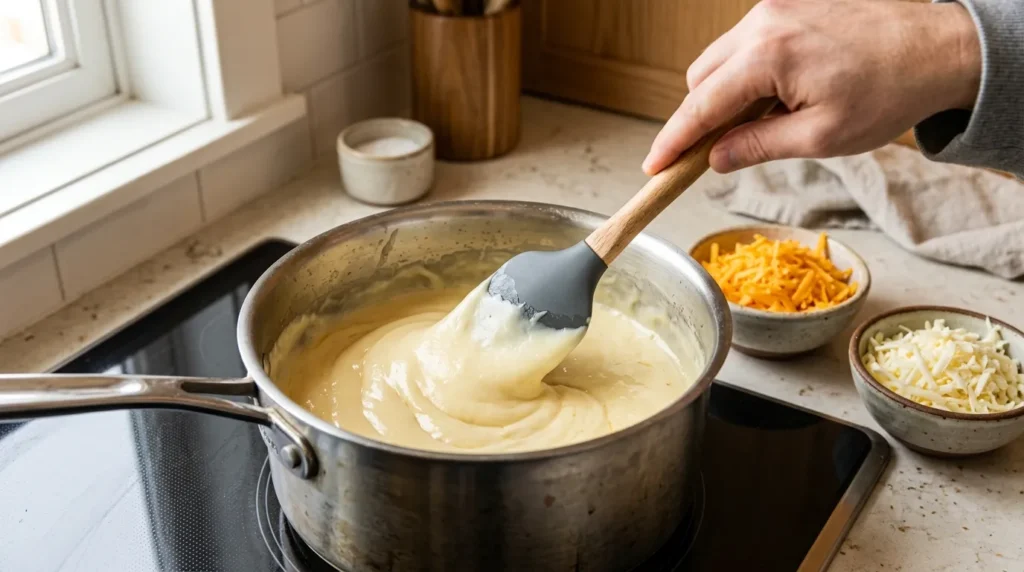
Add one handful of grated cheese at a time while stirring continuously.
Allow each addition to melt completely before adding more cheese.
7. Stir Until Smooth
Keep stirring for about 5–7 minutes.
The mixture should become:
- Thick
- Glossy
- Creamy
- Completely smooth
No visible cheese pieces should remain.
8. Pour into the Mold
Immediately pour the hot cheese mixture into the prepared pan.
Tap the pan gently on the counter to remove trapped air bubbles.
Smooth the top using a spatula.
9. Cool
Allow the cheese to cool at room temperature for about 30 minutes.
10. Chill
Transfer the pan to the refrigerator.
Chill for at least 6 hours or overnight.
11. Remove and Slice
Lift the cheese out using the parchment paper.
Slice into blocks, sandwich slices, or cubes as needed.
The cheese is now ready to enjoy.
Tips & Variations for Homemade Processed Cheese
Use Good Quality Cheese
The final flavor depends heavily on the cheese used.
Choose flavorful cheddar and fresh mozzarella for the best results.
Avoid High Heat
Too much heat may cause the cheese to separate and become oily.
Keep the temperature low throughout cooking.
Slice More Easily
Use a warm knife for perfectly smooth slices.
Make It Extra Creamy
Replace 50 ml of milk with heavy cream for an even richer texture.
Add Herbs
Mix in:
- Dried parsley
- Chives
- Garlic powder
- Onion powder
- Italian seasoning
These create delicious flavored cheese blocks.
Add Mild Spice
For gentle heat, stir in:
- Crushed chili flakes
- Black pepper
- Smoked paprika
Common Mistakes to Avoid
- Boiling the milk
- Adding all the cheese at once
- Using low-quality cheese
- Skipping sodium citrate
- Not chilling long enough
- Overcooking the mixture
For more easy kitchen staples, explore the guide to homemade sandwich spreads and the collection of easy freezer-friendly recipes.
Storage & Serving
Refrigerator
Store the cheese block in an airtight container.
Shelf life:
- Up to 2 weeks
Wrap tightly to prevent drying.
Freezer
Freeze for up to 2 months.
Wrap first in plastic wrap, then place inside a freezer bag.
Thaw overnight in the refrigerator before using.
Best Ways to Serve
This cheese is delicious in:
- Sandwiches
- Burgers
- Toast
- Omelets
- Pasta
- Pizza
- Homemade macaroni and cheese
- Grilled cheese sandwiches
- Cheese sauces
- Wraps
- Stuffed breads
- Savory pastries
The block also grates beautifully over hot dishes.
For more lunch inspiration, check out the recipes for quick family sandwiches and easy homemade burger buns.

Frequently Asked Questions
Can Homemade Processed Cheese be sliced?
Yes. Once fully chilled, it slices cleanly for sandwiches, burgers, and snack platters.
Can it be grated?
Yes. A fully chilled block grates well over pizza, pasta, casseroles, and baked dishes.
Why is sodium citrate used?
Sodium citrate helps the cheese melt evenly and prevents it from separating into oil and solids, giving the cheese its smooth processed texture.
Can another cheese be used?
Yes. Gouda, Colby, Monterey Jack, Edam, or a blend of mild cheeses work well. Strongly aged cheeses create a sharper flavor.
Can low-fat milk be used?
Yes, although full-fat milk produces a richer and creamier cheese block.
Is this recipe halal-friendly?
Yes. All ingredients are alcohol-free and halal-friendly. Always check packaged cheese labels to ensure they meet individual dietary requirements.
Why is the cheese oily?
High cooking temperatures or overheating can cause the fat to separate. Gentle heat and continuous stirring help maintain a smooth texture.
How long does Homemade Processed Cheese last?
It stays fresh in the refrigerator for about two weeks when stored in an airtight container.
Can this cheese melt like store-bought slices?
Yes. It melts smoothly in sandwiches, burgers, sauces, casseroles, and baked recipes.
Can different seasonings be added?
Absolutely. Garlic powder, herbs, smoked paprika, onion powder, or mild spices can create many delicious flavor variations.
Conclusion
Making Homemade Processed Cheese at home is much easier than many people expect. With a few everyday ingredients and simple cooking steps, it is possible to create a smooth, creamy cheese block that slices beautifully, melts evenly, and adds rich flavor to countless meals.
This versatile recipe is perfect for beginners, busy home cooks, and anyone looking for a fresh alternative to store-bought processed cheese. Keep a block ready in the refrigerator for quick sandwiches, comforting pasta dishes, or melted cheese sauces whenever needed.
Give this recipe a try, enjoy its creamy texture and mild cheesy flavor, and share it with family and friends who love homemade kitchen staples.